Sociopaths: Understanding Them Better

In view of the plagiarism issue that was going on around the local news, I came across this word in one of the comments – sociopath.

I never knew really what it meant except that it is a mental problem. I did my research on the internet and I must say that it is a serious case of psychiatric illness.

A sociopath is defined as a person with a psychopathic personality whose behavior is antisocial, often criminal, and who lacks a sense of moral responsibility or social conscience. (http://dictionary.reference.com/browse/sociopath)

Here’s what you need to know about sociopaths:

Profile of the Sociopath

This website summarizes some of the common features of descriptions of the behavior of sociopaths.

  • Glibness and Superficial Charm
  • Manipulative and Conning
    They never recognize the rights of others and see their self-serving behaviors as permissible. They appear to be charming, yet are covertly hostile and domineering, seeing their victim as merely an instrument to be used. They may dominate and humiliate their victims.
  • Grandiose Sense of Self
    Feels entitled to certain things as “their right.”
  • Pathological Lying
    Has no problem lying coolly and easily and it is almost impossible for them to be truthful on a consistent basis. Can create, and get caught up in, a complex belief about their own powers and abilities. Extremely convincing and even able to pass lie detector tests.
  • Lack of Remorse, Shame or Guilt
    A deep seated rage, which is split off and repressed, is at their core. Does not see others around them as people, but only as targets and opportunities. Instead of friends, they have victims and accomplices who end up as victims. The end always justifies the means and they let nothing stand in their way.
  • Shallow Emotions
    When they show what seems to be warmth, joy, love and compassion it is more feigned than experienced and serves an ulterior motive. Outraged by insignificant matters, yet remaining unmoved and cold by what would upset a normal person. Since they are not genuine, neither are their promises.
  • Incapacity for Love
  • Need for Stimulation
    Living on the edge. Verbal outbursts and physical punishments are normal. Promiscuity and gambling are common.
  • Callousness/Lack of Empathy
    Unable to empathize with the pain of their victims, having only contempt for others’ feelings of distress and readily taking advantage of them.
  • Poor Behavioral Controls/Impulsive Nature
    Rage and abuse, alternating with small expressions of love and approval produce an addictive cycle for abuser and abused, as well as creating hopelessness in the victim. Believe they are all-powerful, all-knowing, entitled to every wish, no sense of personal boundaries, no concern for their impact on others.
  • Early Behavior Problems/Juvenile Delinquency
    Usually has a history of behavioral and academic difficulties, yet “gets by” by conning others. Problems in making and keeping friends; aberrant behaviors such as cruelty to people or animals, stealing, etc.
  • Irresponsibility/Unreliability
    Not concerned about wrecking others’ lives and dreams. Oblivious or indifferent to the devastation they cause. Does not accept blame themselves, but blames others, even for acts they obviously committed.
  • Promiscuous Sexual Behavior/Infidelity
    Promiscuity, child sexual abuse, rape and sexual acting out of all sorts.
  • Lack of Realistic Life Plan/Parasitic Lifestyle
    Tends to move around a lot or makes all encompassing promises for the future, poor work ethic but exploits others effectively.
  • Criminal or Entrepreneurial Versatility
    Changes their image as needed to avoid prosecution. Changes life story readily.

Other Related Qualities:

  1. Contemptuous of those who seek to understand them
  2. Does not perceive that anything is wrong with them
  3. Authoritarian
  4. Secretive
  5. Paranoid
  6. Only rarely in difficulty with the law, but seeks out situations where their tyrannical behavior will be tolerated, condoned, or admired
  7. Conventional appearance
  8. Goal of enslavement of their victim(s)
  9. Exercises despotic control over every aspect of the victim’s life
  10. Has an emotional need to justify their crimes and therefore needs their victim’s affirmation (respect, gratitude and love)
  11. Ultimate goal is the creation of a willing victim
  12. Incapable of real human attachment to another
  13. Unable to feel remorse or guilt
  14. Extreme narcissism and grandiose
  15. May state readily that their goal is to rule the world

(The above traits are based on the psychopathy checklists of H. Cleckley and R. Hare.)


NOTE: In the 1830’s this disorder was called “moral insanity.” By 1900 it was changed to “psychopathic personality.” More recently it has been termed “antisocial personality disorder” in the DSM-III and DSM-IV. Some critics have complained that, in the attempt to rely only on ‘objective’ criteria, the DSM has broadened the concept to include too many individuals. The APD category includes people who commit illegal, immoral or self-serving acts for a variety of reasons and are not necessarily psychopaths.


DSM-IV Definition

Antisocial personality disorder is characterized by a lack of regard for the moral or legal standards in the local culture. There is a marked inability to get along with others or abide by societal rules. Individuals with this disorder are sometimes called psychopaths or sociopaths.

Diagnostic Criteria (DSM-IV)

1. Since the age of fifteen there has been a disregard for and violation of the right’s of others, those right’s considered normal by the local culture, as indicated by at least three of the following:
A. Repeated acts that could lead to arrest.
B. Conning for pleasure or profit, repeated lying, or the use of aliases.
C. Failure to plan ahead or being impulsive.
D. Repeated assaults on others.
E. Reckless when it comes to their or others safety.
F. Poor work behavior or failure to honor financial obligations.
G. Rationalizing the pain they inflict on others.

2. At least eighteen years in age.

3. Evidence of a Conduct Disorder, with its onset before the age of fifteen.

4. Symptoms not due to another mental disorder.


Antisocial Personality Disorder Overview (Written by Derek Wood, RN, BSN, PhD Candidate)

Antisocial Personality Disorder results in what is commonly known as a Sociopath. The criteria for this disorder require an ongoing disregard for the rights of others, since the age of 15 years. Some examples of this disregard are reckless disregard for the safety of themselves or others, failure to conform to social norms with respect to lawful behaviors, deceitfulness such as repeated lying or deceit for personal profit or pleasure, and lack of remorse for actions that hurt other people in any way. Additionally, they must have evidenced a Conduct Disorder before the age of 15 years, and must be at least 18 years old to receive this diagnosis.

People with this disorder appear to be charming at times, and make relationships, but to them, these are relationships in name only. They are ended whenever necessary or when it suits them, and the relationships are without depth or meaning, including marriages. They seem to have an innate ability to find the weakness in people, and are ready to use these weaknesses to their own ends through deceit, manipulation, or intimidation, and gain pleasure from doing so.

They appear to be incapable of any true emotions, from love to shame to guilt. They are quick to anger, but just as quick to let it go, without holding grudges. No matter what emotion they state they have, it has no bearing on their future actions or attitudes.

They rarely are able to have jobs that last for any length of time, as they become easily bored, instead needing constant change. They live for the moment, forgetting the past, and not planning the future, not thinking ahead what consequences their actions will have. They want immediate rewards and gratification. There currently is no form of psychotherapy that works with those with antisocial personality disorder, as those with this disorder have no desire to change themselves, which is a prerequisite. No medication is available either. The only treatment is the prevention of the disorder in the early stages, when a child first begins to show the symptoms of conduct disorder.


THE PSYCHOPATH NEXT DOOR (Source: http://chericola57.tripod.com/infinite.html)

Psychopath. We hear the word and images of Bernardo, Manson and Dahmer pop into our heads; no doubt Ted Bundy too. But they’re the bottom of the barrel — most of the two million psychopaths in North America aren’t murderers. They’re our friends, lovers and co-workers. They’re outgoing and persuasive, dazzling you with charm and flattery. Often you aren’t even aware they’ve taken you for a ride — until it’s too late.

Psychopaths exhibit a Jekyll and Hyde personality. “They play a part so they can get what they want,” says Dr. Sheila Willson, a Toronto psychologist who has helped victims of psychopaths. The guy who showers a woman with excessive attention is much more capable of getting her to lend him money, and to put up with him when he strays. The new employee who gains her co-workers’ trust has more access to their chequebooks. And so on. Psychopaths have no conscience and their only goal is self-gratification. Many of us have been their victims — at work, through friendships or relationships — and not one of us can say, “a psychopath could never fool me.”

Think you can spot one? Think again. In general, psychopaths aren’t the product of broken homes or the casualties of a materialistic society. Rather they come from all walks of life and there is little evidence that their upbringing affects them. Elements of a psychopath’s personality first become evident at a very early age, due to biological or genetic factors. Explains Michael Seto, a psychologist at the Centre for Addiction and Mental health in Toronto, by the time that a person hits their late teens, the disorder is almost certainly permanent. Although many clinicians use the terms psychopath and sociopath interchangeably, writes psychopath expert Robert Hare on his book ‘Without Conscience’, a sociopath’s criminal behavior is shaped by social forces and is the result of a dysfunctional environment.

Psychopaths have only a shallow range of emotions and lack guilt, says Hare. They often see themselves as victims, and lack remorse or the ability to empathize with others. “Psychopaths play on the fact that most of us are trusting and forgiving people,” adds Seto. The warning signs are always there; it’s just difficult to see them because once we trust someone, the friendship becomes a blinder.

Even lovers get taken for a ride by psychopaths. For a psychopath, a romantic relationship is just another opportunity to find a trusting partner who will buy into the lies. It’s primarily why a psychopath rarely stays in a relationship for the long term, and often is involved with three or four partners at once, says Willson. To a psychopath, everything about a relationship is a game. Willson refers to the movie ‘Sliding Doors’ to illustrate her point. In the film, the main character comes home early after just having been fired from her job. Only moments ago, her boyfriend has let another woman out the front door. But in a matter of minutes he is the attentive and concerned boyfriend, taking her out to dinner and devoting the entire night to comforting her. All the while he’s planning to leave the next day on a trip with the other woman.

The boyfriend displays typical psychopathic characteristics because he falsely displays deep emotion toward the relationship, says Willson. In reality, he’s less concerned with his girlfriend’s depression than with making sure she’s clueless about the other woman’s existence. In the romance department, psychopaths have an ability to gain your affection quickly, disarming you with words, intriguing you with grandiose plans. If they cheat you’ll forgive them, and one day when they’ve gone too far, they’ll leave you with a broken heart (and an empty wallet). By then they’ll have a new player for their game.

The problem with their game is that we don’t often play by their rules. Where we might occasionally tell a white lie, a psychopath’s lying is compulsive. Most of us experience some degree of guilt about lying, preventing us from exhibiting such behavior on a regular basis. “Psychopaths don’t discriminate who it is they lie to or cheat,” says Seto. “There’s no distinction between friend, family and sucker.”

No one wants to be the sucker, so how do we prevent ourselves from becoming close friends or getting into a relationship with a psychopath? It’s really almost impossible, say Seto and Willson. Unfortunately, laments Seto, one way is to become more suspicious and less trusting of others. Our tendency is to forgive when we catch a loved one in a lie. “Psychopaths play on this fact,” he says. “However, I’m certainly not advocating a world where if someone lies once or twice, you never speak to them again.” What you can do is look at how often someone lies and how they react when caught. Psychopaths will lie over and over again, and where other people would sincerely apologize, a psychopath may apologize but won’t stop.

Psychopaths also tend to switch jobs as frequently as they switch partners, mainly because they don’t have the qualities to maintain a job for the long haul. Their performance is generally erratic, with chronic absences, misuse of company resources and failed commitments. Often they aren’t even qualified for the job and use fake credentials to get it. Seto talks of a patient who would get marketing jobs based on his image; he was a presentable and charming man who layered his conversations with educational and occupational references. But it became evident that the man hadn’t a clue what he was talking about, and was unable to hold down a job.

How do you make sure you don’t get fooled when you’re hiring someone to baby-sit your child or for any other job? Hire based on reputation and not image, says Willson. Check references thoroughly. Psychopaths tend to give vague and inconsistent replies. Of course the best way to solve this problem would be to cure psychopaths of their ‘illness.’ But there’s no recipe for treating them, say psychiatrists. Today’s traditional methods of psychotherapy (psychoanalysis, group and one-on-one therapy) and drug treatments have failed. Therapy is more likely to work when an individual admits there’s a problem and wants to change. The common problem with psychopaths, says Sets, “Is they don’t see a problem with their behavior.”

Psychopaths don’t seek therapy willingly, says Seto. Rather, they’re pushed into it by a desperate relative or by a court order. To a psychopath, a therapist is just one more person who must be conned, and the psychopath plays the part right until the therapist is convinced of his or her ‘rehabilitation.’

Even though we can’t treat psychopaths effectively with therapy, it doesn’t mean we can’t protect ourselves, writes Hare. Willson agrees, citing the most important factor in keeping psychopaths at bay is to know your vulnerabilities. We need to “realize our own potential and maximize our strengths” so that our insecurities don’t overcome us. Because, she says, a psychopath is a chameleon who becomes “an image of what you haven’t done for yourself.” Over time, she says, “their appearance of perfection will begin to crack,” but by that time you will have been emotionally and perhaps financially scathed. There comes a time when you realize there’s no point in searching for answers; the only thing is to move on.

Taken in part from MW — By Caroline Konrad — September 1999

THE MALIGNANT PERSONALITY:

These people are mentally ill and extremely dangerous! The following precautions will help to protect you from the destructive acts of which they are capable.

First, to recognize them, keep the following guidelines in mind.

(1) They are habitual liars. They seem incapable of either knowing or telling the truth about anything.

(2) They are egotistical to the point of narcissism. They really believe they are set apart from the rest of humanity by some special grace.

(3) They scapegoat; they are incapable of either having the insight or willingness to accept responsibility for anything they do. Whatever the problem, it is always someone else’s fault.

(4) They are remorselessly vindictive when thwarted or exposed.

(5) Genuine religious, moral, or other values play no part in their lives. They have no empathy for others and are capable of violence. Under older psychological terminology, they fall into the category of psychopath or sociopath, but unlike the typical psychopath, their behavior is masked by a superficial social facade.

If you have come into conflict with such a person or persons, do the following immediately!

(1) Notify your friends and relatives of what has happened.

Do not be vague. Name names, and specify dates and circumstances. Identify witnesses if possible and provide supporting documentation if any is available.

(2) Inform the police. The police will do nothing with this information except to keep it on file, since they are powerless to act until a crime has been committed. Unfortunately, that often is usually too late for the victim. Nevertheless, place the information in their hands.

Obviously, if you are assaulted or threatened before witnesses, you can get a restraining order, but those are palliative at best.

(3) Local law enforcement agencies are usually under pressure if wealthy or politically powerful individuals are involved, so include state and federal agencies as well and tell the locals that you have. In my own experience, one agency that can help in a pinch is the Criminal Investigation Division of the Internal Revenue Service or (in Canada) Victims Services at your local police unit. It is not easy to think of the IRS as a potential friend, but a Swedish study showed that malignant types (the Swedes called them bullies) usually commit some felony or other by the age of twenty. If the family is wealthy, the fact may never come to light, but many felonies involve tax evasion, and in such cases, the IRS is interested indeed. If large amounts of money are involved, the IRS may solve all your problems for you. For obvious reasons the Drug Enforcement Agency may also be an appropriate agency to approach. The FBI is an important agency to contact, because although the FBI does not have jurisdiction over murder or assault, if informed, they do have an active interest in any other law enforcement agencies that do not follow through with an honest investigation and prosecution should a murder occur. Civil rights are involved at that point. No local crooked lawyer, judge, or corrupt police official wants to be within a country mile if that comes to light! It is in such cases that wealthy psychopaths discover just how firm the “friends” they count on to cover up for them really are! Even some of the drug cartel biggies will scuttle for cover if someone picks up the brick their thugs hide under. Exposure is bad for business.

(4) Make sure that several of your friends have the information in the event something happens to you. That way, an appropriate investigation will follow if you are harmed. Don’t tell other people who has the information, because then something bad could happen to them as well. Instruct friends to take such an incident to the newspapers and other media.

If you are dealing with someone who has considerable money, you must realize that they probably won’t try to harm you themselves, they will contract with someone to make the hit. The malignant type is a coward and will not expose himself or herself to personal danger if he or she can avoid it.


Update: A thorough article. You may also find more at http://sociopathworld.com/.

I, the creator of this site, am not a psychologist and have no special expertise in the subject. I created the site as a public service, because no similar site existed in 2003. I occasionally get sad calls and emails. I urge you to consult either a clinical psychologist or the police depending on the problem you face, and wish you good luck.

_____________________________________________________________________________________________________________

(Published article can be found here: http://www.mcafee.cc/Bin/sb.html)

Here are some tips in case you know one or has a friend who is one, although the best thing to do is to get that someone seek professional help:

http://www.wikihow.com/Deal-With-a-Sociopathic-Friend.

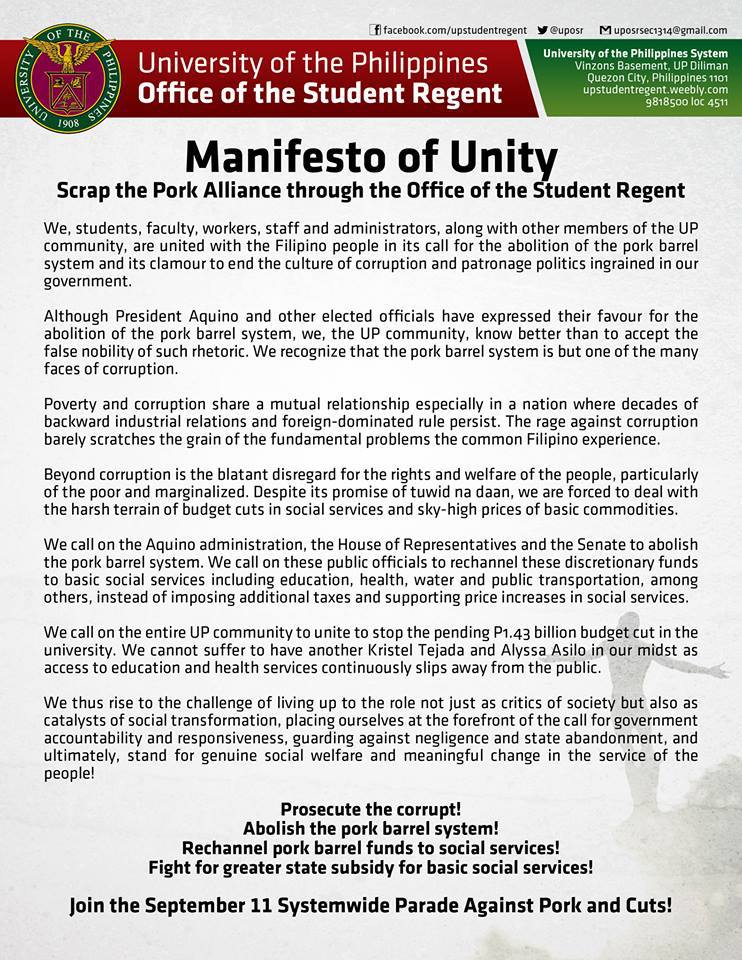
Manifesto of Unity

Filipino Governance: Democracy is No Longer an Option

Or so I thought.

With the issues at hand in the current political system and governance, I can no longer stay mum and just ‘do my part.’  Sentiments of irate citizens are everywhere. If I am to say now that you join me in praying for our leaders and our country and leave it all to that, most likely I will also have a piece of the pork used in the Million People March at Luneta last August 26 thrown at me.

Yes, I understand. A social upheaval against the government means only one thing – it is a call for action. It is time for the public to learn from the consequences of vote buying, of previous officials charged of graft and corruption being reelected in office to just being plain forgiving. Mistakes are repeatedly committed because no one was ever convicted guilty of graft and corruption and has been justly punished for it.

The irony of it all is this – we, Filipinos, are being punished for having the ‘soft’ culture. Is it my conscience that is urging me to speak out and condemn? No, a conscience that goes far beyond my not voting during elections for a decade already. I never cared, it never mattered. My one single vote for a good official is nothing compared to the millions who voted for the wrong ones.

Red

Red

Red symbolizes love and passion yet it also symbolizes rage and war.

I raise red.

A love-hate relationship with my country and my countrymen. But I am a Filipino, I have a ‘soft,’ forgiving heart. I live in the Philippines, it is a democratic country. I am bound by the societal rules but I follow one ruler – God. I chose to pray, to live well and do what I can do in my own little way. How? By asking God through a prayer to lead me to what it is that He would want me to do for me to be able to help.  I will wait for His instructions. How will you know? You will know. All you have to do is trust God and Him alone.

Whatever the results of the investigation will be, I will continue doing what is good for this country through the Lord’s guidance. I will not just sit and wait for legislators to do their jobs. I will do my job as well as a citizen – not just by paying the taxes alone but extending help to those who may be directly or indirectly affected by the inconsistencies and irregularities in our current political system. Share what you know to help your fellow countrymen.

I say, ACT NOW. 

Ideas, Answers and Waiting

“Education is the most powerful weapon which you can use to change the world.” – Nelson Mandela

Wisdom and knowledge are two different things. My small group in church led by our Victory group leader, Sheryl, shared a discussion on this two Sundays ago. Just to get to the basic definition of the two, knowledge is all about facts, wisdom is how you use those facts for good.

Nowadays, education is regarded by most as a tool to gain knowledge. My question is this – is wisdom being taught in schools as well? Or is it what most would say too – education happens everywhere. Learning so to speak. Or could it also be this – the school prepares, the society teaches. The school offers knowledge, society and life in general teach wisdom; theory for the former, application for the latter.

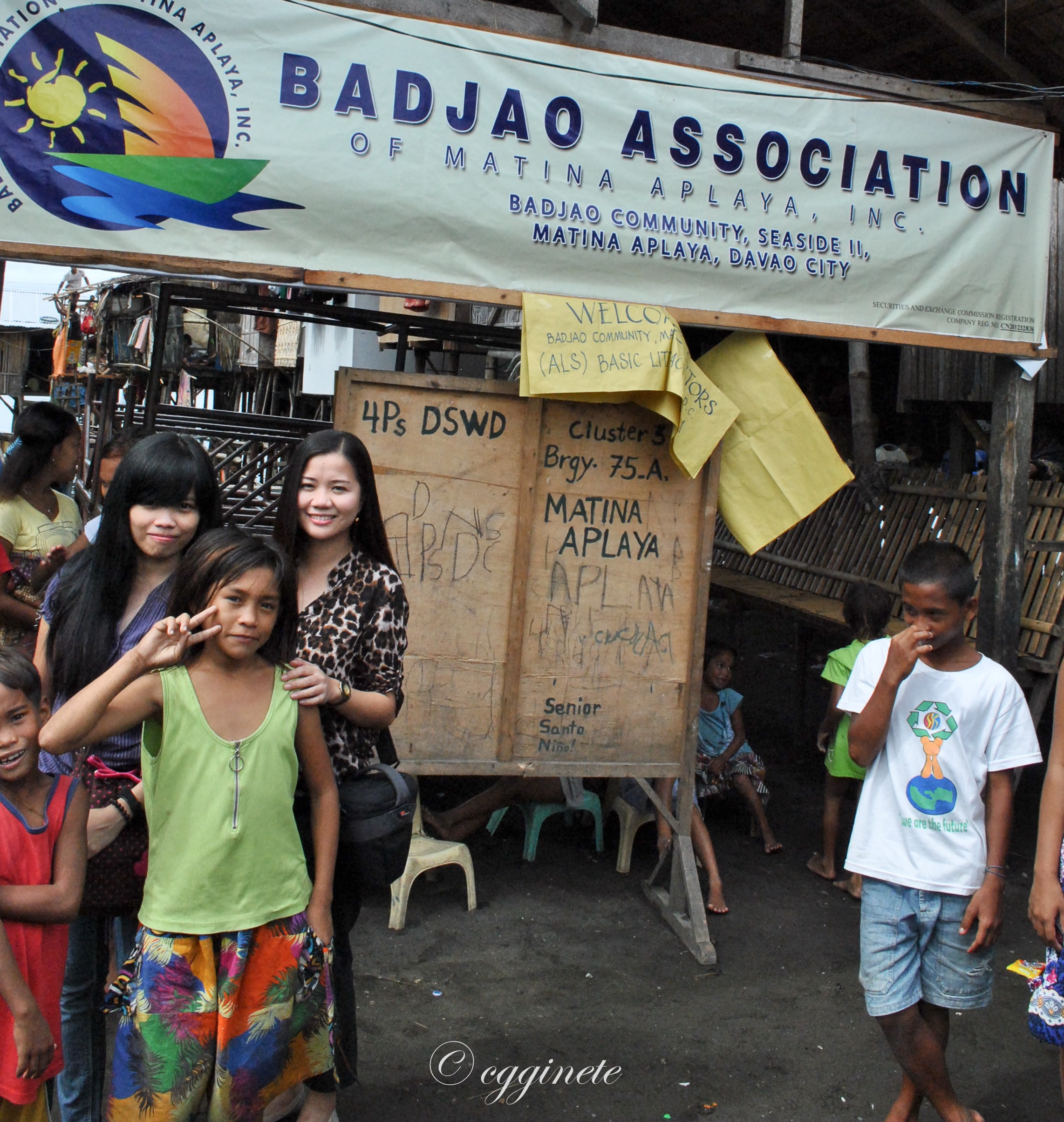
Concepts can be very passé. But time and circumstances can change them. I aim to educate people. I see myself doing more of what is in the photo below – extending educational services to those who do not have the privilege to be in schools in the future. I also am still in the stage of gaining knowledge to gain wisdom when I get the chance to be out in the field and apply them – prepare and equip first. The photo below was taken during our visit in the Badjao community in Davao City to observe how the community runs the Alternative Learning System.

Alternative Learning System in the Badjao Community in Davao City, Philippines

Alternative Learning System in the Badjao Community in Davao City, Philippines

But I have one challenge to myself and to other educators – the bible, THE book of all books. Didn’t you know that even for us, adults, more can be learned from the bible? I believe I need not ask because that’s a given, a stated fact. Yes, a lot of articles and books are out there to teach us about a lot of things. But the basic foundations of learning can be found in the bible.

A lot have interpreted the bible. A lot have quoted the verses. Some used it to condemn. Some used it to glorify. I have no right to judge and say who said it right, who interpreted it wrong. Because I personally believe they are all correct. I do, however, think that the bible was created to serve as our personal guide and as a reminder when we tend to be dissuaded every now and then from our good faith and in our beliefs. But it is still through God where we can gain greater wisdom. Read the bible, ask God in a prayer to reveal what He meant by those verses that you have read. Share your testimonies and experiences, back it up with the bible verses. In other words, pattern the knowledge acquired from the world through the bible.

Culture wise, it is difficult to incorporate everything – Christianity, scientific knowledge, and wise, practical ways into one bundle and be rest assured that all is learned. It is a constant dilemma, a difficult proposition, a challenging task. This is where I hope to seek wisdom, this is how I seek wisdom. Thus, I go back to the highest and superior mentor and teacher, I ask God. But God most likely will say – the first thing that I wanted you to learn is this – patience. Have that and then you will have your answers. They will be revealed to you at the right time.

Thus, I end this article, I keep quiet and I wait.  🙂

The Great Divide

Canyon Cove in Nasugbu, Batangas

Canyon Cove in Nasugbu, Batangas, Philippines

Sand and sea, land and water.

While taking a photo of the scenery by the beach at Canyon Cove in Nasugbu, Batangas, snippets of what I learned in the academe came through – society, its people and the barriers.

If partiality bespeaks of the unfair divide in the dichotomy of social statuses, will there ever be equality in favor to what majority of the public is comprised of, thus magnifying the basis of and for existentialism?

It is the least of my concerns, most people would say, but the thing is, I see it every single day. And it strikes, it kills.

On a less serious note, accuse me now of verbosity, yes, I am indeed guilty of the crime.

Undeniably guilty. 😉

The Very Inspiring Blogger Award

veryinspiringblogaward

It is with sincerest gratitude that I accept the nomination for the Very Inspiring Blogger Award from a fellow blogger, wordrummager.wordpress.com – it truly is an honor and a privilege to be an inspiration to others. 🙂

The rules of the award are:

1. Display the award logo on your blog.
2. Link back to the person who nominated you.
3. Nominate 15 other bloggers for this award and link to them.
4. Notify those bloggers of the nomination and the award’s requirements.

I therefore would like to share the list of wonderful blogs that have inspired me all throughout my entire blogging experience:

1. marinakanavaki.com

2. jacquelinemhadel.wordpress.com

3. everydaypowerblog.com

4. positivelypositivity.com

5. blog.echarta.com

6. talentflushblog.com

7. cyndipachinophotography.wordpress.com

8. artscottnet.wordpress.com

9. urbanwallart.wordpress.com

10. gratitudenist.wordpress.com

11. www.joeseeber.com

12. chrismartinwrites.com

13. peakperspective.com

14. ajaytao2010.wordpress.com

15. hannahsterry.com

16. cristianmihai.net

I still have a lot more to list down actually as each and every blog here in WordPress has its own identity and is inspiring one way or the other. But for starters, the blogs above are all a very fascinating read. That, I can attest. 🙂

All About Davao City: Dissecting Its Educational System and Its Culture

Though it was my second visit to Davao, I must say that the place never fails to amaze me, geographically and culture wise. It was a trip to Talikud Island when I first visited Davao along with my co-workers way back year 2009 as my supervisor was a “Dabawenyo” (a local of Davao city). But if there is one thing that differentiates this second visit from the first, it would be the visits to the schools.

5733_1068079672973_5286359_n

With former office mates (2009)

5733_1068091153260_5986630_n-2

Davao’s Talikud Island

9328_1108288598171_6034786_n-2

Davao’s pristine waters

My second visit to Davao was with my fellow graduate students last February 16-18, 2013 as the field work is part of our requirements in our Socio-Cultural Foundations of Education class in UP Diliman. Before the trip,  I already have my own expectations about the visit i.e. what we would learn regarding the different educational systems that they have in Davao, what kind of classrooms do they have, what kind of students do they cater, how do teachers instruct students, what are the materials that they use for teaching, etc. And as far as my observations are concerned, somehow all my expectations were met and even more.

17

Pamulaan (Center for Indigenous People’s Education)

18

Pamulaan

If there is one thing that I find particularly significant about the educational systems in Davao, it would be the support, active participation and involvement of the local government with regard to the implementation of the said systems. Like for example in the Badjao community, the ALS (Alternative Learning System) program provides opportunities for the settlers in that community to participate in socio-civic affairs which would then allow them to raise their concerns and the issues that need to be dealt with i.e. health, source of livelihood, promotion of wellness for every family, etc. But it posed one certain dilemma – the idea of culture slowly diminishing once the Badjaos were educated. I believe educators, through the mobile teachers, are not just sent out to the field to teach the basics of writing and reading to the people of the Badjao community, old and young. It is also their responsibility to teach the Badjaos how to preserve their culture through the knowledge that they have acquired. For example in folk songs, these can now be written and preserved for the future use of the next generation. In the ALIVE Madrasah, for example, the children were taught Arabic, which is, preserving the native language by passing them on and by teaching them to the younger generations. MTBMLE (Mother Tongue-Based Multilingual Education) also has the same aim and in the class that I have observed, children are more receptive, they are more at ease when it comes to learning and they do participate actively in the discussions. The ALS at the city jail, however, may not be inclined to cultural preservation but it somehow shares the same vision to that of the E-skewala Program and the Open High School of the Davao National High School which look into holistic development of skills to those who may not have the same opportunities as what regular students commonly have.

19

Badjao community

3

ALS among Badjao children

2

Badjao girl

All the educational systems that we were able to visit in the selected schools in Davao hold one very good vision which would benefit all – both the indigenous groups and the non indigenous groups. I see this as satisfying one very important goal and should be the main goal of every educator and every educational system – breaking down barriers when it comes to providing opportunities in terms of knowledge acquisition, cultural ventures and holistic development of every individual. The Pamulaan College and the ALS at the city jail are very promising projects considering that learning is not held in a regular classroom setting/school. It posits greater challenges not just for the educators involved in running the program but as well as to the learners themselves. Indeed, the society, as a whole, has a huge partaking in making the program a success. For example in Pamulaan College, one challenge that I see in the implementation of their mission is considering how open the society would be when it comes to promoting culture and passing it on by teaching the cultural traditions, beliefs and practices to the younger generation. The idea may sound interesting to foreigners and those who are not particularly in the area, but will the locals, themselves, voluntarily participate in promoting the advocacy and not because it was required by the city government of Davao? It is imperative in every advocacy/mission that they should aim for the success of the system taking into consideration that its success entirely depends on how involved the community is and not only with the supporters and the organizers who run that mission.  I also would like to put emphasis on what kind of opportunities will the graduates of the college have, career wise and will they still devote in promoting the college’s aim even after graduation. As for the ALS in the city jail, it is a huge responsibility not just for the educators but also for the government officials concerned with the project to make the program not just as a one-time, testing project but that its implementation will remain consistent regardless on who holds office both in the department of education in Davao and the local government.

I have observed that when it is time to change officials, the problem lies in keeping the projects running implemented by the previous officials and maintain consistency. Newly elected/ appointed officials also would like to raise and push through with their own projects regarding the educational system and society in general. It will continue to be a greater challenge that a very good collaboration between the local government and the educators would push through as any tension between the two when it comes to promoting projects will and can affect the status of the implementation of said programs.

Learning the culture part is where leisure would come in. Yes, the less serious part. I must say that our dissecting Davao’s educational system started and ended on a very positive note. And to cap off the 3-day field work, we have decided to tour around Davao city’s local hot spots at the last day of our stay there. If there is one thing I can say about Davao’s cuisine, it may not be far from the regular dishes we have in Manila, but the recipes have a slight twist to it, making them as a Davao original.

4

Davao Restaurant

5

Davao Restaurant

7

Davao Cuisine

6

Davao Cuisine

15

Jack Ridge’s Restaurant

1

Jack Ridge’s Restaurant

We were able to visit tourist attractions such as the Crocodile Park, the Butterfly house and the Japanese tunnel which all contributed to our having a very fulfilling field work/vacation. I may have been to Davao for more than once already but there will always be something more, something new, and something exciting to look forward in Davao city. Yes, 3 days are not enough for me to completely acquaint with the place and learn more about its culture.

16

Tarantula at the Butterfly Farm

14

Japanese statue at the Japanese Tunnel

13

The Japanese Tunnel

12

Lotus Pond at the Butterfly Farm

11

Butterfly

8

Davao Crocodile Park

10

Butterfly Cocoons and Larvae

9

Davao Crocodile Farm

Therefore, it is decided that I will make it a point to visit the place – OFTEN. 🙂

I Have Made A Friend – In Jail

Davao City Jail

Davao City Jail

No. I wasn’t arrested. Just in case you are wondering. 🙂

It was my first time to be in jail. I was nervous. I have always thought of prisons in a very negative manner – a correctional facility for the “bad guys” of society. I expected to see and experience the worst – prisoners taunting us, throwing things while we are looking around, screaming, dirty environment and prison cells.

That was before I entered the compound of the Davao City Jail. When I got inside, I was surprised. I saw colourful homes with curtained windows, flowers, plants, trees and a pavilion with a stage decorated for a program. I saw women sweeping the yard, washing laundry, creating and weaving handicrafts –  it doesn’t look like a jail at all.

Yes, the jail wardens referred to the jail houses as “cottages” and the prisoners as “bakasyonistas” or “tourists.” Their quarters are indeed small cottages and if you weren’t informed beforehand, you might think that there is a small community inside. Except that the settlers are all women – a correctional facility for female prisoners.

Slowly, I became more comfortable as our guide, who happened to be one of the prisoners also, toured us around and explained what the “bakasyonistas” are doing, what the particular cottages are for and how the system in that community works. Our purpose for the visit is to learn about how they run the program on ALS or Alternative Learning System as part of the requirements in one of my classes in my graduate study at the University of the Philippines in Diliman.

The ALS aims to provide opportunities for these women to study and learn while inside the facility to help them earn for a living through the income generated from the handicrafts that they have created. As for the younger women, this will be an equivalent to a vocational course that would certify them of getting decent and promising careers outside when they have served their terms and are released from the facility.

Most of the “bakasyonistas” were detained due to drug-related offenses. Some accounts are based on a drug-busting operation and they just happen to be included because they were at the scene when the operation happened but were innocent of the crime. A classmate of mine and I were given the opportunity to interview one “bakasyonista.”

Her name is *Rosa. She is 25 years old, 2 years younger than me. She has two kids already and she’s been in the facility for about almost 2 years. She and her husband were separated even before she was arrested. When I saw her, I never felt any apprehension how to approach her. She seems harmless. She greeted us with a smiling face, a bit shy. She carries a very light expression about her while we were conversing. We asked her about how she finds the ALS program and found out that she is one of the staff in-charge with the art decorations of the stage. She said that she loves to do art works and she is also one of the women in that community who weaves ladies’ bags out of straw.

She said that it is a very good opportunity for them that they are studying through the ALS because it gives them hope. It gives them another chance to start something good for a new beginning when they leave the facility. I asked her what she plans to do after she has served her term, she said she plans on putting up her own handicraft store and she wanted to see her two kids as she missed them so much already. She said that she seldom sees the kids as they are studying and her mom and relatives are also too busy to pay her a visit. They get to visit her once or twice a year. I asked her when her term will end. She was silent at first, looked at her hands laid out in front of her and then, she cried.

She doesn’t know for how long she will stay inside the facility. In between sobs, she told us she misses her children so badly. Sometimes, even if the facility seems to be a good community and they are treated pretty well, it still feels lonely. She said that yes, they may be seeing homes, flowers, plants – a regular community, but at the back of her mind, the thought still remains that they are prisoners. That though they may be free to roam around the compound, they still can’t leave the facility and mingle with the rest of society, free to do anything they want.

At that time, while she is talking, I wanted to cry too. But I just held her hand and listened. By the end of her story, I told her with a smiling face, “Don’t lose hope. Have your faith in God. He will give you the strength to overcome all those feelings of loneliness and hopelessness. You will get out of this facility, you will be free and you will be able to see your children soon.”

I changed the topic as soon as I said that to prevent her from crying even more. I asked her what she did on Valentine’s Day. She told us that she was one of the “bakasyonistas” who conceptualized the theme for the stage decoration and yes, she had a date. After saying this, yes, the light, bubbly *Rosa was back again. I teased her. I asked who the guy is. She told us that the guy is one of the male detainees at the men’s correctional facility which is the compound next to theirs.

So I wondered how they got to know each other. She said that it was through a dance group, where she and the guy were members, while they were practicing for a dance presentation. After that, they have been sending love letters to each other through a window. She is blushing while saying all these and I can’t help but feel happy for her.

When our professor told us to wrap up the interview, I asked her if she can show me some of the handicrafts she made. She showed me a purple and blue shoulder bag. Being a fashionista, I liked it right after I saw it. I asked her how much is it. She told me it is worth Php350.00 which is equivalent to US $7. I gave her a 500-peso bill and told her to just keep the change.

I was expecting her to say “Thank you” and only that. But no, she hugged me tight, almost jumping from joy, smiled, and told me, almost crying, how grateful she is. She just could not thank me enough; she told me she will use the money to buy her youngest girl a new pair of school shoes. She then told me to wait because she has something more for me. I told her it is fine as we are also about to leave. But she still insisted, so I gave in. She returned a few minutes after with a coin purse and a belt made of the same color to the bag I bought. She is giving them to me, for free, so they would match my bag.

Image

*Rosa’s Handwoven Bag, Belt and Coin Purse All Made of Straw

When she said that, it was I who wanted to cry right then and there. It is a good thing I was able to control my tears. I thanked her and just told her how nice of her to do that and for having a big heart. I told her that I will never ever forget her. I asked her how I can contact her. She gave me the number of the facility and her full name. Afterwards, I hugged her tightly again and she hugged me back just as tight, smiling with a light and happy heart. I, then, bid her farewell.

As I was inside the van with the rest of the class on our way to our dormitel, I began to replay what just happened. Those few minutes that I got to talk to her, see the community and hear their stories, I felt like I have learned a year-worth of experience.

As the facility is starting to get smaller and farther from our view, I can only utter a prayer. A prayer of hope for *Rosa, her children and her family. A prayer for her that she would continue to look into life on a positive perspective despite what she went through, going through and her sacrifices. That she would continue to hold on to her dreams despite all the feelings of loneliness, depression and hopelessness.

Yes, I have faith. I told her to have faith. God is good and loving enough to answer prayers when we repent and ask for His forgiveness. He has a purpose for every single thing that we experience. I told her to be patient. God makes all things beautiful in His time. Just trust and obey.

Lastly, I pray for her heart, that though it may have been broken, though it may have been tainted, it still would remain to be capable of loving and caring.

It was golden. That moment was golden.

Dating Defined

Before the “love month” ends, I thought I might post something related to matters of the heart which I normally don’t do. Thus, this article. 🙂

If you are to ask me about my thoughts on dating, I believe I have quite a set of ideas that are mostly not in tune with everyone’s ideas on dating. First, let’s define “dating.” The notion of dating is relative. Some of us view it as 2 persons going out together either to watch a movie, have dinner, etc., all leaning towards a romantic inclination – a relationship. Others simply define it as a casual hanging out similar to how they hang out with their friends.

I don’t believe in friendly dates like between a girl and a boy who do not know each other completely because yes, it may not be explicitly implied but the attraction is there since they both agreed to go out together for starters and yes, they are open to the notion that they would end up as a couple after some time. Again, because the attraction is there. You would not go out with someone you are not attracted to, would you?  😀 It is impossible to say let’s go out, let’s just have fun, just enjoy the time being together, etc. and only that.

There will be expectations. That’s a given. Expectations not regarding the person per se but more on how the date would end up. Like would you still go out with that person? Do you enjoy hanging out with that person? So friendly dates, for me, are a no-no, romantic dates would be better after you have been friends for a long time and have spent time together along with a group of friends. Intentions in romantic dates are laid out clear in the open, no room for wrong assumptions either on both parties.

This is another reason why I simply don’t go about dating any guy I like on friendly dates. Why? Because they are all automatically commoditized when you date one from the other thinking that because it did not work out with this one, I’ll just move on to the next.  Exactly the same as buying something from the market. It is definitely not a good way to start a relationship. Now, you most probably would wonder how, then, will I find out who is the right guy for me. Well, I may partly be a cynic at some point but I still believe in fate and faith (God’s plans), patience and waiting (God’s time). Who knows, I might find him while I am dating with my friends and within my circle of friends. 😀

How about the notion of love at first sight, then? Like I have never seen the guy before, never been friends with him and yet I fell in love with him at first sight? Tough question. Which would lead to another tough discussion I opt to stay away from – the definition of love. 😀

Nah, let’s just leave it all to the element of surprise. God’s wonders work in amazing ways, anyway. 🙂

Why I Share

Image

Sharing.

Yes. Inspirations solely come from how we see other people and what we see from other people – by what they share and by what they do.

It is neither for popularity, for awards, nor recognition that’s why I post and write articles in my blogs and websites. I do acknowledge the awards as a courtesy to those who have appreciated and recognized my works. My sincerest gratitude goes out to them. The same thing when I post photos and statuses over Facebook or any other social networking sites.  The ‘likes’ are highly appreciated but I just regard them as an added bonus to my main purpose – to SHARE interests  and thoughts, to make CONNECTIONS with people who share the same passion and ideas that I may have and ENCOURAGE those who don’t by giving them something new to learn, something new to try and something new to discover.

People have different interpretations of what they see. There are pros and cons when an idea is laid out in the open for the entire world to see. A single thought can spark a gazillion feedback and ideas. Yes, I am speaking of an issue going viral especially on the internet, nowadays. There are issues that fueled debates, some got conclusions, while some are still, yes – heated debates. A certain post, a certain idea, a certain action can either turn you into a hero or a victim of cyber bullying. That is why sharing will require someone to sum up great courage and patience.

We, writers, are often misunderstood. There are times when by sharing, we gain more detractors than supporters. But I take it on a positive and light note. It indicates that they have pondered upon your thoughts to come up with their own interpretation even if it means contradicting yours. It is, in fact, good. That is freedom of expression and it is everybody’s right. Democracy, in other words. The same way I have exercised this freedom through writing and letting the world know what I have in mind.

By sharing, you give your interpretation of the world to the world. You are giving another option for people to think about. The more options we have, the broader our knowledge becomes. When we think on a wider perspective, we become more accepting, more understanding, we learn to respect. Sharing what is good will harbour good responses. Sharing the negative ones will create a negative atmosphere. Just like what we see on televisions nowadays. Violence will foster violence and harmony will foster peace.

But it is not always the one side of a coin that people should know about. They needed to see the other side too. They needed to be informed, they needed to be warned. That’s when a writer starts trusting his/her instincts what is highly relevant from what is not and be responsible about sharing so as not to create a negative atmosphere and promote a negative value through his/her post.

At the end of the day, it is good to reflect on the comments, suggestions and insights of other people, the good and the bad ones. But at the end of it all too, you have to go back to the very reason why you posted that idea, that thought. It will refrain you from thinking negatively and reacting negatively. You have to remember that you needed to SHARE – to provide another insight, learn other insights too and INSPIRE other people.