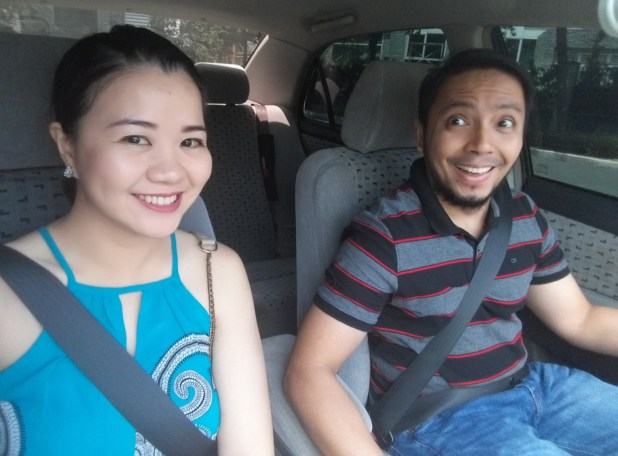
Hello, everyone! This has long been overdue because August, for me, was the busiest month. I had to juggle several responsibilities at the same time. I thank the Lord, though, because when September ushered in, I was able to “breathe a little.” Thus, this article. 😉
I am writing this blog post to commemorate our 4th year wedding anniversary last month. Hubby and I celebrated it with a simple dinner and some well-deserved pampering.


I guess that’s what really happens when you’re getting older. Any free time you get, you would rather choose to spend it by resting. 😀 We do hang out, though, with our families and friends every now and then just to maintain balance.
Why Hosea?

I encountered the story of Hosea in the Love Dare book lent to me by my Victory group leader last year when I was going through tough times in my marriage. I diligently followed every dare in the book, and there were times a dare would move me to tears because I was so convicted.
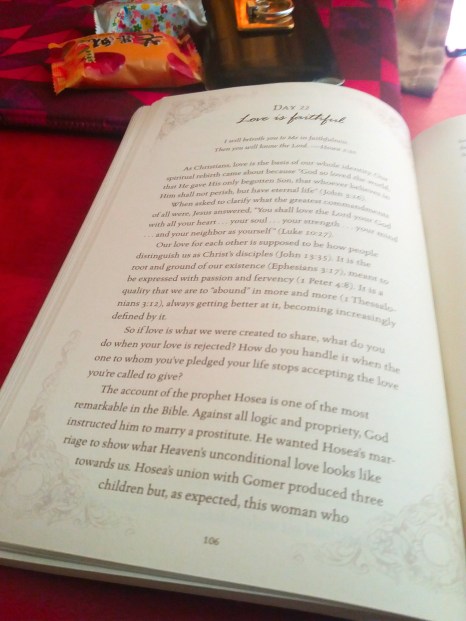
How could I not know the right way to respond as a Christian wife in the relational conflicts between me and my husband?
The book just laid bare everything vulnerable, crooked, and imperfect inside me. With them all exposed, however, I was able to deal with the real issues behind some of the conflicts I had with my husband.
One of them is fear. I was so driven by it that little did I know the enemy is already using it against me and my husband to his advantage and to destroy God’s beautiful promises for us. It’s just timely that this year’s wedding anniversary reminded me once again of our Bible verse during our wedding back in 2015:
“Such love has no fear, because perfect love expels all fear. If we are afraid, it is for fear of punishment, and this shows that we have not fully experienced His perfect love.” – 1 John 4:18
Next, it was lack of faith. While doing the dare, there were instances where I felt a part of me was wrestling against doing it.
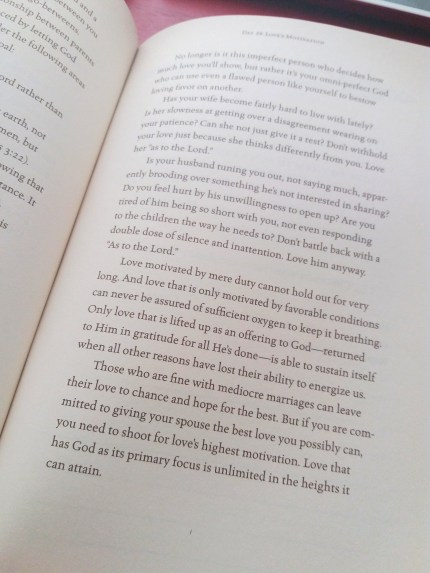
What I discovered is that I wasn’t humble enough as I claim to be, and there is still pride lurking deep down. I still relied on my own efforts when dealing with tough relational issues instead of trusting God, for one.
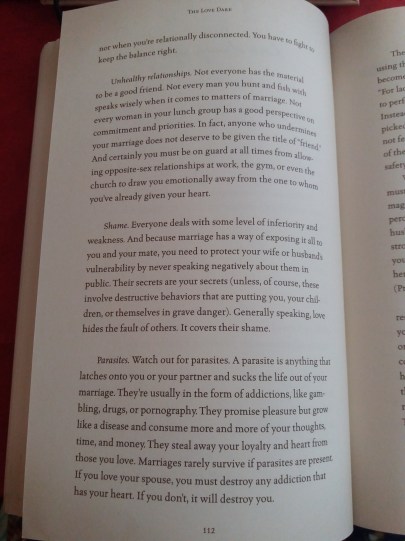
The Love Dare book didn’t just reveal parts of me that I needed to work on, but it also showed me how to better appreciate my spouse and his efforts to make our marriage work. I am sure you are curious by now to find out if it indeed resulted in a more positive and healthy relationship between me and my husband.
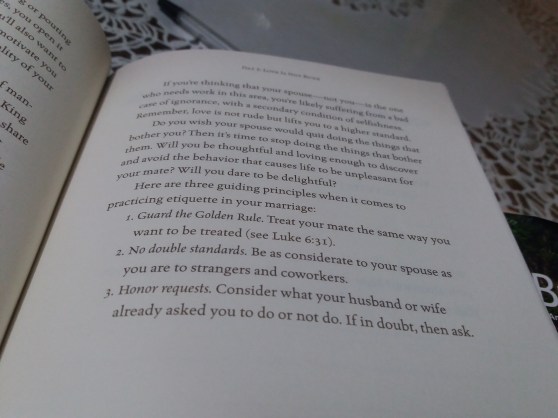
I can say that it did, for the most part, and yet for the majority of the changes, they did not happen overnight. They all required a great deal of discipline in order to see satisfying results. I am just grateful that both my husband and I are willing to work on our marriage regardless of the amount of effort and sacrifice it requires. Yes, we are still a work in progress, and God is definitely not done with us yet.
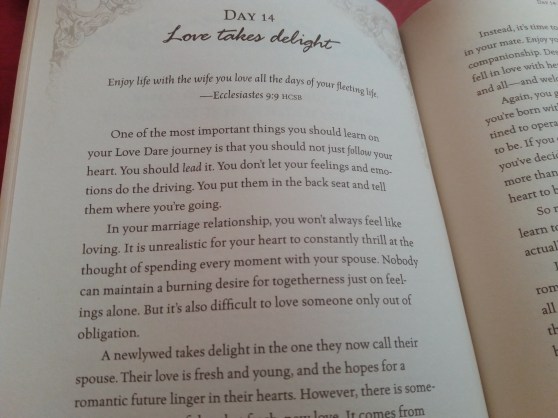
When I did the dares in the book, I decided not to wait for my husband to change first before I follow suit. If he does or doesn’t change, that is between him and God. But God’s calling for me is that I change now.
Will I recommend the book?
Definitely.
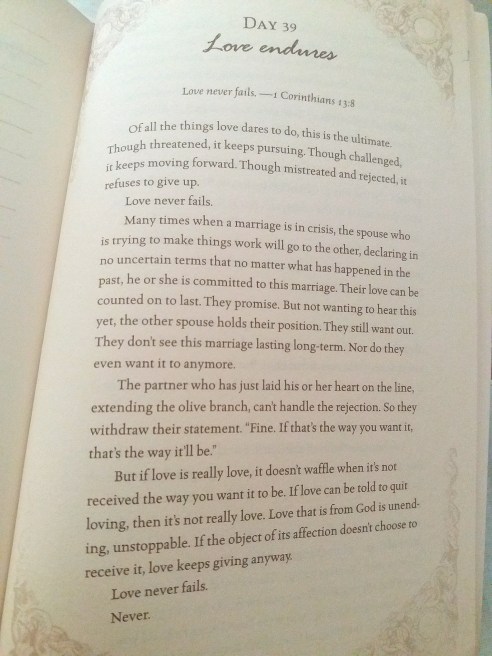
I am sure any husband or wife out there can relate with every dare in the book 100%, and if you’re going through rough seasons in your marriage, I highly recommend it. It’s also included in the Fireproof movie hubby and I watched a couple of years ago. I already have an idea of what the book was all about, but doing the dares, yourself, is an entirely different case.
Who is Hosea?
Hosea, in the Bible, is a prophet who was called by God to marry a prostitute. The story revolves around the prophet’s obedience to God in the midst of adultery, which was prevalent in God’s people during those times.
After getting married and having children, Hosea’s wife left him and unfortunately went back to prostitution. This was a very heart-wrenching experience to the prophet. It extremely tore him apart and yet, God asked him to do the most difficult task – ask her to return to him as his wife.
After leaving Hosea and going back to prostitution, Gomer (Hosea’s wife), got herself into undesirable circumstances and was sold as a slave. Hosea, though, still loves her. So, when God instructed Hosea to buy his wife back, he obeyed. He dismissed his own pain as seeing her would probably mean bringing back all the hurt of her leaving him and her sexual promiscuity with different men.
Gomer was full of remorse when Hosea bought her, but he did it on one condition – that she will completely let go of her past sins as a prostitute and repent.
What can we learn from Hosea?
God used the marriage of Hosea to Gomer as a representation of His unending love for His people despite their sinfulness and disobedience. God will continue to make all efforts to bring His people back to Him because that is what He is, He is love.
And there’s just no greater avenue to display the love of God than in a marriage. 1 Corinthians 13 portrays who God is as love, but there are other passages in the Bible that also describe what love ought to be such as loving your enemies and your neighbors as yourself.
The Lesson Of Hosea In A Marriage
When we love our enemies whom we don’t have a close relationship with, we sure can deal with it easily. But in a marriage, it is a tad more difficult and requires greater faith and more grace. To share one roof and sleep beside your enemy is already challenging enough. What more to love whom you disdain every single day?
Yes, there will be times in your marriage wherein you’ll feel you married your worst enemy. Your spouse can be your worst enemy because he/she knows so much about your weaknesses that nobody else does. And yet it doesn’t have to be that way if you choose to see your spouse in a different light.
This is where we can apply the lesson of Hosea’s love story. Just as God will choose to give chances to His people no matter how grave their sins are, then we, too, should do the same. When we were called to be married, God called us to love our spouses just like what Hosea did.
Every Marriage Was Orchestrated By God
I don’t believe in coincidences nor the idea that God does things based on trial and error just like in marriages. I believe that every marriage was orchestrated by God for us to fulfill a certain task. We are the only ones who can determine what these tasks are when we ask God sincerely and devote ourselves to obeying Him and His instructions completely.
Whether our marriages are failing, surviving, or thriving, God has a purpose for it, and this purpose will vary depending on each and every couple. My purpose in my marriage might be different than Hosea’s or any married couple out there. But they all have one goal – to display God’s unending love because that is who He is and that is who He wants us to know and follow.
This is why I don’t judge married couples whether they have God-centered marriages or not for now. Through the story of Hosea, I have surmised that we are not in the position to judge whether a marriage will last or not or decide for a person who he/she must marry. Because every marriage will go through seasons and in these seasons, God will use circumstances to fulfill His greater plans.
It Is A Calling
A marriage is a calling. The choice to marry a person doesn’t merely happen by chance, and it isn’t based on our own free will alone. God also has a hand in it. When I was single, I would read articles on who to marry or what is the type of guy/girl who will fit your personality. And yet reading the story of Hosea changed my perspective on relationships and marriages. It called for an understanding beyond legalism and pre-set doctrines that the world has dictated.
The Bible did state to never be yoked with an unbeliever. My interpretation, however, is that it should be taken with a grain of salt, and it depends on a case-to-case basis. What if the same calling similar to Hosea’s happens now in our generation? As a church, we can only respond to it with prayers. We can never judge because we don’t know what God has planned for a certain couple.
All we know is that it is in a marriage that God calls us to exhibit the greatest of them all – LOVE. We should always remember, too, that no marriage is ever a failure in God’s eyes as long as we seek His counsel on how to run our marriages. 🙂
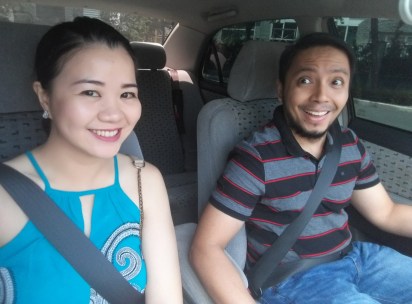
Always the goofy husband, when he’s in the mood. lol 😉
Called by God to be a Christian wife in every circumstance,


 The Journeyman's Moments