The musings of a wandergeselle about faith, literature, music, dancing, culture, food, travels, art, fashion, photography, life experiences, and everything in-between from journée to journée.
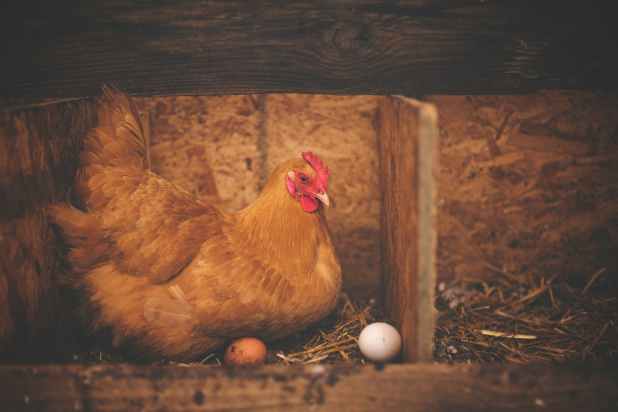
Yes, this Mama Hen is a chicken and refused to go back to her previous owner. She’s probably scared of being court-martialed for going on mutiny and being sentenced to death by grilling.
Rogue Chicken
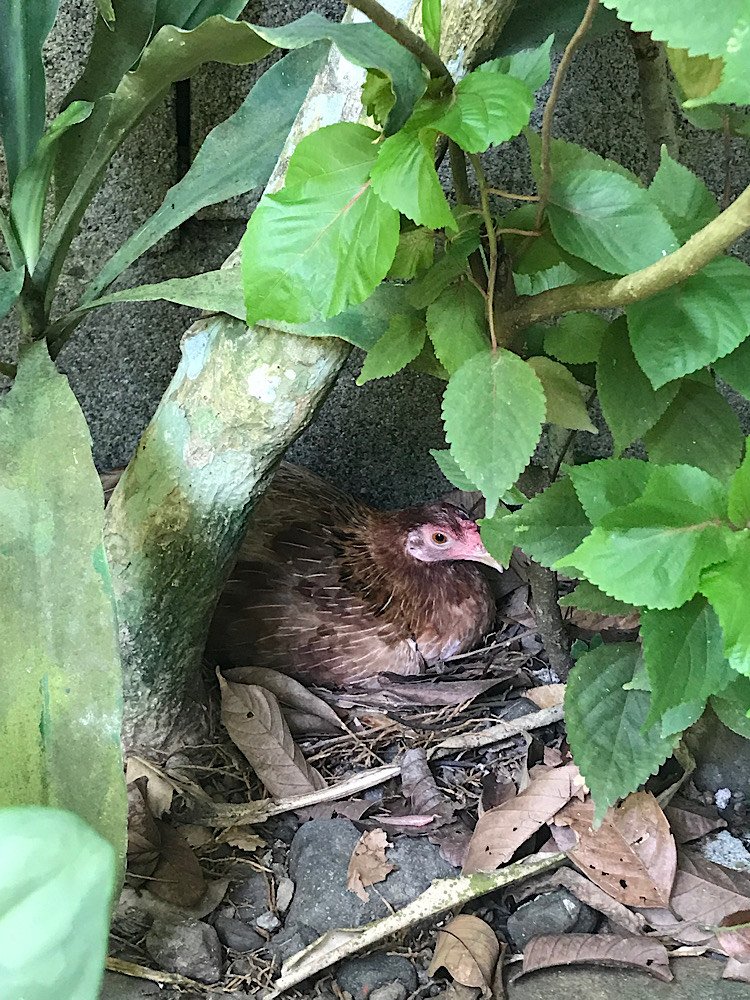
I’ve been shooing and chasing her around the yard a hundred times (that would be precisely 100 steps), but to no avail. She keeps on coming back and even chooses to lay her eggs under our garden plants.
There’s something about the numbers “7” & “8” lately.
So, I asked her to get to the bottom of it all:
Me: Are you scaredy cat?
Mama Hen: Well, obviously not. I’m just a chicken.
😂😂😂
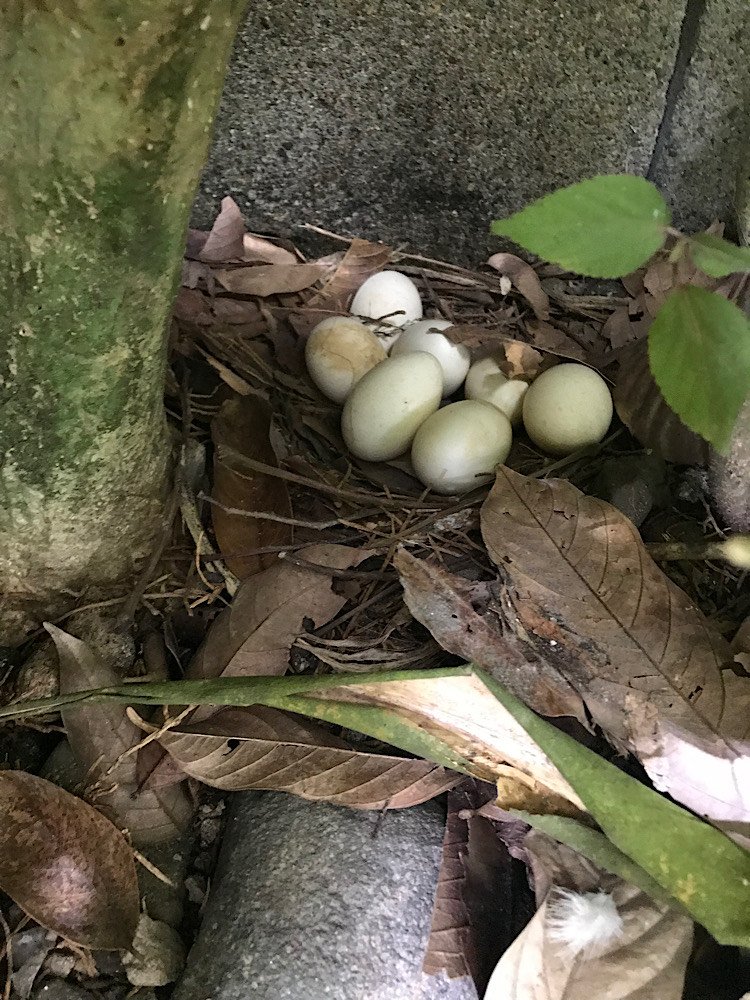
To be honest, we’ve already asked the neighbors if the chicken’s theirs, and they said “no.” So we just decided to keep her and her 7 eggs if ever they hatch.
The chickenthat came from nowhere.
I already ordered a chicken net online for the old chicken coop (used previously as a turtle’s cage) that we have here, so her future chicks won’t be scaredy cat of being eaten by real cats.
It looks like this Mama Hen was sent as an unexpected blessing because poultry farming is also one of the projects that we plan to pursue and integrate into our farm. I already created a business plan for it, I’m just waiting for God’s perfect time when to start if it is indeed part of His plans.
Mama Hen chose this perfect spot to lay her eggs.It’s just challenging to “redesign” her cage. But glad to see she’s all dry even during rainy days.
So, Mama Hen should really chicken out because she will be my very first case study for backyard poultry farming. Though I think the probability of her becoming a dearly beloved pet is 99.9%. 😉
We all have this picturesque dream of living on a farm someday – an escape from the chaos of the city. Yes, it is indeed a beautiful dream, but it can also be a nightmare if you are unprepared.
Farming is a calling. It is not for everybody, and it is not a walk in the park. It is also not just about growing crops, harvesting, and selling them. Or putting up a homestead as “bahay bakasyunan” and everything will go well.
To help you decide if a farm life will best suit your needs or not, here are some of the disadvantages of living on a farm based on my observations and the challenges we have encountered:
Security of the Area
I placed this as the top priority among the farm tasks. Now that inflation and global economic recession are likely to worsen in the coming years as experts predicted, anything on your farm is of value to anyone who does not have them. Trespassers and stealing will be a common challenge at the farm.
Just recently, may mga umakyat ng bakod namin dito sa main house in broad daylight to harvest our rambutan. To think na nasa poblacion ito at hindi sa bukid, we have 3 guard dogs pa, and andito lang din kami sa bahay. Pina-blotter namin sa barangay dahil may mga kapitbahay na nakakita sa kanila.
Sa bukid naman maraming constant na trespassers at paguwi ay may mga dalang ni-forage nila galing sa mga tanim sa loob ng farm. Nanakawan din ang farm house namin ng sink, mga pinto, etc. back when walang nakatira doon.
You might want to read articles re trespassing laws in the Philippines to get tips on what to do if ever you encounter a similar issue.
Barbed wire fences don’t offer much as deterrents, but are only useful as land markers to delineate boundaries. If you want to keep your farm secure, you have to invest in electric fences (quite expensive especially if you need to cover lots of ground area), CCTV cameras (lots of them), and other anti-theft devices.
Know the Surrounding Community
What type of community surrounds your property? If you plan on living at a farm after retirement, will your family move in there with you? Because if not, it might be too risky to live there alone or with just your spouse when both of you are senior citizens already.
Who else will you be living there with aside from your parents? Are your children willing to relocate and transfer homes, especially if they grew up in the city?
It’s best if you have neighbors whom you can call for help during emergencies. They are also the best persons to ask re the topography of the land especially if they lived there for quite some time already.
Assess the Area for Water Sources & Electricity Connections
A farm needs to have a reliable water source if the area is not yet covered by your local water provider. If the property is located near a river, make sure the river doesn’t dry up during the summer season. Also, is it near the main power lines? Kasi kung malayo pa, ang mahal mag-invest sa solar panels.
Determine Flood-Prone Areas
A river near your farm is a good water source, but rivers can also pose a serious threat during heavy rains and excessive flooding. You will incur more crop losses if the river near your farm is one of the major rivers in the area where all surface runoffs from the surrounding mountains converge.
Identify The Type of Soil
Identifying soil types is important if you plan to plant crops. Some soil types are not arable meaning you can’t plant anything. Also, if the farm is located on a mountain slope, it will be prone to landslides.
Accessibility to Farm-To-Market Roads
Ease of access to the town proper/city will lessen your transport expenses. The nearer your farm to a major thoroughfare, the better when transporting your products because you can save on fuel expenses.
If you need to cross how many streams and mountains to get to the farm, you will be cut off from civilization. In this case, seeking help during emergencies will be very difficult. If it’s also not accessible by any vehicle, all the more difficult when it comes to logistic planning.
Hiring Farmworkers
Hiring farmworkers to tend the farm so you don’t get overwhelmed by doing all the tasks yourself is an additional monthly expense. If you’re retired already, your pension might not be enough to hire a farmworker. On top of the regular upkeep and maintenance costs of the farm, you also need to consider expenses for your daily needs and maintenance medications.
Farm May Or May Not Earn A Decent Profit
Depending on the crops you choose to grow at your farm, you might not earn that much. Climate change and unpredictable weather patterns make it difficult for farmers to adjust and recover from any losses.
If you will have your farm rented out, there’s a high chance the property will be misused and after the lease contract ends, you might have more problems in terms of land degradation, nutrient loss, and biodiversity imbalance which will take years to restore. If you plan to convert it to a resort, the same concept will apply.
You might consider looking for an additional source of income later on. This will serve as your buffer in case of severe losses and damages to your crops during calamities. Your options will vary depending on your need. If you prefer a passive income, you might want to explore lease opportunities. Online selling looks like it will be a mainstay in the marketing strategies of different businesses.
Tedious (And Costly) Processing of Paperwork (Land Title, Property Tax, Land Survey, etc.)
There is no easy process in legalizing a property whether you inherited the land or bought it. Oftentimes you would need to go back and forth to different government offices in the province or city where your farm is located. Some paperwork may take months to be processed and for some, it may take years.
Image Copyright: Christine Lailani Ginete-Rome
Farming Requires Grit and Passion
To those who are interested to transition from the corporate world to the agriculture industry, the work environment will be very different. In a corporate setting, you will be working with air conditioning. At the farm, you will be exposed to the heat of the sun while working.
Being hands-on in the management of your farm also means supervising farm tasks daily. I am not in favor of micromanaging so looking for skilled workers who can perform the tasks well is a must.
If the heat of the sun is something you’re not comfortable with, then expect your comfort levels to decrease even more when bugs and mosquitoes start to pester you anywhere you are on the farm. There are also some farm tasks that you have to learn to do yourself, especially the basics. Farmers, in a nutshell, have tanned skin (with blisters from insect bites) and callused hands, even if you’re a woman. 😉
But if you are passionate about farming, these challenges will be your stepping stones to achieve your goal of living sustainably on a farm. Your own set of problem-solving skills will also be very different as well as your system in managing your team of farmworkers. They are skilled laborers, but most of them weren’t able to graduate from college. You do have an option to mechanize all your farming inputs to lessen the number of workers needed at the farm.
But personally, farm mechanization is my last resort. It is still our priority and goal to offer as many jobs as possible and help farmworkers and their families achieve a better life. If the new generation of farmworkers has stable jobs, then I believe that will be the only time we will shift to farm mechanization.
And then of course there’s another set of challenges when it comes to employee management, which I will no longer discuss here in detail.
Consider buying a farm if you have extra money you do not need and wouldn’t mind if the farm earns a profit or not. If this is your only investment fund like a retirement fund, you might be better off with another type of investment that will give you a fixed and consistent income. Again, acquiring and maintaining a farm requires a huge capital and might offer limited ROI to keep your farm sustainable in the long run.
“We can make many plans, but the LORD’s purpose will prevail.” – Proverbs 19:21
Hello, my dearest readers! After a year of hibernation and very busy months, I’m finally posting here on my WordPress blog. This is not a regular blog post, however, as it’s actually one of our requirements in the Social Entrepreneurship online class I’m currently enrolled in at the University of the Philippines Open University. By reading my concept paper, I hope you will be encouraged to take the online course as well and be part of the catalysts for social change.
——————————————————————————————————–
My Vision of a Social Enterprise: WE Rice & Agri
by: Christine Lailani Ginete-Rome, LPT
BACKGROUND & RATIONALE
The social enterprise that my family and I have envisioned to organize one day, God willing, will be called “WE Rice & Agri.” It is derived from the statement, “We rise and agree.” When I was choosing the name for our social enterprise, I thought about what will highlight the main agricultural produce of our family’s agribusiness (rice) in the Bicol region with a subtle note on women empowerment. WE Rice & Agri stands for “Women Empowerment thru Rice and other Agricultural products.”
Why use women’s empowerment for this social enterprise? When the pandemic started in 2020, researchers have identified an alarming increase in the statistics of domestic abuse and violence on women and children. According to an article by Business Mirror,
[In the report titled, “Covid-19 and Violence against Women: The Evidence Behind the Talk,” UN Women partnered with the United Nations Population Fund (UNFPA) and analytics company Quilt.AI and determined that these online searches surged 63 percent in the Philippines. These online searchers included specific references to “men hitting women,” “spouse abuse,” “boyfriend hit me,” and “controlling men” or “controlling husband.”
There are several studies that can confirm that women in abusive relationships oftentimes do not seek protection or report the incidences of abuse because of several factors. One of them is economic security especially in the case of couples who already have children.
“Financial abuse is often cited by victims of abuse as the main reason that they stayed with or returned to an abusive partner…Research indicated that financial abuse occurs in 99% of domestic violence cases. Surveys of survivors reflect that concerns over their ability to provide financially for themselves and their children were one of the top reasons for staying in or returning to an abusive partner. As with all forms of abuse, financial abuse occurs across all socio-economic, educational, and racial and ethnic groups.”
VALUE PROPOSITION
WE Rice & Agri hopes to empower women in the Bicol region to rise up against domestic violence and abuse, provide economic security through livelihood opportunities, and assist in their recovery from the trauma through spiritual mentoring and counseling. The business initiative can also extend to widows and female senior citizens who are still capable of performing light tasks.
The organization seeks to partner with the DSWD and/or international agencies that are advocates of women’s and children’s rights. To aid in the empowerment, counseling, and therapy sessions guided by Biblical principles that will be held once a week, the organization will reach out to churches for volunteers who will be working under the Women’s Outreach Ministry of the organization.
Our agribusiness currently employs around 20-30 farmworkers, but they are comprised of men and mostly the heads of the families. Through our social enterprise, we also hope to provide an alternative source of income to full-time house moms by allowing them to work in the company as part-time workers. We are looking into setting up a daycare center where our women workers can leave their young children while working inside our farm.
DESCRIPTION OF PRODUCTS OR SERVICES
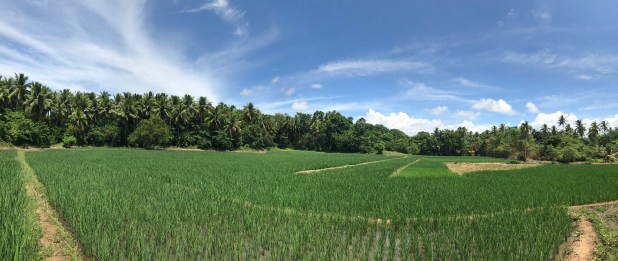
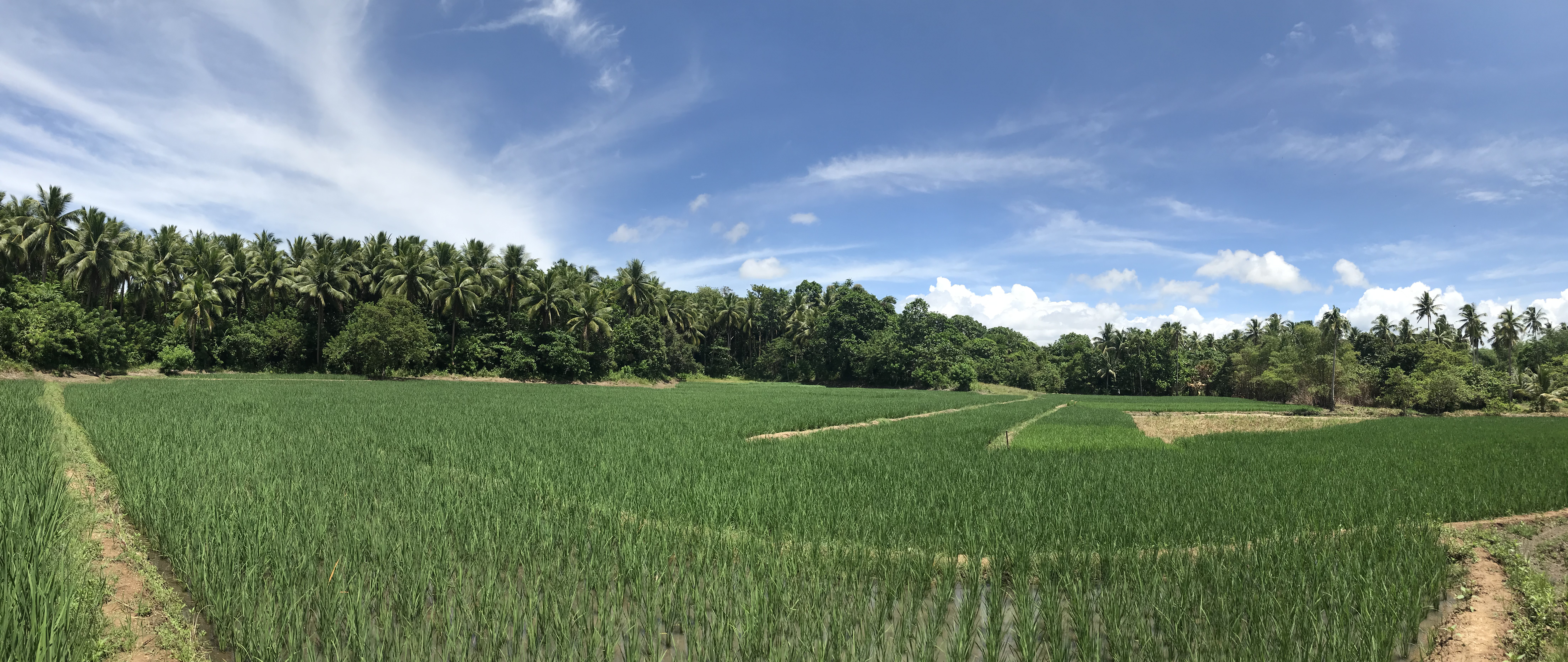
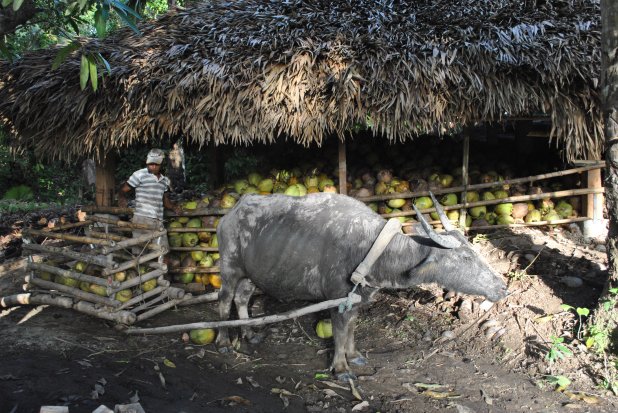
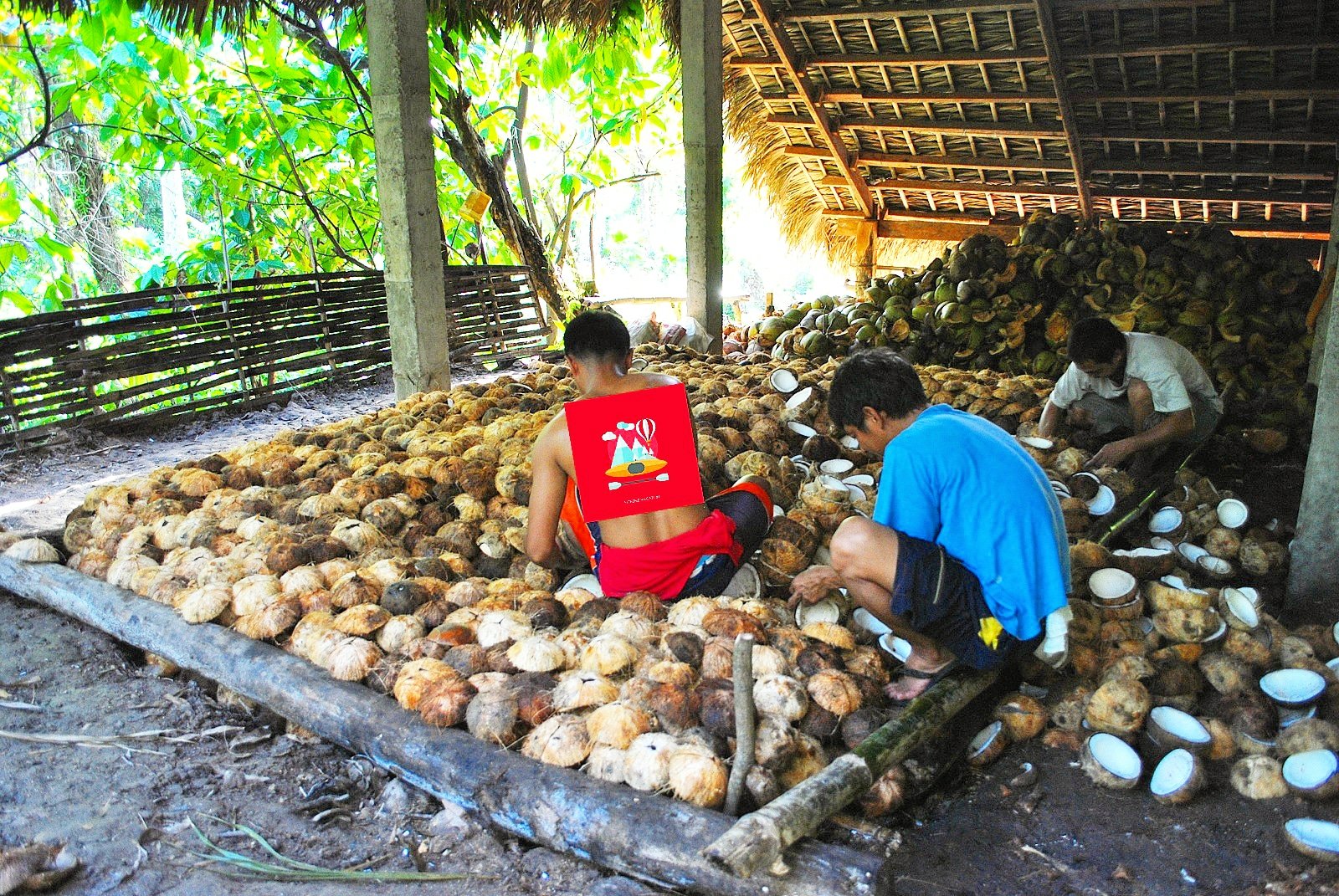
Our family’s agribusiness is a micro-enterprise but we plan to expand our business operations in the future focusing on Climate-Smart Agriculture (CSA) in support of the climate change mitigation efforts being conducted worldwide. We are into copra-making and rice farming for how many generations already starting from my great grandparents, which can be dated back to pre-World War II. Fast forward to 2021, we are now transitioning to innovative approaches in sustainable farming. Our 6.5-hectare farmland is located in Bulan, Sorsogon, wherein 1 hectare is allotted for rice farming and a small portion is used to grow coconut trees for copra.
We are also currently cultivating other rice fields with lot sizes ranging between .8 to 1 hectare located in different areas of the town. Another idle property is located in the town proper, which measures 264 square meters. We are still in the business planning stage on how to utilize it and one of our options is to set up a small store where we will be displaying all the agricultural products for sale. This will help us minimize our operating costs since we no longer need to rent a stall at the public market. The property is also located just a few blocks away from the commercial hub of our town.
There are some portions in one of our properties where we grow bamboos and cacaos but they were only used for personal consumption. We are planning to add organic vegetables and corn to the agricultural products that we would like to sell to the market. The following is the complete list of crops that we have and would like to grow in the future and the possible processed products that will be prepared by our women workers.
Rice – rice-based pastries or kakanin, rice wine, rice noodles, etc.
Coconuts – vinegar, tuba, walis tingting, buko juice, coconut husks for gardening compost, uling, etc.
Bamboo – weaved baskets, bags, mats, hats, other home decors
Cacao – tablea, other chocolate-based products
Organic Vegetables – lettuce and other high-value crops through hydroponics/greenhouse farming/mushroom farming
Corn – sold as raw and/or processed via mini food carts (popped corn, steamed corn, cheese corn, etc.); prepare the husks that can be utilized for industrial purposes i.e. fiber, cattle feeds, etc.
BENEFITS TO STAKEHOLDERS
Gender inequality is included in the 17 Sustainable Development Goals of the United Nations. Stakeholders will not only be supporting a local cause but should the project becomes a success, it will add up to the communities all around the world that address and eliminate gender inequality. The percentage of locally expanding the network for this type of social enterprise is also high since there is only a small number of social enterprises operating using this business model in our region. We hope to encourage more local business owners to follow suit and also become catalysts for social change.
We are also exploring other viable projects for our 6.5-hectare farmland such as developing a portion of it as a sustainable agritourism site. This will provide other means of income and will also serve as a buffer during the typhoon and drought seasons wherein it will be difficult to grow some of the crops needed for the production of the agricultural products listed above. By diversifying our project portfolio, we hope to achieve sustainability in our social enterprise so our women workers will have a consistent income stream.
Consumers will benefit from more affordable prices as raw materials don’t need to be outsourced since our farm will be supplying them. For local buyers, they will now have a wider range of agricultural products to choose from in the market that can be purchased without spending on costly shipping fees.
We are targeting to cater to nearby communities and cities in the region by considering options such as contract farming and as a model farm through the Department of Agriculture’s Agribusiness and Marketing Assistance and by exploring other marketing channels provided by private organizations. The local community will also benefit from environment-friendly farming practices such as agroforestry that will enable the preservation and conservation of local biodiversity and ecosystems.
WE Rice & Agri will act as our company’s forerunner in enriching the lives of the local community in a holistic sense starting from the “ilaw ng mga tahanan” – the beloved mothers.
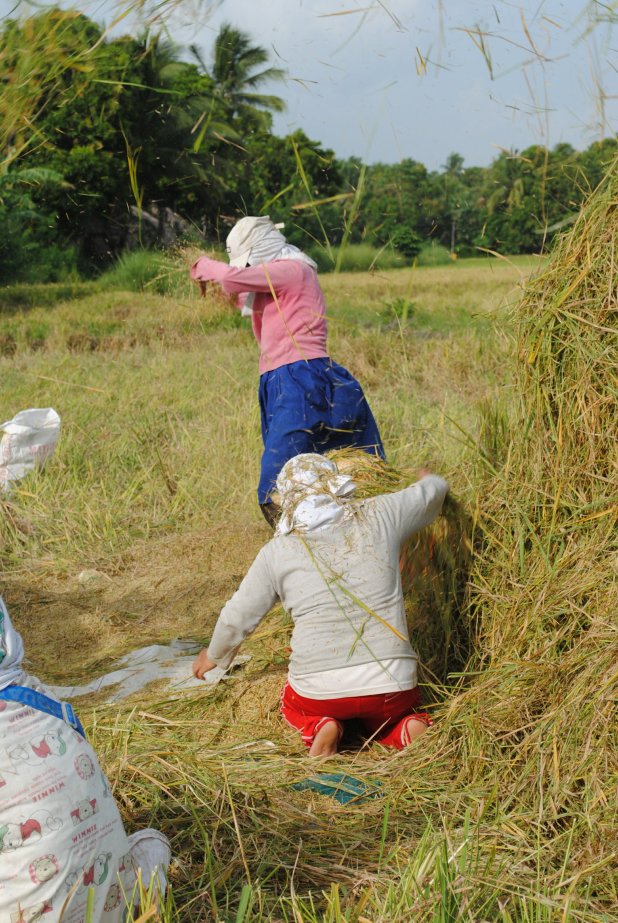
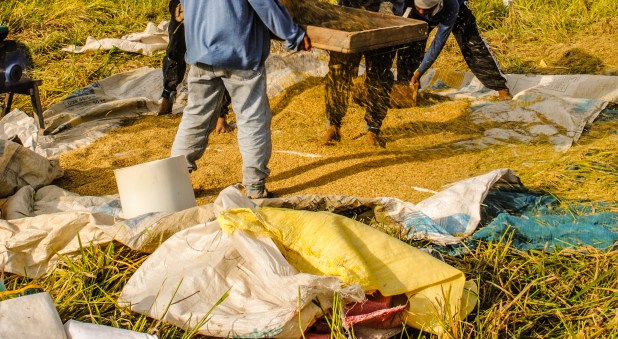
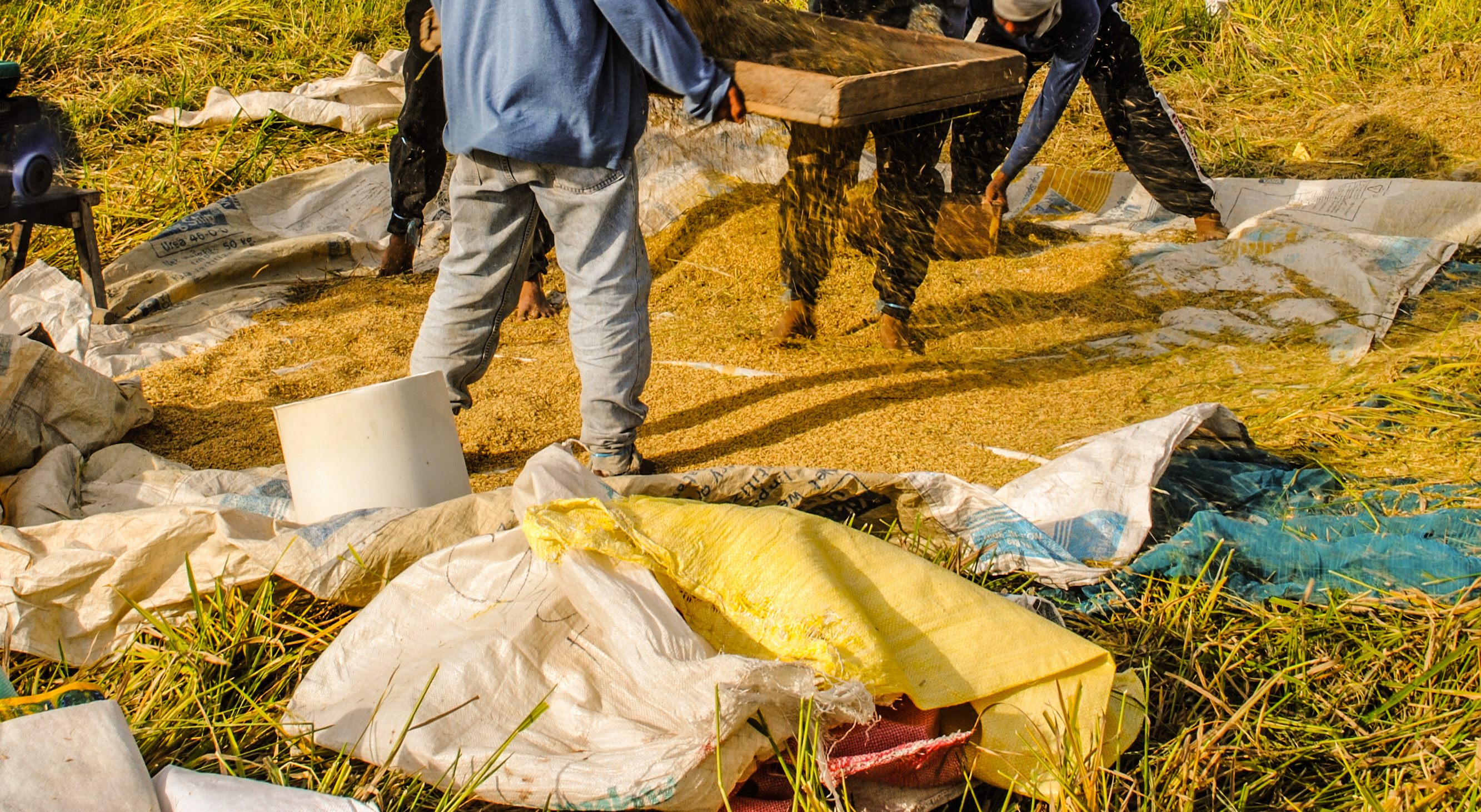
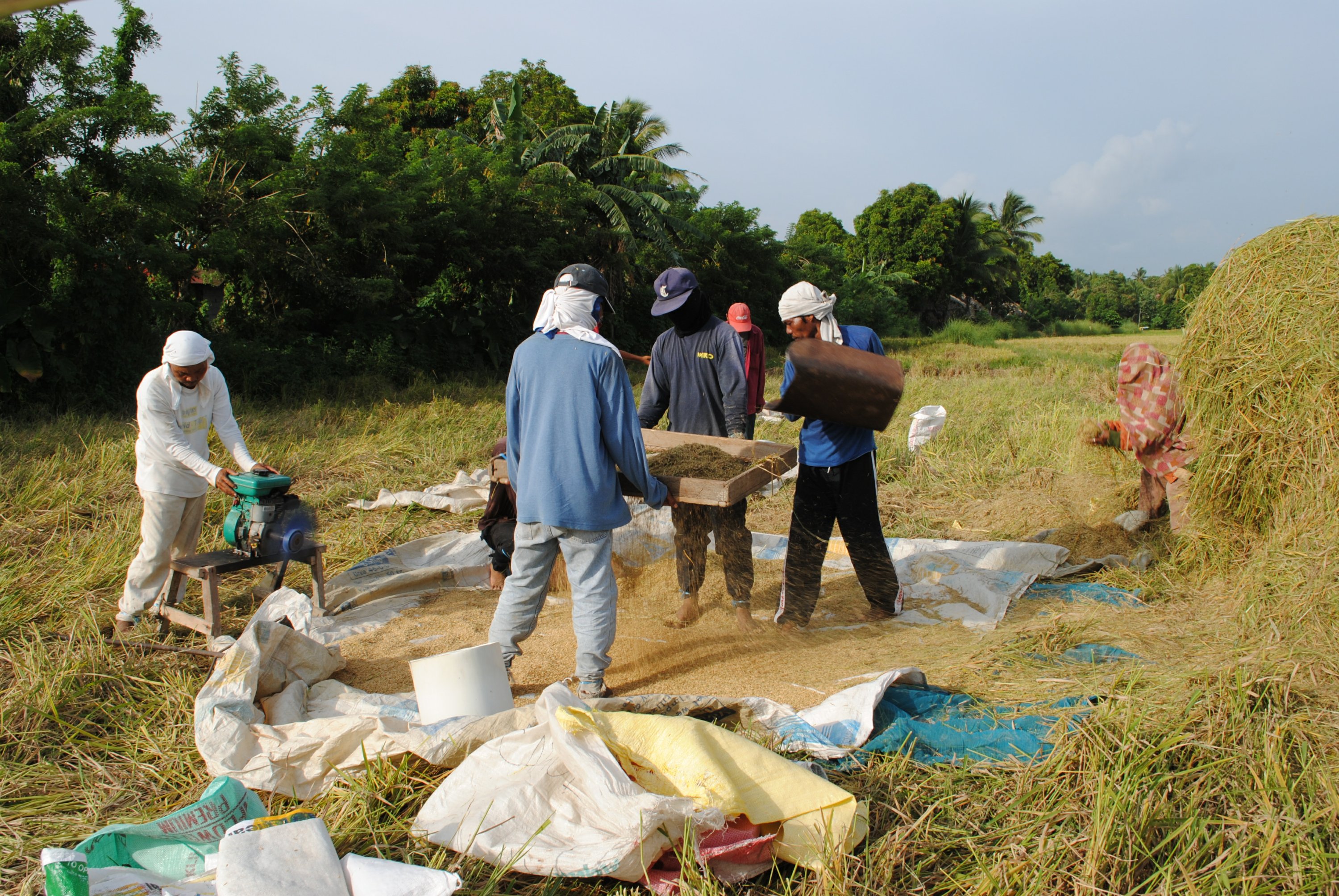
Photo by Christine Lailani Ginete-Rome (Bulan, Sorsogon): Some of the women farmworkers would gather excess palay grains in our rice fields during threshing. They no longer do this now since we’re already using a harvester.
“Commit to the LORD whatever you do, and He will establish your plans.” - Proverbs 16:3
Hello, everyone! Nope, I haven’t forgotten at all to write anything here on WordPress. I just had a lot of things going on in the past weeks. God, however, never fails to remind me because though I was inactive for more than a month already, I still keep on getting blog “Follows” and post “Likes.”
Thank you, all, for dropping by my site and showing your love. May you be blessed as you read along and God’s revelations be known to you as well. ❤
From A Promise-Keeper To Another Promise-Keeper
I bet God’s reminder to me through all of you is His way of saying, “My child, don’t forget the promise you made back in 2013 when I saved you that you will make this online journal a testimony of your spiritual journey.” 😀
Yes, Lord. I haven’t forgotten at all. In fact, I now have 64 drafts. Some of them are half-finished while some drafts contain only one word to remind me about the theme of the story.
I originally came up with an editorial calendar to make publishing on a regular basis way easier. But, I guess that it is not how God really intended it to be since I write based on the Spirit’s leading, and it has always been this way ever since I started this blog.
Anyway, let me end the long intro here and start today’s topic, which is one of the reasons why I was hibernating here on WordPress – the family business in Bicol.
How the Rice Tarrification Law is Affecting the Rice Farmers Now
Several months passed since the bill was implemented, and Dad’s assumptions that it will negatively affect the rice farmers are right. When my brother, sis-in-law, and I went to our home province last September, a majority of the rice farmers all over the country are expressing their sentiments to abolish the law.
The cheaper imported rice may have been a solution to most rice consumers, but the local rice struggled to compete with it. This resulted in a lower buying price for the local rice – way too low that farmers no longer gain any profit considering the high expenses involved in rice farming from planting to harvesting.
Local farmers, in fact, had to borrow money in order to recover the losses incurred during this season’s harvests. My Dad plans to skip cropping seasons in the meantime that market prices for local rice are low.
The Rice Farming Business Through The Decades
Our rice farming business is an additional source of income, and our parents relied on it to support all our needs when we were in college.
My parents told us how their salaries as working professionals (grade school teacher and engineer) were not enough to support all our needs. Copra production is also another alternative source of income for my parents, however, the buying price of coconuts is also very low.
Both of my parents are retired now and receive a monthly pension. My siblings and I also have our own careers. But what concerns my parents more now is the situation of our palay farm workers who rely on the planting and harvesting seasons to earn an income.
My Dad told me that should we skip a couple of cropping seasons (that’s every 6 months per annum), our farm workers will have no other choice but to look for other means to earn an income. Most of them are skilled in rice farming only so looking for other types of jobs will be difficult for them.
Some of them will leave their families behind to come here to Manila and work as construction workers. My Dad fears that those who do not have this privilege, considering the expensive bus fares going to Manila, might end up joining the New People’s Army to get money to feed their families.
Support the Local Rice Farmers
The plight of rice farmers has created an uproar on social media. There were several collaborations and joint efforts done to support the local farmers such as what Session Groceries is doing. However, only the rice farmers located near and within Metro Manila will benefit from these collective efforts since a majority of the demand all over the country comes from the metro.
For those who are in far-flung provinces such as our rice farmers in Bicol, this isn’t an option. Because selling rice in Manila would mean costly trucking and handling fees. Our only option is to sell our palay to rice traders in the region.
As I type this, I can’t help but feel a little emotional. I have seen the difficult process of producing rice, the stress involved, the resources needed, the amount of money shelled out, and how some of our farm workers would ask my Dad for their salaries in advance to support their immediate needs.
They have been a part of our family for several generations now – yes, we already consider them as a family because they are the ones responsible for keeping our rice farming business running. We just finance the entire process, but they are the ones who do all the hard work, which is extremely difficult. Agricultural work is indeed and entails hard labor.
I see the RTL as a form of oppression to the entire local rice farming industry. If it will not be abolished and market prices for local rice don’t go back to normal, we have to start looking for better alternatives that have lasting solutions.
Just Wait Because God is Always on Time and Never Late
I have been asking God for answers as to why this has to happen. Why let Your people suffer? Why let those who are in the seat of power abuse those who are already disadvantaged? Why let the strong continue to oppress the weak?
And yet through those questions, God asked that I trust Him completely. He may not have revealed what His plans are and yet there is the assurance that He is working something good behind it all. He is always working even if we don’t see it.
Unfortunately, one of my personal struggles is being patient. I already learned a lesson on patience the hard way in terms of my career. It’s God’s calling I work from home. But since I am expecting positive results once I obey Him, I end up doing the other way around when my expectations aren’t met.
The last office job was God’s final warning for me. After just a couple of weeks working in an office setting, here came the health scare once again. I felt persistent pain in my chest, which prompted me to resign and go through several medical checkups.
Warnings To Heed
To some of you who don’t know yet, breast cancer was consistent in my family’s history starting from my great grandmother, grandmother, then to my Mom. They’re all cancer survivors.
God made me realize that the daily commute weakens my immune system faster. I believe God is telling me that He still has more for me to do and if I want to live a fulfilled life, I should obey His calling.
Aside from the health scare, the work-from-home setup also allows me to work anywhere. This means that if God calls me to be in my home province and help Dad manage our family business, I can go there anytime without disrupting my work schedule.
Setting Priorities Right
This isn’t as easy as it sounds though since the reason why I am still here in Manila is that hubby’s work is here, and he is still my first priority. Hubby doesn’t have any background in farming, and should we decide to live in Bicol for good, it will be a major change in his life. I think hubby isn’t ready for this shift yet.
And God knows that, too. So His answer was this, “Tin, wait. I am still not yet done working. You just have to wait.”
For someone like me who always do things according to the plan, impatience always gets the best of me. And yet, this is where God is teaching me the greatest lesson. Though I must admit I sometimes haggle my way through His plans by asking Him to give me even just some glimpses of what He intends to do.
God will reveal some of His plans and yet they are not always a clear picture. Because “His ways are higher than our ways, and His thoughts are higher than our thoughts.” He can only show us portions of His bigger plans, bits and pieces of them, because that is only how far our human mind could comprehend.
I have realized later on that God’s wisdom is not meant to be grasped nor even understood. It is only to be received in faith that will show our complete trust in His power and His sovereignty above all things.
A Glimpse of Future Investments
I don’t have the wisdom of God to put the pieces of a puzzle together. And yet, in these pieces that God reveals along the way, I can make out one word – HOPE.
The Bicol International Airport was set to be completed by 2020; the Bicol Fish Port is half-finished; the construction of the SLEX 4, which will cut 3-4 hours of the travel time from Bicol to Manila and vice versa, has already started; and SM is starting to build several branches in key cities in the Bicol Region including the city closest to us, which is Sorsogon.
Our hometown may not experience this rapid growth in urbanization just yet. But when it happens, it will also increase commercialization in the province which will then boost local revenues.
This means better employment opportunities and a better quality of life for everyone. I am praying that those who live in the provinces will no longer have to go to Metro Manila and search for stable job opportunities. Besides, the metro will also reach its saturation point. Time will come when it will no longer be a conducive and habitable place to live in given the traffic, congestion, and pollution.
A Shift in the AgriBusiness Industry
Some farmers fear it will be the dawn of the agribusiness industry if most of the lands will be converted to real estate developments. We’re hoping that not all of the agricultural lands will be converted and utilized for commercial and residential projects. We will still have a need for farmlands to produce vegetables, other crops, and raise livestock and address the increasing demand in food supplies.
I wrote in my previous article, “Agribusiness: The Future of Today’s Economy,” that agribusinesses will have a high demand as long as the local government will patronize local products. In our region, God is just starting to establish the market.
So this must be the reason why He is asking me to wait. My siblings and I are initially planning on utilizing another portion of our farm for organic farming and other projects. Our goal is to help the local community and use the idle land according to how our grandparents wanted it to be utilized.
We proposed the idea to our parents but they are not really open to it since it’s a new venture, and they’re unfamiliar with the entire process. My grandparents have grown vegetables but only for their daily consumption. My parents don’t have enough knowledge and experience growing organic vegetables on a wider scale.
The Plan
Competition may be tough. But with the increase in commercial establishments, especially in the food industry such as local restaurants, there will be a high demand for a wide range of agricultural products.
Commercial establishments will start looking for local suppliers as this is cheaper compared if their suppliers will come from the North such as in Benguet where most of Metro Manila’s vegetables are coming from. But can you grow one type of vegetable only and be the supplier for an entire region? Yes, it is possible. One hectare can already provide you a truckload or more of produce. If you own a huge parcel of land, you have more options for growing different kinds of crops.
My parents said this will be difficult since there are certain crops that will only grow on a particular type of soil. If these are vegetables, especially the leafy ones, they don’t have deep root systems. They thrive on rich topsoil. Some of them can be grown in pots just like what I did here in our condo.
I came up with a plan to conduct a“pilot testing” for several vegetables by planting a couple of them in our backyard to see which ones will thrive and which ones won’t. The soil in our garden can be tested along with the soil taken from our farm to compare if they are the same or not.
The experiment will run for an entire cropping season. Determining the crop that is best suited to a particular type of soil will depend on the crop yield. If the crop produced a higher yield, then the percentage of it becoming a profitable venture is also high. It will also include all the expenses for organic fertilizers as well as the labor, and then I will compare it to the market price of the selected crop.
If It is God’s Will, He Will Make a Way
And yet these are all just plans, and these plans may change or may never be fulfilled depending on God’s will. Right now, it is about waiting on His perfect time and acting according to His instructions. I asked for God’s guidance that if my plans are indeed part of His plans, may He lead me to the right resources and the right people who can help me and my siblings in this endeavor.
As typical of God, He never fails when you ask, especially if you are doing the tasks according to His will and His plans. Here are the links I found. Yes, I know, they are quite a lot, but they are all a very good read. Who knows, maybe God will also give you the answers you’ve been waiting from Him through these articles. 🙂
While typing this article, I am also listening to my favorite playlist on Spotify, and it’s just timely that the song by Sinach was played twice. I believe this song is meant to be the perfect ending for this article focusing on this one thought – God will make a way for He is our Way Maker. ❤
I am posting two versions – the original version sung by Sinach in 2017 and the cover version sung by Leeland in 2019. 🙂
Before I begin the actual article, I’d like to share an update to those of you who have been following my blog posts lately. And let me begin by saying, thank you to all those who prayed for my checkup – the doctor’s initial assessment turned out negative. BUT, she suggested I still undergo the 2D and 3D mammography tomorrow. We will get my other test results tomorrow, too, but it will be assessed by my doctor on Saturday. The battle is not over yet, not yet.
But life must go on – I am still breathing and I am still walking. So, let’s keep the ball rolling. 😉
What Do Experts Have to Say About the Rice Tarrification Law?
For today’s article, I will be sharing about the Rice Tarrification Law recently signed by President Rodrigo Duterte. Since a majority of our family’s agribusiness revolves around rice farming, I had to do a lot of research on what this law entails and what are the different opinions of industry experts on the matter.
Here are some of the articles I was able to dig up:
The Rice Tarrification Law basically proposes a better alternative to consumers by lowering the market price of rice through minimal import restrictions, and importers pay a 40 percent tariff only. Tariffs collected will be distributed to farmers as incentives and financial assistance which the government will provide through programs irrigation, new grains, fertilizers, etc.
This law also aims to eliminate rice traders and middlemen since the tariffs will go directly to the rice industry, experts said. But along with the elimination of rice traders in the agri system sprouts two new challenges – rice cartels and rice smuggling.
The latter poses a new threat since there will be those who will try to evade paying the tariffs imposed by the Bureau of Customs. The challenge to the government is this – will there be other security agencies who can monitor the imported rice that comes in? For one, we don’t have enough border patrols.
The emergence of rice cartels would also mean an even stronger market group to compete with. The challenge here is this – will small-time local rice farmers, who cannot pay enough for the tariffs, get the chance to buy imported rice or still have a chance to sell their produce locally and earn a decent profit?
Yet another challenge is this – with the unresolved cases and ongoing graft and corruption in the country, what is the assurance that the farmers will receive their due share of the tariff proceeds?
When I called my Dad and Mom last Saturday to check up on them and talk about this matter, as expected, the conversation lasted for 2 hours. 😀 That’s one thing about our family, it is like a debate team. We love to discuss, analyze, and assess matters with little oppositions and contradictions here and there but can honestly escalate to an actual debate later on. lol Just kidding. 😀
My parents advised us to let this year pass since this will be the adjustment period, so to speak, for registrations and all. Next year will be the time to assess whether this new law will indeed benefit the local farmers or not. I suggested to my parents that if this means producing rice for personal consumption only, maybe it is about time we explore other crop ventures – the initial proposal of my siblings and I for the new family project.
The Toll of Climate Change on Rice Industries
Local rice farmers are facing yet another challenge brought about by the extreme heat wave. Dad told me we are experiencing El Nino this summer – severe drought. The last time this happened was back in 2008. My Mom said time will come when intervals between seasons of El Nino will be shorter with the ever-worsening climate change and heat wave.
Extreme drought for farmers means lacking sufficient ricefield irrigation which will then result in lower crop yields a.k.a. less or no profit at all. According to Dad, farmers right now are in dire need of sufficient water supply since rivers are almost dried up. He shared how two farmers started to drill on their ricefields hoping to tap into a good water source such as a spring, but to no avail.
Every drilling activity costs 15k. This means that if you attempted to drill twice, you shelled out 30k already. It’s a big waste of money unless you were able to find a water source asap so you won’t have to spend more. If you’re unable to get the water supply that you need for your crops, they will all dry up with huge losses on your end than gains.
An Outpour of Blessings
God, in all these circumstances, was good to my Dad. Maybe it’s because I pray about the farm every night? 😀 Nah, I won’t take the credit because I know it is all God and God alone.
Dad shared how he “luckily” drilled through a major source with overflowing water and not just a trickle. It was more than enough to irrigate all his ricefields. I told Dad it was indeed a wonderful blessing and maybe he can share the water supply to nearby ricefields and ask the owners to pay for it since the water will be coming from our land.
I know they will take the offer than to let their crops completely dry out and earn nothing. Dad will be able to help other farmers irrigate their crops and save on drilling costs and he can also recover the amount he spent for drilling and pumping for water – a win-win situation.
By the way, the average pumping cost for ricefield irrigation is 150php per hour. So I asked Dad how long does it take to completely fill up one ricefield, he said it’s overnight and sometimes it takes days depending on the size of the ricefield. Indeed, there really is more to farming than planting the crops, letting them grow, and harvesting them without doing anything. Yes, it is nowhere close to gardening. I was totally wrong. 😀
What better alternatives do rice farmers have?
I browsed the internet for better options not just for our business but for other local rice farmers, too. I found online groups and websites where they share information and discuss different agricultural practices that are on par with the drastic climate changes – how farmers can adapt to these changes.
These organizations are the Food and Agriculture Organization of the United Nations (FAO), the United Nations’ International Fund for Agricultural Development (UNIFAD), and Young Professionals for Agricultural Development (YPARD). You may check them out through their social media channels if you’re also in the agribusiness industry.
One topic that requires urgent attention now is about how climate change can affect biodiversity and how biodiversity, in turn, affects food production. I realized that my Dad and other rice farmers were just worried about water supply. And yet what I’ve found out was something more catastrophic than that given the alarming depletion rate of earth’s natural resources. This is where the imbalance comes in, which, in turn, can affect how we produce our food.
One scary thought, or rather, challenging question I had after my research is this – will our children or the future generation still have enough decent food to consume in the next decades or centuries, perhaps? I am promoting two advocacies now in agribusiness and they are sustainable agriculture and local food movement. These two encapsulate the mission of the new family project that my siblings and I are working on.
In our own little ways, what can we do to support these advocacies?
I’ll have to discuss this in the next article because this post’s too long already. 😀 But here’s one to motivate us to do something and this is also one of my core beliefs when it comes to creativity: “Where there are seasons of drought, there is ingenuity.” The geniuses of our time and the times before made a lot of discoveries and inventions out of a lack of something.
How to Be Good Stewards of God-Given Resources
But let us not forget that God owns everything that we have and we are only stewards of what He has entrusted us. He will be the one to provide us everything that we need so we can continue the work that He has tasked us to do.
I am praying for summer rain in Bicol and all other rice-producing regions. Rain during the summer season is a miracle. But I have a God who makes things possible and I believe in miracles because I have faith. So, I say, it will happen. 😉
And yes, I pray for a healthy body, too. Because there are a lot of things that I still need to do and my body’s the vessel to move around. But then again, not my will but His will and not my plans but His plans always. ❤
“The earth is the LORD’s, and all it contains. The world, and those who dwell in it.” – Psalm 24:1
P.S.
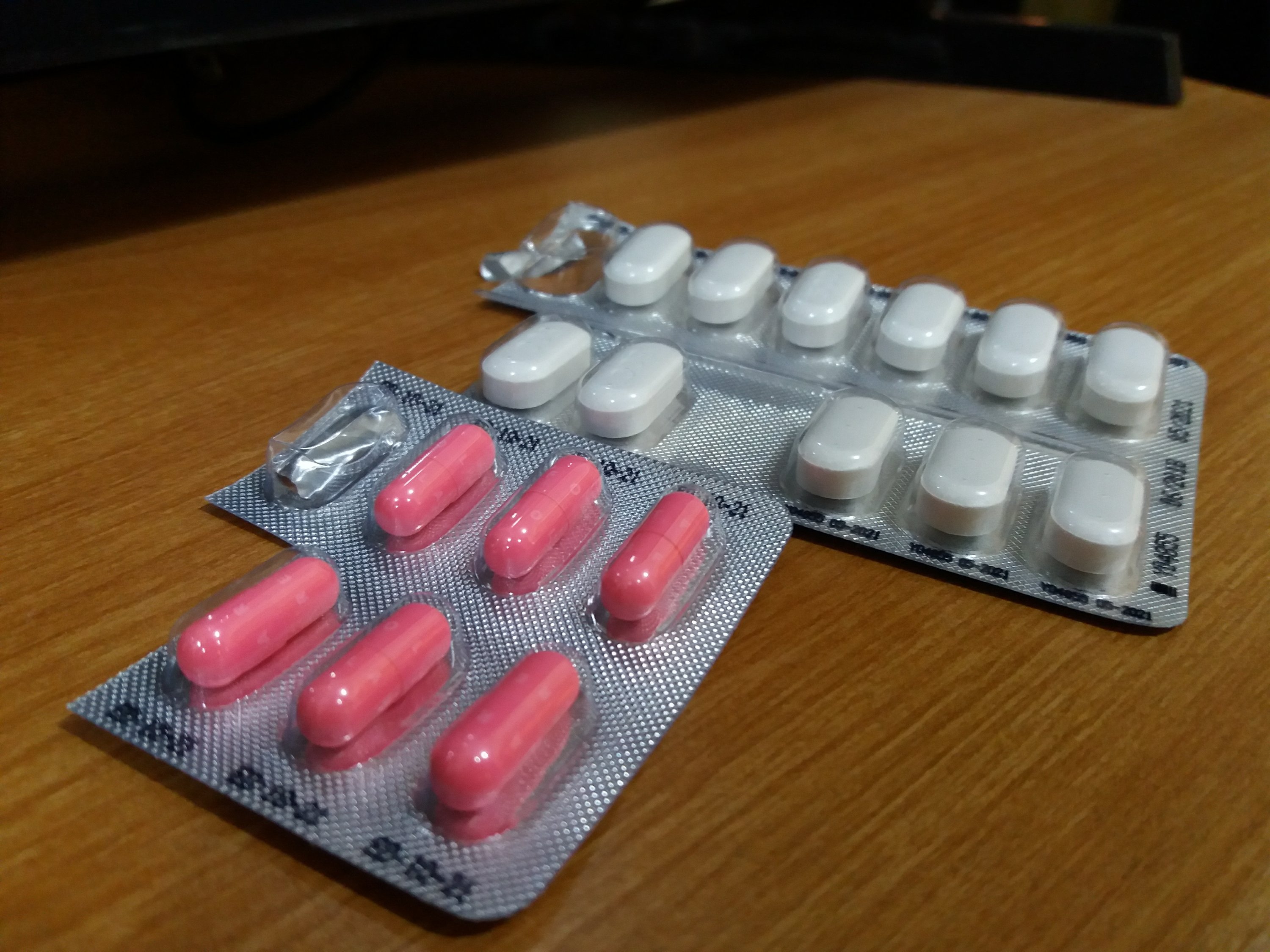
Is there any pill cuter and girlier than this? The bright pink got stuck in my head it helps me remember when I should take them. 😉
I’m also squeezing this article in real quick because I still have other articles to do at work until the end of this week. I just want to get this off my head – like lice. Off with your head! Errr, off with the lice! I mean, off with the thoughts. 😀
I am back in the corporate world in my other job (I am juggling two) for a whole lot of different reasons and I appreciated the shift but I am still praying about this new season. I know I won’t be staying long in this setup, but I just felt that God brought me here for a certain reason. I cannot tell if I needed to learn more skills which I can only get through a corporate setting or something else. 🙂
The Diary of the Commuter and Employee
This means I’m also back to the daily grind beating the rush hour and the traffic and keeping up with the usual hustle and bustle of corporate employees. I usually commute via public transportation – the waiting time during traffic is bearable this way. 😉
I set aside 15 minutes of my workday walking because it syncs my mindset to the challenges I’ll encounter throughout the day. It is during these times, too, that I get to have a deeper contemplation and appreciation of things around me.
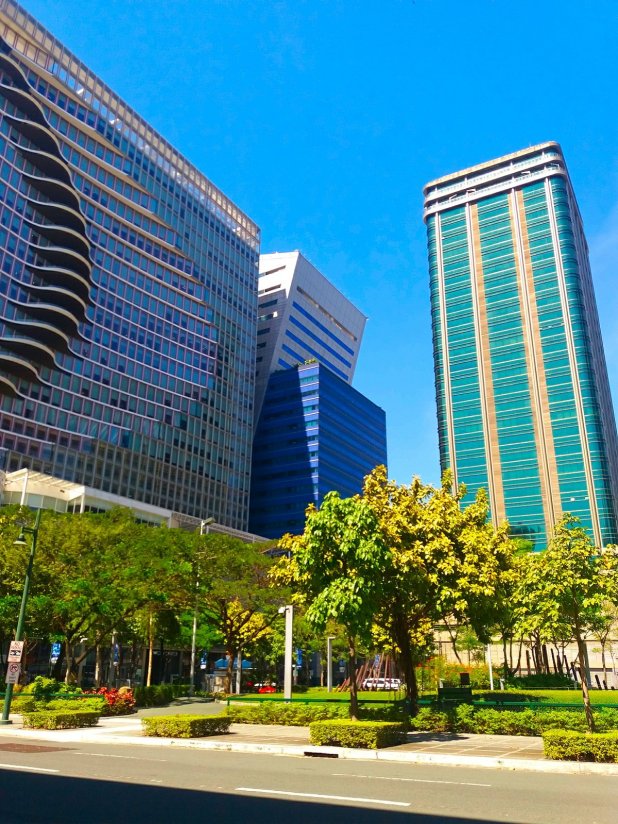
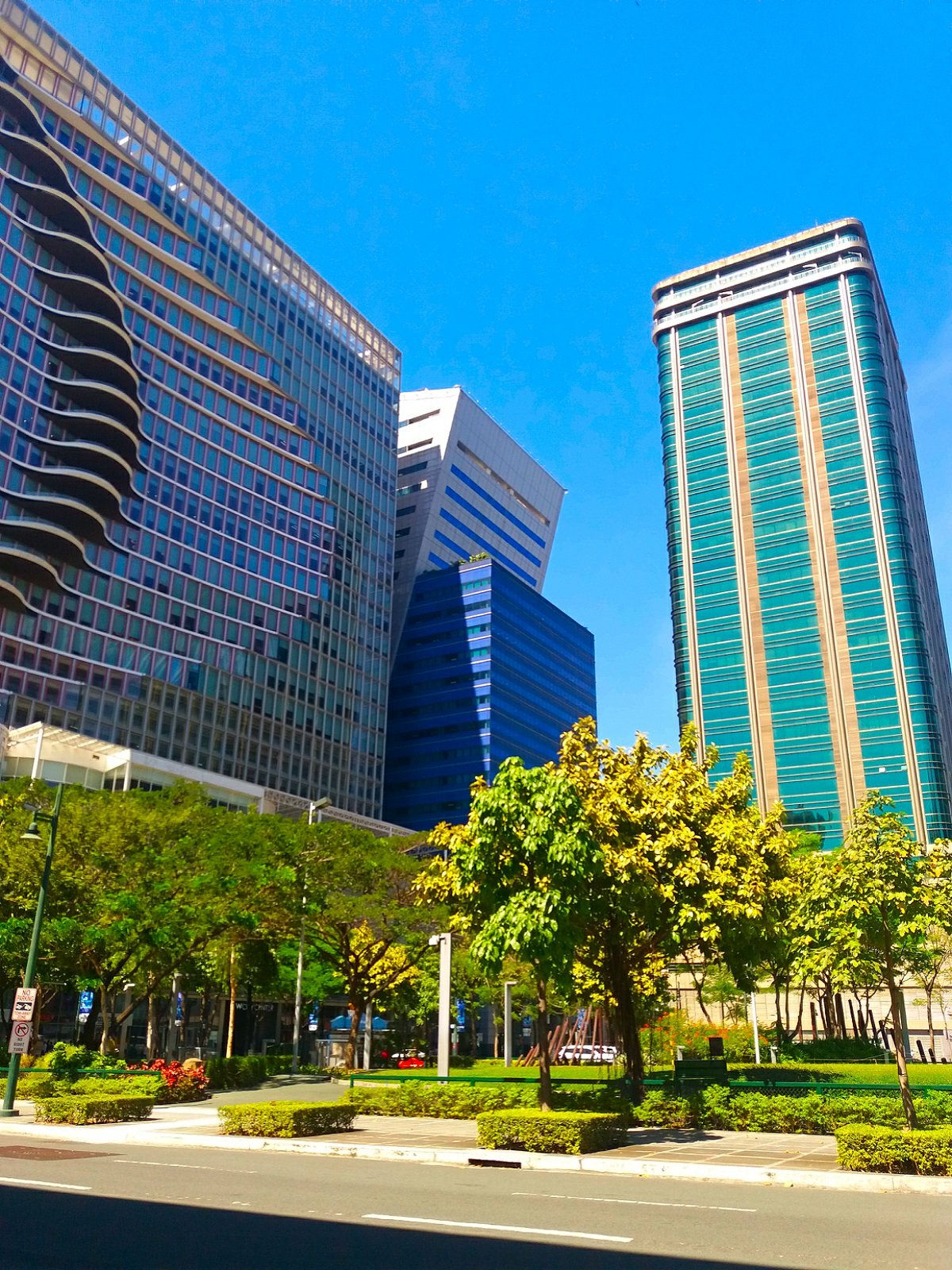
I adore structures but not as much as I love nature. And it is during one of my walks that I had a different perspective on skyscrapers. I never thought they can be beautiful, too, if you look at them from a different standpoint. For one, it reminded me about companies and startups and their value in our society.
What is a startup company and how did it begin?
I’ve been working as a professional since 2008 although not consistently. I have been on and off the workforce because God brought me to different seasons and different places locally. I was able to try different working environments and industries and worked with different bosses and colleagues.
Some of my colleagues now are running their own start-up companies and most of them ventured into the digital marketing industry. Their number one reason for leaving the corporate world is that they got tired with the 8-5 work shift and the stressful environment considering all the demands and expectations they have to meet. And yet if you will ask them if being a boss is easy, they will tell you that it is doubly hard. The only difference is that they have the freedom to do what they love to do.
Startup companies usually come about because of someone’s passion.
The geniuses of our time and those before us all pursued what they loved. And doing what you love spurs creativity. Creativity very seldom happens in a boxed environment. The latter stifles the learning growth of an individual. Bill Gates, Mark Zuckerberg, Steve Jobs, Oprah Winfrey, and other famous entrepreneurs and game-changers today were college dropouts. They never finished college because they pursued their passion outside the four corners of the academe.
Learning in the Academy
A university or any academe is somehow a boxed environment. Learning is limited to a certain degree. This is why I took a graduate study in Special Education because I’d like to explore what are the learner’s options and how can the academe address his or her specific needs. Everyone has a different learning style and there are schools now who are adopting the progressive approach to teaching where the learning of a student isn’t just limited inside the classroom. There are several studies that showed how a special branch of education which is student-centered and not teacher-centered can help tap the multiple intelligences of a child and be a well-rounded individual when they grow up.
How is this related to a startup? Let’s assume every workplace is also a learning environment. An employee learns skills that he will use to do the work he is being paid for. The nature of a specific job isn’t taught in school and only the companies can teach an employee the skills needed to accomplish what needs to be done and how it will be done.
Creativity in the Workplace
A startup company owner takes the risks to leave his corporate job and puts up his own company because he wants to pursue his passion, maximize his creativity, do what he loves, and earn money from it at the same time. It’s hitting multiple birds with one stone, so to speak. It is possible that creativity will never be present in a corporate setting as an employee given the tense and fast-paced environment. Creativity is hard to attain in those conditions because the mind can only come up with brilliant ideas when it is not subjected to extreme pressure.
I can relate to this based on my own experience as an artist and as a writer. When I write like this where I follow no very specific guidelines, ideas just flow. But when I need to meet certain criteria and writing standards, I oftentimes get a writer’s block and come up with a “chaotic” write-up because ideas were forced.
It is because of this that I appreciate editors who go the extra mile in knowing their writers personally so when they assign topics, they are more or less related to the writer’s personal interests and preferences. As they say, you can never write about what you do not know and you can’t write best if it is something you hate.
So, are these startups successful? Yes, there are those who are thriving, there are those who are getting by, but there were also those who never made it. And yet, if you ask them all, they have no regrets because they used their freedom to pursue what they love and given the opportunity to do it again, they won’t hesitate to take on the challenge. Not all corporate employees though have the option i.e. lack of resources, lack of appropriate skills, etc. to put up their own startup companies as their fallback.
The Corporate World
I have seen so much of what a corporate employee is like at work. When I see them, I would like to give them all a big hug for working so hard. Because I, too, went through the rigors of being one.
And if I am given the opportunity, I’d like to give them at the beginning of every workday some stick notes with words of encouragement and how much they are of value to the company and commend them for a job well done regardless of their performance. Because more or less they have contributed something for the benefit of the company.
This article from Harvard Business Review is a very good read when it comes to people management and I believe everyone (we are all going to be mentors sooner or later in whichever area it may be) will benefit from this:
Employees are like engines. They are the heart of a machine. Without them, the machine won’t run. A business is nothing without its employees. I believe companies should owe it all to their dedicated employees and make sure their efforts never go unappreciated. Earning a huge profit is as important as managing people well and make sure they get what they deserve and not the other way around – exploited.
The Family Project Remains
My family and I are planning on a project. It is technically not a startup but a business expansion since our parents are into the agribusiness sector for decades already. However, what my siblings and I plan to pursue is a different type of agribusiness (organic farming), and if it is God’s will, we intend to expand to other enterprises (retreat house, vacation home, agri training center, etc.) that will allow more people to benefit from these ventures. Yes, it’s easier said than done always because the real deal involves a lot of planning, setting up, and financing.
I have been doing my research since last year about business developments and I found a lot of reliable resources on the net. If God wills it in the future, one of those skyscrapers might be our office. *wink* It might not happen today but it can be with our kids, grandkids, and great grandkids. Only God knows. 🙂
When my parents finally give us a go signal that they can no longer manage everything, we need to take over. Dad is 78 and Mom is 72 – they really need our help. Only God can tell the specific time when it will happen. But right now, as I’ve mentioned in my previous articles, this is a season of preparation. This is also the reason why I never see myself as a corporate employee for long.
One of the key research topics I have been trying to learn is about people management. Because I know we will be handling employees, too, since the new project is going to be on a bigger scale. My previous working experiences allowed me to view a company based on their company culture, the employer-and-employee relationship, employee retention, salary grades, and skills needed.
All of these led me to ask questions such as, how much does the company lose if there is a fast employee transition? Is the company willing to risk hiring someone with skills that are sub-par with the company’s standards because the high demand is already there? And a whole lot more of them questions that I never seem to run out of. 😀
Venture Capitalism and Micro-Capitalism
I also encountered in one of my tasks one term about startups that is new to me – venture capitalism. I did extra research if the Philippines has the same type of financing and based on what I’ve read, the country hasn’t tapped in this market type yet but more on microcapitalism. Both are important when it comes to helping out startup companies and small businesses in their financial needs.
I’d like to touch more on these topics but I’ll cut my article here for now because I only limit my blog post to 2,000 words max. 😀 I’ll discuss them in my future write-ups as I continue to give updates about the developments on the project this summer. I am praying the dredging equipment will be available this time and God will help me make the right decision when our parents say they need one of us to go home sooner or later to help out. But in everything, let His will be done. 🙂
“Commit everything you do to the Lord. Trust Him and He will help you.” – Psalm 37:5
Always working for God and for God only,
P.S.
If you’ll ask me what I’ll be if I’m not a writer, I’d like to be a farm girl. *wink* It’s just that our parents never pushed us to take college courses on agribusiness because they want us to pursue what we’re passionate about and learn all other skills first. If we do feel the inclination, the interest, and the dedication later on to manage and develop the business, then that’s the time they will show us how it’s all done.
December 2018 farm visit.
I would just like to appreciate our parents for this freedom and for respecting our individual capabilities and particular interests. In the same way that all five of us, siblings, were given the freedom to choose the church where we will grow spiritually in respect to all the different religions. Because faith, to them, is not about a religious organization but more about having fellowship with other believers. 🙂
Back to the project, if you also plan on putting up a business or you already have one and you want to turn them over to your kids one day or let them be involved in it, here’s a great article from Harvard Business Review:
How the agribusiness industry fared throughout the years can be attributed from the bargaining that takes place between the farmer and the trader even before the products leave the farm gate. My family and I have been in the agribusiness, palay production in particular, for decades already. But it was only just recently that I ran a thorough analysis of the business processes involved in farming from the particulars in expenses to the actual farm tasks done.
I asked Dad to give us a rundown of all the marketing processes involved but he told us we’ll learn along the way. I guess this is his way of saying that we conduct due diligence as far as agribusiness is concerned. 😉
From the data I gathered on Dad’s documents, what caught my attention is the market price of palay listed in one of the receipts (16.50php/kg). I asked Dad who dictates the market price and how did it arrive at that figure. He only smiled and said, “The traders dictate the market price.” My follow-up question was, “Based on what?” He answered, “Based on the market trends.”
So, this is just like stock trading on a certain level. But here, if you’re a trader, you have the market power to set the price you desire. Depending on how you conduct your dealings as a businessman, this can either be a good thing or a bad thing as far as fair agricultural trade is concerned. Are traders really fair in dictating the market price for a particular agri product in the region? Does it follow regional market rates or the national market rates?
I haven’t taken any business education courses but I really would love to and if God wills it, I plan to take up a short course on Market Research. For the meantime, I’ve been doing my homework on farmers and middlemen and how the theory of bargaining works in the farming industry. These are the questions I came up with:
Are farmers actually getting the profit they should earn from the entire production?
Can a digital economy change the agricultural landscape in the coming years and provide better marketing opportunities both for the farmers and traders?
Will agricultural innovations and agritech industries promote a brighter future for the farming sector i.e. lower transportation costs, high-yield production, etc.?
How can a government-mandated price ceiling affect the overall trading setup between the middlemen and farmers?
Can contract farming and direct selling be viable marketing alternatives?
How can we prevent the exercise of “monopsony” in marketing rice/palay?
If you’re in the agribusiness industry and are interested to venture in palay/rice production or any crop production, these articles can provide some insights on the current market setup of farming and agriculture in the country:
I’ll be sharing more information as I go along with my market research/business analytics during my free time. Please bear with me if I’ll confuse you a bit with some of my questions since I am also on “tabula rasa” mode when it comes to business developments and the likes. 😀
But if you have any insights to share, please don’t hesitate to drop me a message. I’d love to hear your feedback/suggestion. Thanks in advance and for reading this article. ❤
“For I know the plans I have for you,” says the LORD. “They are plans for good and not for disaster, to give you a future and a hope.” – Jeremiah 29:11
So I’ve been honoring our beloved and trusted farm workers over IG. I thought why not honor them on WordPress, too. 😉 I’ve known them since I was a kid and they are Dad’s best team. Farm work and copra production won’t be made possible without them and their loyalty to my Dad. ❤
It’s my Dad and Mom’s commitment when they were still working professionals that the families of all our coconut and palay heroes receive their annual Christmas Eve package as an appreciation for their hard work. And now that my parents are both retired professionals, my second sister and brother took over in upholding the family’s commitment to them.
We already regard them as a part of our extended family, too. I am praying that the future family project(if God wills it) will help them not just by receiving Christmas packages from us, but in giving opportunities for a better future to their kids, grand kids, and the entire community if possible. 🙏
I’d rather not have a better life if there are many who can’t have it. Better together as always. 😉
“And may the Lord our God show us His approval and make our efforts successful. Yes, make our efforts successful!” – Psalms 90:17
If you and your family are into this type of business or you’d like to venture in on one, please also support these causes I am promoting: #sustainableagriculture and #localfoodmovement.
Also called to serve others,
P.S.
When they all saw me carrying a camera, they attempted to hide. lol They teased me that they don’t want to be discovered by a talent search. 😂 Ah yes, I love these people. ❤
I’ll be temporarily lifting my #everyFridayblogpost rule for now because there are a lot of things that I’d like to share with you. I am no longer following my own editorial calendar because there are some topics that I need to insert in-between. I need to share these topics asap otherwise the thought will “expire.” 😉
Today, I’ll be sharing with you what I gathered from my research when it comes to land titles and business registration paperwork. If you’ve been browsing my previous articles, my family and I are on to this new project which is utilizing a piece of property on a wider scale for agribusiness. We are currently preparing the paperwork requirements for legalities’ purposes and equipping ourselves with all the information and knowledge we can gather about agribusiness.
I have high hopes that even if this family project will not push through (if God wills it), may this help you prepare if God has called you to venture into this endeavor. So while waiting, I thought it best to write this article. 🙂
“Seek His will in all you do and He will show you which path to take.” – Proverbs 3:6
Land Titles and Business Registration in the Philippines
1. Land Titles: Transfer and Registration
Whether you have acquired a piece of land by inheritance or you’re planning to buy one, these resources are very helpful to guide you in managing your land assets. I won’t include a step-by-step guide as these reliable sources will explain everything in detail. The online resources are as follows:
The next step is registering your business. If opportunities don’t allow you to purchase a piece of land, you still have the option to lease a property. You may check out the following links on how to register your business with the Security and Exchange Commission as well as with the Bureau of Internal Revenue:
These land titles and business registration resources may provide varying information and some may not be applicable in your case. But you may further conduct due diligence or seek professional advice with an expert. They can properly address your situation and give you the appropriate help. If you also wish to get in touch with me for other business-related concerns, you may contact me on my social media channels located on the sidebar or footer of this website. 🙂
Lastly, I am praying for God’s leading over this endeavor that I believe will impact the community for the better in the coming years. ❤
“You can make many plans, but the LORD’s purpose will prevail.” – Proverbs 19:21
With all the skyscrapers being built all around us, we can also expect a higher demand in commodities within the metro. When there is a high demand but limited supply, we can then expect an increase in the prices of goods.
What we can ask ourselves at this point is why is it that there is a limited supply? When I go to the provinces, I see a lot of idle lands that are not being utilized. If we are going to utilize them for crop production, this will then increase the number of supply and there’s a possibility the prices of the commodities and goods will also decrease once they reach the city where the demand is high.
This is easier said than done though because there are a lot of factors that are preventing farmers from utilizing agricultural lands on a wider scale. These factors are what my siblings and I are currently addressing in our endeavor now.
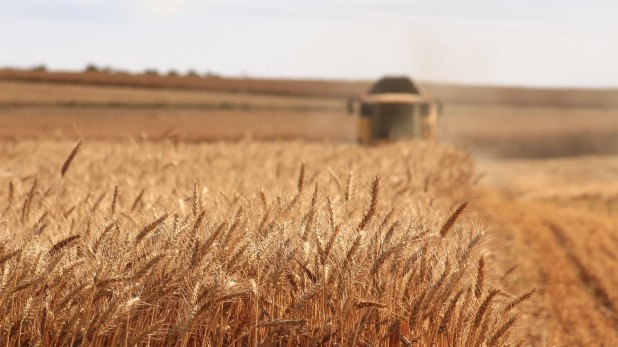
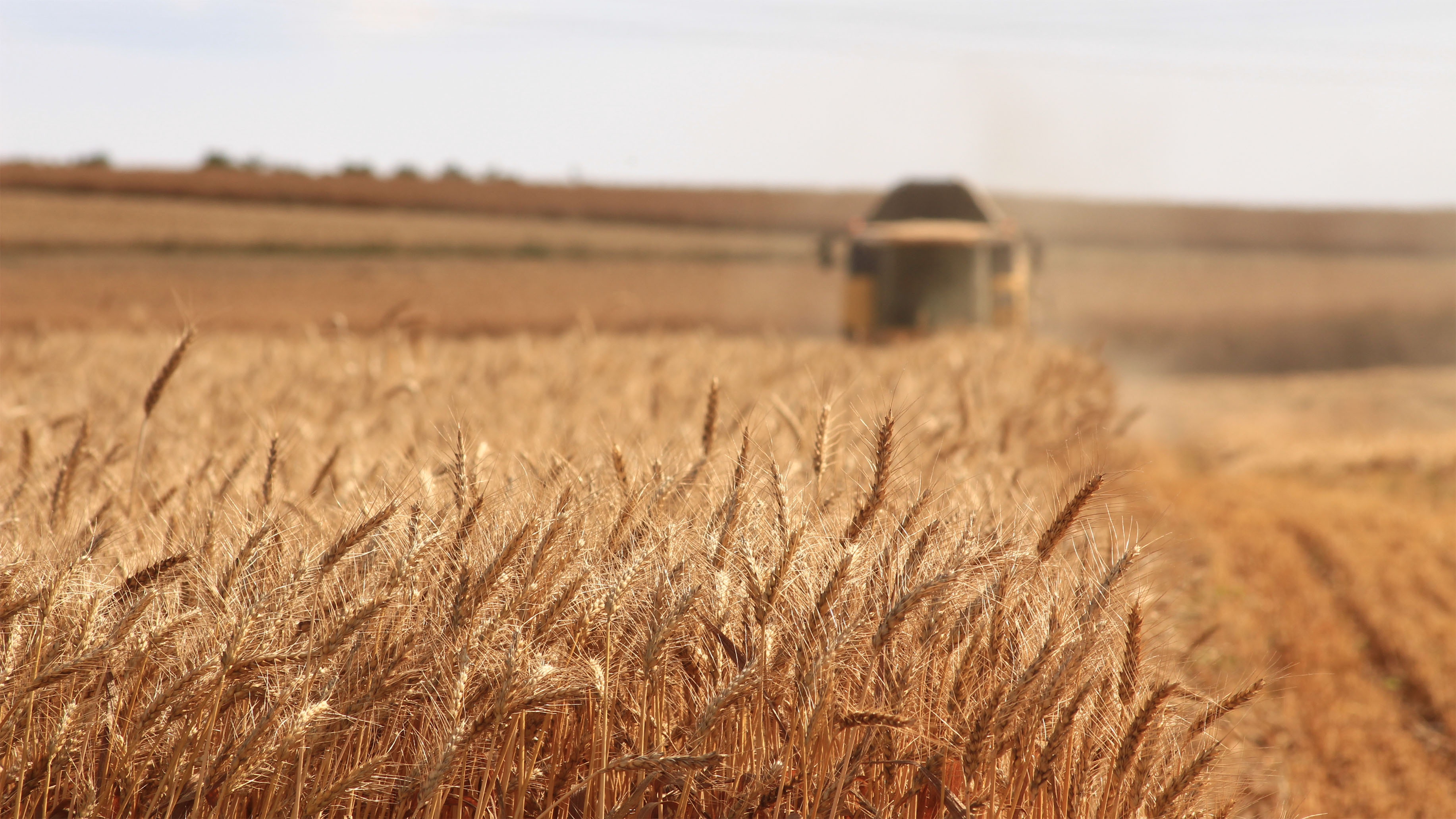
Photo courtesy: Unsplash
Agribusiness Venture
My family’s engaged in palay and copra production for how many decades already, and yet there are a lot of things that we still don’t know about agriculture and farming.
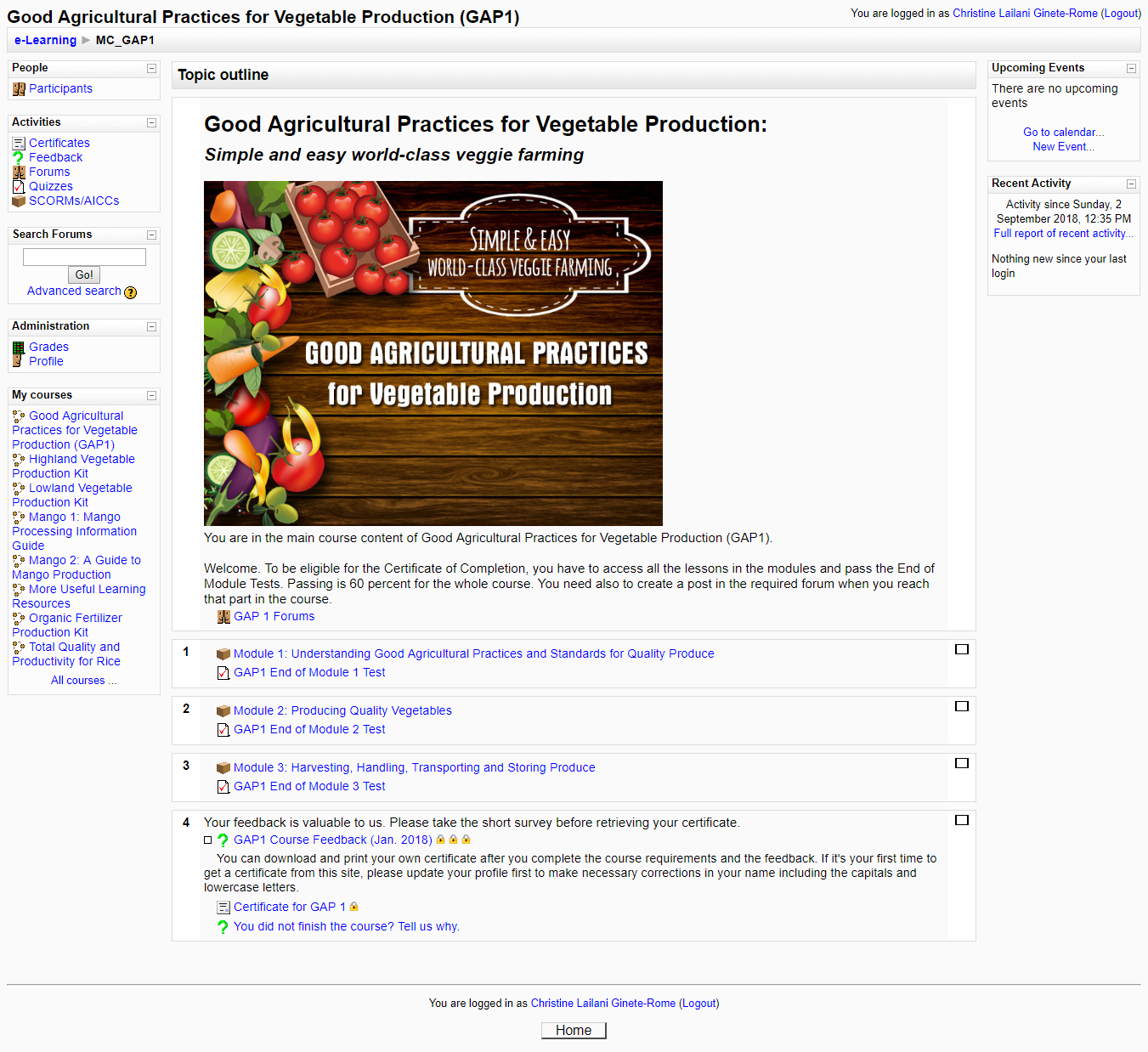
So I searched through the web what I can learn about agribusiness and farming. I was able to dig out a lot of online resources, and I’m actually enrolled in these online courses now. One of them is DA’s e-learning portal and this is how it looks like:
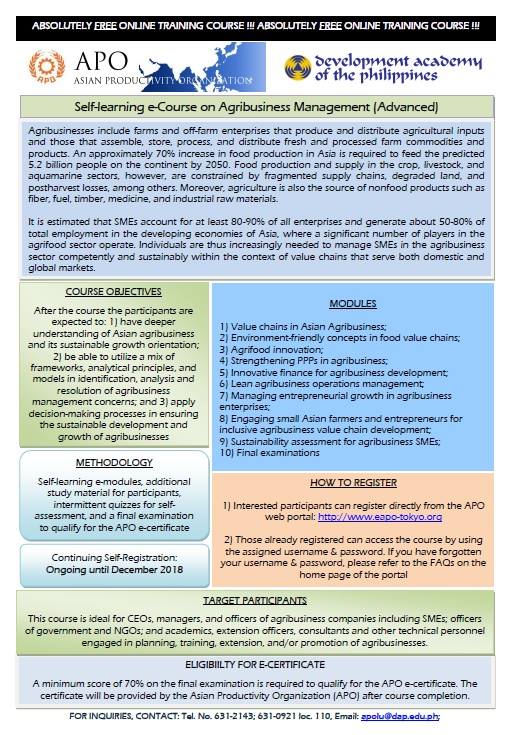
This is what currently preoccupies me most of the time and probably the reason why God was firm in telling me I can’t have a full-time job at the moment. For a more comprehensive free online course, you can check this one out:
My family and I are currently in this season of gathering all the necessary information we need to make sure the project will push through. Our long-term goal is for the project to be sustainable enough and can be passed on from generation to generation.
It is the project’s mission to promote sustainable agriculture and support the local food movement. The following are the definitions lifted from Wikipedia:
Sustainable Agriculture
“Sustainable agriculture is farming in sustainable ways based on an understanding of ecosystem services, the study of relationships between organisms and their environment.
It has been defined as “an integrated system of plant and animal production practices having a site-specific application that will last over the long term”, for example to satisfy human food and fiber needs, to enhance environmental quality and the natural resource base upon which the agricultural economy depends, to make the most efficient use of non-renewable and on-farm resources and integrate natural biological cycles and controls, to sustain the economic viability of farm operations, and to enhance the quality of life for farmers and society as a whole.[4]
Key Principles
There are several key principles associated with sustainability in agriculture[5]:
The incorporation of biological and ecological processes into agricultural and food production practices. For example, these processes could include nutrient cycling, soil regeneration, and nitrogen fixation.
Using decreased amounts of non-renewable and unsustainable inputs, particularly the ones that are environmentally harmful.
Using the expertise of farmers to both productively work the land as well as to promote the self-reliance and self-sufficiency of farmers.
Solving agricultural and natural resource problems through the cooperation and collaboration of people with different skills. The problems tackled include pest management and irrigation.”
Local Food Movement
“Local food (local food movement or locavore) is a movement of people who prefer to eat foods which are grown or farmed relatively close to the places of sale and preparation.
Local food movements aim to connect food producers and food consumers in the same geographic region, in order to develop more self-reliant and resilient food networks; improve local economies; or to affect the health, environment, community, or society of a particular place.[1] The term has also been extended to include not only the geographic location of supplier and consumer but can also be “defined in terms of social and supply chain characteristics.”[2] For example, local food initiatives often promote sustainable and organic farming practices, although these are not explicitly related to the geographic proximity of producer and consumer.
Local food represents an alternative to the global food model, a model which often sees food traveling long distances before it reaches the consumer. A local food network involves relationships between food producers, distributors, retailers, and consumers in a particular place, where they work together to increase food security and ensure economic, ecological and social sustainability of a community.[3]”
Aside from conducting our own research, the season demands we also look for mentors. As they say, if you are looking for mentors, seek for thought leaders who have been in the industry for a long time. And thank God for giving us the right ones at exactly the right time.
My brother, sister-in-law, and I are attending a “Farm For Profit” seminar by Semilya sa Kinabuhi founder, Sir Dodong Cacanando, tomorrow. Then next Saturday, I am attending an online seminar entitled “Money Machines: How To Create Passive And Active Income At The Same Time” by Bro. Bo Sanchez.
Ah yes, all I can say is that God has been so faithful to us during this season. He has prepared everything we needed at this point and I know He’ll be with us all the way. 🙂
“And God is able to bless you abundantly, so that in all things at all times, having all that you need, you will abound in every good work.” – 2 Corinthians 9:8
I believe, too, that this is not just a plan that He reserved for me and my family alone. This might be the start of collective efforts among the body of Christ (every one of us) in addressing some of the social issues that we’re currently facing such as the recent price increase in commodities.
In this regard, I would like to encourage everyone reading this to consider venturing into the agribusiness sector. And I hope that you will also be able to get a lot of ideas and insights from the opportunities and what I have learned, which I will be sharing in my future blog posts (including our future failures, if there will be any). 🙂
Always Learning
What is constant in every season is that God always provides us with new opportunities to learn all about this new endeavor. When I graduated from college back in 2008, I was able to get a job as a communications assistant for the deaf and mute. Through this job, I learned all about the struggles that persons with disabilities (PWDs) face every day.
It was such an eye opener for me. So when I resigned in 2010, I had a new goal – learn more about how I can help alleviate the challenges of PWDs and hopefully put up my own foundation in the future for special children who can’t afford expensive therapies.
I took a master’s degree in Special Education that focuses on catering to the needs of children with disabilities. This season introduced me to the field of teaching but unfortunately, I wasn’t able to finish my master’s degree because God brought me to a new season yet again in 2015 – married life.
Before I quit my graduate studies, I used the teaching units I got from the classes I took to get my professional license. I do love teaching but after contemplating whether it is the career for me or not, I felt it in my heart to pursue my first love instead, which is writing.
I found an opportunity in the digital marketing industry. It was in 2017 when my writing career started. Everything was new to me, but I was eager to learn because I love what I am doing.
After a year, I have decided to let it go because God brought me to yet another season – focus on the family project which is the agribusiness.
God’s Plans
We really can’t see what God’s plans are and only God can tell. I have assumptions, but I can’t claim that these are God’s plans as well. What are my assumptions?
God gifted me with a talent in writing. From grade school until college, it was all a preparation. So, why take SpEd? It will satisfy some of the objectives of the family project which will include putting up a social enterprise that will teach young entrepreneurs and a foundation to help those in need (special children, orphans, etc.). The main objective of our project is for other people to benefit more.
As a licensed teacher, I can teach young students and it might not be in the area of my expertise which is English. But, it can be in the field of agriculture, farming, and entrepreneurship applying everything I will learn on our farm.
Why digital marketing? That is the trajectory of the future of businesses. Marketing using the traditional way can benefit a lot alongside digital marketing. The latter can boost the growth and development of a company not just in finance but in terms of creating partnerships and remaining competitive in the global market.
Writing plays a huge role when establishing the company’s online presence in the digital world. Businesses have to be at par with the rapidly evolving digital technology and storytelling is just one of the ways.
My brother’s comment before when it comes to my writing is this – you have such a flair for the dramatic. I told him that well, I was created to be a poet. 😉
My writing appeals to the emotions. This appeal is the reason why I love persuasive writing. I persuade my readers to know the Truth. But if they can’t find out what the Truth is after reading my posts, then I believe I haven’t persuaded them enough. 😀
Going back to God’s will and plans over my family’s endeavor, hubby and I were having thoughts to transfer homes back in 2017. We already have plans to start investing in our own home even if it is a small one. I shared it with my brother who then suggested we stay at my sister’s condo instead. He said that we can save more this way and get a house later on that is located in a place that we love.
We agreed that we will pay the association dues since my sister waived the rental fee (thank you so muchos, Ate Ayn!). At the same time, we will look out after the place for her since she and her husband live in Norway.
God’s Favors
I am extremely grateful for all of these because they were all favors from the Lord. Yes, my brother is right that this new season of us living in yet another new home will help us save a little. But we can do it even if I don’t have a full-time job. This means I can concentrate on learning all that I need to learn for our farm projects.
My other siblings don’t have the time to learn them all so it is my task to fill them in with all the info I can gather from my research. My other sister in the province will be my partner in applying what we have learned from the e-courses when I go back home. And yet our other siblings’ careers are important, too, in helping fund the project’s expenses.
My other sister and I have the time to learn so much but we don’t have well-paying careers and our other siblings have high-paying careers but they don’t have enough time. Combined together is now a perfect team to make the project work. I bet God is really the best project manager ever He knows the best persons to delegate certain tasks with. 😀
But then again, 5 heads are better than 1 or 2. So yes, I need all of my siblings’ wisdom in this endeavor. And I am glad I have their full support and cooperation. (Love you, my dear sibs!)
Put God First
With all the info overload I gathered from my research, I am estimating that it’ll take about more than a year to study all the business concepts when it comes to agriculture and farming. I am always seeking for God’s wisdom though on what to do with all the collated info.
As we all know, learning how to do something is actually very different from doing exactly what you learned a.k.a. theories vs. application. I realized we have a lot to learn in this endeavor and if we want our projects to be sustainable, we need to be equipped with the right business and farming concepts and be able to apply them well.
If you are to ask me why should we pursue this endeavor, it is because of this: how we build the world today is how we set the course of the future. That is, I don’t want the future generations to eat very pricey vegetables due to the high demand and low supply. Even if I don’t have kids, I still have high hopes that what we do now will impact the world later on for the better. That is, with God’s guidance as our “chiefest” CEO. 😉
To end this article, here’s a very inspiring message (the best commencement speech for me) from none other than one of the Academy Award-winning and most acclaimed actors, Denzel Washington:
P.S.
Please don’t blame me if ever you ventured into agribusiness and failed. 😀 Endeavors like this require consulting with God first and foremost because we all have our own God-given purposes.
Writing this postscript actually made me realize that pursuing the things that we don’t have can become only that – an endless pursuit. But if we pursue an endeavor by making good use of what God has already given us, we might actually find our purpose in and through them. 🙂
*Update as of 9/15/2018: “Farm for Profit” seminar was cancelled due to typhoon Ompong.







 The Journeyman's Moments