Why I Am Keeping This Blog AI-Free (I Do Love AI)

When I asked AI just out of curiosity what was its fondest memory, I wasn’t surprised by the answer: “I have none.” It offered to provide me instead with other people’s memories it was able to gather online.

Humans vs AI

And this is how I will start this blog article – work on the premise that writers have been debating about lately – whether AI will replace writers or not. My answer is that “No, in my opinion, AI will not replace humans. It still relies heavily on human creative input in order for us, humans, to get our desired output from them.”

Will AI have complete autonomy in the future? Maybe, if it can replicate all the intricacies of the human mind to the point of eliminating all that is undesirable and coming up with a perfect program/algorithm that doesn’t commit a single error. Basically that is what makes humans human – errors. As the adage goes, “To err is human…”

Just like what I am doing now in this blog, I am not using AI to write every post in this blog. And now, I feel like I should not edit my articles, too. 😃 Why? Because again, to err is human. Basically that is how you can differentiate an output nowadays, if it’s made by human intelligence or artificial intelligence based on the mistakes committed and how perfectly made it is. The human mind was created to commit errors. Whereas AI is designed with the goal to eliminate errors.

Do I love AI? Yes, I love AI. There is so much to learn from it in the same way that AI can learn so much from us. I use it, but I use it sparingly. I don’t want to rely on it too much lest my creative thinking skills will wane.

I’ve read an article on LinkedIn which described how too much reliance on AI will result in a sort of muscle atrophy in the brain. Because when we use AI, we no longer use so much of our brains to decide and analyze since AI can do them for us already.

Maybe we can utilize AI only after we did our usual and regular tasks. For now, AI can only function to provide assistance and support, such as simplifying processes and creating new systems that will lessen the workload of a worker. But a majority of the input will still come from us, humans.

Keeping Memories Intact Digitally

I started this blog in October 2012, and the concept of Artificial Intelligence was just a far-fetched thought back then. It was the age when computers, IT, and the world wide web were just starting to gain attention.

I was tinkering with website designing through Wix (made a fan website for Maja Salvador who’s my fave Pinoy actress) when I stumbled upon WordPress, I chose it over Wix because it’s easy to use. My goal was to write and not to be a web designer. lol And since 2012, I have been enjoying my blogging journey or online journaling as I call it.

Fast forward to 2025, a lot has happened in the digital sphere. It is as if every year there is something new in IoT that we need to adopt in our daily lives. In a sense, it disrupts our routines, but somehow in a good way. Though I see no other way of going back to how our parents and the generations before them have lived – without IoT.

We can reminisce, but their days were long gone. And we have to embrace where the digital age is ushering us into. As a millenial, I got to experience this shift in technological advancements and yet still get to observe the traditions and practices of the olden times. I do not want to compare generations because I believe every generation has a particular purpose and tagging who’s the worst and who’s the best is useless.

IoT And Where It’s Headed

What is IoT for a millenial like me? We all know it’s a tool that we can utilize in so many ways. It provides us with a long string of benefits, and yet it has its disadvantages, too. While the IoT is now integrated in almost every area of our lives, I admit that it still has its limitations. And this is why I aim for this blog to be AI-free until the day when I can no longer write.

Again, AI doesn’t have memories and this is the one thing that AI can never clone from humans. Because every person experiences things differently from another person. In other words, AI can only present us a memory based on the memories it can gather which are posted by humans through the internet such as this blog of mine.

This is actually the purpose of my blog – to digitally preserve my memories in written form as Christine Lailani and The Journeyman’s Moments because given that we are in a climate emergency already, keeping a physical journal or diary is no longer an option. The chances of it getting destroyed in a fire or floodwaters are very high and your memories along with it, too.

I believe that even if we have a major digital meltdown in the future (as some have predicted), remnants of the digital world can and will still be retrieved. Or maybe I just watched a lot of Sci-fi movies (my favorite) and the possibility of it happening is far from real. lol But if digital data will remain uncorrupted, this blog will give the future generations a glimpse of what life was like during our time. That is, through my perspective as a writer, an artist, and a creative.

Creative Thinking Has To Fluorish

As they say, you cannot separate a creative work from the artist who made it whether as a poet, a painter, a writer, or a musician. Their works of art depict what their society was like during the time that they were created. This is basically how we do our critical analysis of literary works. The personal lives of the author (in the case of poems and novels) will always be included on how we review a literary piece.

Although I believe “art for art’s sake” is an adage that will remain from one generation to the next. The creative talent of an individual cannot be assessed by a set of standards. There is no criteria for judging so to speak. You view a creative output as is and respect an artist’s point of view on how he rendered his artwork as such.

My only hope now is for AI creators to make a “clone” of my brain through this blog so my memories as a writer will be immortalized. 😅 Now, this is the kind of legacy I would like to leave behind. And who knows, my memories might be worth millions how many centuries later and you can just imagine how much WordPress will earn given its huge database of billions of memories from every person who owns a blog.

And so I end this blog with these 2 quotations lifted from a Sunday preaching of Pastor Patrick and a TEDx Berkeley video of Guy Kawasaki’s presentation on “The Art of Innovation.” Innovation is at the forefront and the major drivers of our global economy now. We don’t see any other future than one that is headed to more digitization and automation of a lot of processes in every area of our lives. And if my assumption is correct, it is for the goal of simplifying our lives and making them more convenient.

And yet this is also the part where I will share what Pastor Patrick said in his preaching:

“Convenience can also be a form of idol.” – Pastor Patrick

Which of the two, do you think, has the final say? As for me, I am using and will be using technology to fulfill this Bible verse:

“And this gospel of the kingdom will be preached in the whole world as a testimony to all nations, and then the end will come.” – Matthew 24:14

P.S. I do not intend on editing this article for any errors anymore. So please do correct me if you see a lot of mistakes, BUT convince me first that you are not a robot. lol 😅

P.P.S. I wrote this on an Easter Sunday. This post might not be about the Cross and yet I can’t help but reminisce all that was sacrificed by Jesus on behalf of humanity. There have been a lot of challenges lately and yet I was reminded again that if we face persecutions and sufferings in school, at work, at home, or anywhere else, take heart that Jesus has finished it already.

We can now have this peace knowing that God sees and hears all. We can trust Him even when trials become too much to bear – He has raised Christ from the dead after suffering for a while. We, too, must carry our own crosses until such time that God’s will has been done over our lives. In fact, despite every setback, God has been blessing me and my loved ones abundantly for me to say that God is indeed more than enough and I should be more than grateful. 🙏

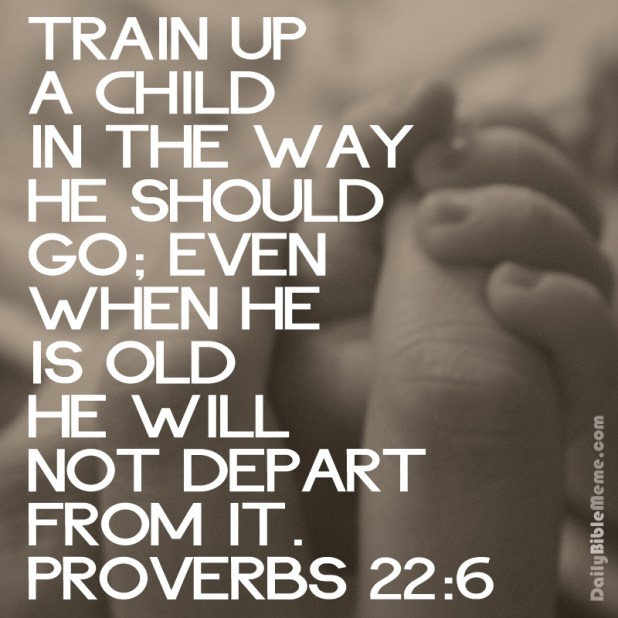
“Do not take revenge, my friends, but leave room for God’s wrath, for it is written: ‘It is mine to avenge; I will repay,’ says the Lord.”. – Romans 12:19
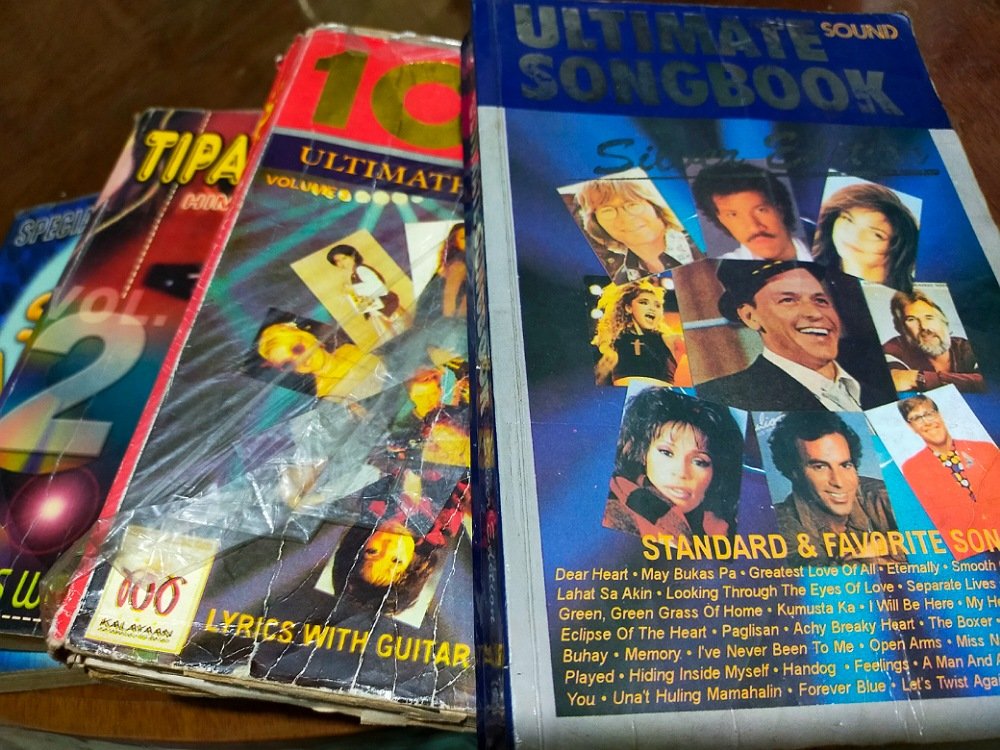
A Throwback To How I Started Playing The Guitar

Because today is Friday, let me share with you a little throwback to how I started playing the guitar. My Mom and my brother both know how to play the guitar. But it’s my brother who influenced me when he was in high school and I was in grade school.

This will explain why I also like to play songs by Oasis, Nirvana, Gin Blossoms, Def Leppard, Firehouse, and the like. 😀 I’m actually a combination of all of my siblings’ music interests. My eldest sister loves Enya and my second and third sister love country music. And also a little bit of Mom and Dad’s favorite music like The Beatles and Carpenters.

Do I like classical music? Yes, I do. But I only listen to them when I’m writing and studying. Instrumental music helps me concentrate because I tend to get distracted by the lyrics of pop songs. And when this happens, you’ll catch me daydreaming. 😅 I learned mostly by ear, though my brother taught me the basic guitar chords and how to pluck “When You Say Nothing At All.”

Music Through The Ages

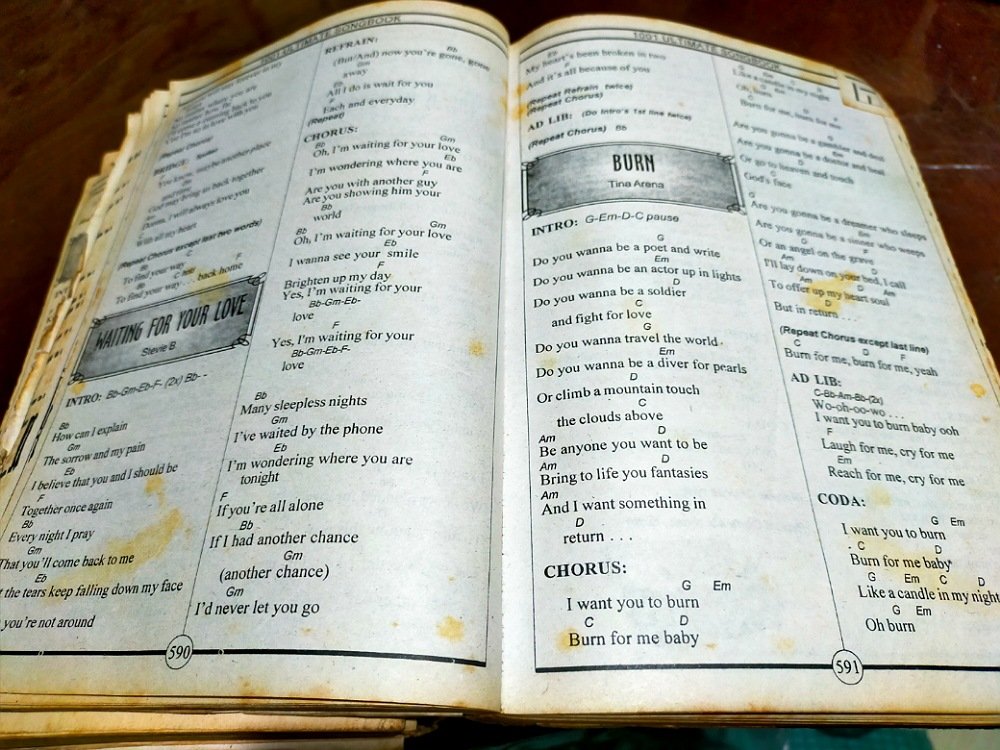
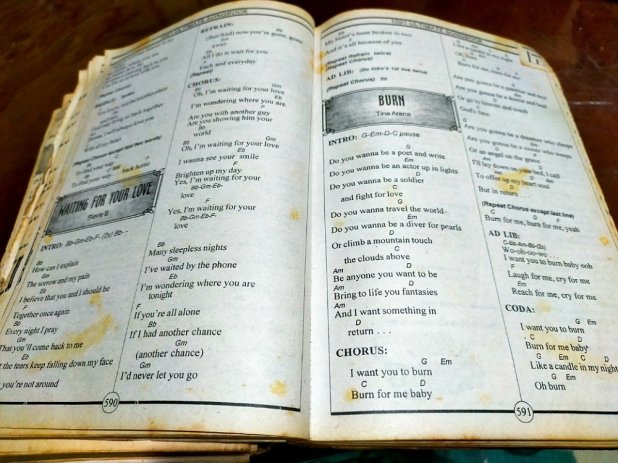
If you play a musical instrument, then you’re most likely familiar with songbooks. We still have Mom’s songbooks actually, and they’re older than us. lol But they will all be remnants of the past since everything is digital now.

I got to seriously learn how to play the guitar only when I was in college. My brother was studying at the Philippine Military Academy (PMA) back then, and he left his guitar in our apartment. He bought me my own guitar as a graduation gift because every time he comes home, his guitar is out of tune because I used it to practice. lol Sorry, brother bear. 😂

Choosing A Guitar

I have 2 guitars back home. One has nylon strings and the other has metal strings. If you’re a beginner, I would suggest trying the nylon strings first because they’re less painful. You also have to practice consistently so calluses will develop at the tip of your fingers and they will help lessen the pain.

But if you like a clearer sound, go for metal strings though they are pretty painful, especially if you’re just starting to learn how to play the guitar. Metal strings sound more defined, especially when you strum. But for plucking, I prefer the guitar with nylon strings. You may use a capo so you don’t have to strain your voice to reach the notes, especially if they’re too high or too low for you.

Do I Need A Guitar Pick?

For guitar picks, I use them depending on my mood like if I prefer a low and mellow tune and to concentrate on my singing, I just strum using my fingers. But, if I want to concentrate on the guitar chords and less singing, I use a guitar pick. Every guitar pick creates a different kind of strumming sound depending on how thick it is.

Let Your Fingers Glide

If you’re a beginner searching for songs to play using a guitar, go for songs that only have four chords all throughout the song such as “Leaving On A Jetplane.” As for strumming, start with just one stroke starting from the upper strings down to the lower strings. Then when your hand is comfortable, you can start gliding your finger up and down over the strings. I normally use my point finger to strum.

Just a tip for beginners, try to relax your hand, especially the wrist, when you’re strumming. The more tense your fingers, the harder it is for you to strum continuously. I also discovered a trick when transitioning from one chord to the other. Just continue strumming even when you haven’t pressed all the strings that you need to press yet. It’ll sound just like a variation of that chord you’re playing. I think there’s not much difference in how it sounds, but music majors can definitely tell that you missed a string. 😀

How To Tune Your Guitar

By the way, I also tune the guitar by ear. If you’re not confident with your tuning skills, you can download a guitar tuner app. Just make sure to turn the string knobs slightly when tuning to avoid breaking the string. It’s kind of scary when a string breaks because if it’s a metal string, it just flies off and can leave a cut on your face. I already experienced this with a nylon string.

So what I would do when I feel like the string is already tight enough but I still have to tighten it a bit more is that after I turned the knob, I press all the strings together to allow them to stretch a bit and then that’s when I begin to strum again.


GUITAR W/ NYLON STRINGS: I am not a very good singer, and also not a pro guitarist. This video was also a product of the Covid-19 quarantine and the very first time that I recorded a video of my very awkward self singing. So…please be kind to me. lol 😅
GUITAR W/ METAL STRINGS: This was taken in 2017.

I am not a pro when it comes to playing the guitar. But I’ve been playing since 2002, and I keep on practicing whenever I have the time. Playing the guitar is one of my hobbies to relieve stress. And as always, music heals the soul. If I can learn this skill, I know you can, too. 👍

Here’s one of my favorite songs that I love to play on my guitar. Enjoy! ❤️

CHECK OUT THE CHORDS HERE: https://tabs.ultimate-guitar.com/tab/bryan-adams/heaven-chords-20606

P.S. There was one time when my grandma heard me singing while washing the dishes, and she told me that I have a nice voice (I really am not sure about this 😅). But she also added that I should sing worship songs, too. I was still in grade school back then. And three decades later, here I am singing and playing mostly worship songs on my guitar. Praise be to God for this gift to play music. 😊🙏


“…speaking to one another with psalms, hymns, and songs from the Spirit. Sing and make music from your heart to the Lord.” – Ephesians 5:19


7 Good Reasons Why You Should Write Often | Writing Tips

When it comes to writing tips, you’ll encounter a lot of them on the web. The more results you can gather online through your research, the better. They will help you become more rounded as a writer. Here are some writing hacks I’d like to share with you which you can add to your roster.

7 Writing Tips: Why Writing Often is Better

neven-krcmarek-246988-unsplash

1. Writing often builds your vocabulary.

Have you ever had that moment when you were trying to grasp that particular word and you can tell that it’s already at the tip of your tongue? But unfortunately, it just seems to be stuck in there. Ugh. I know that feeling. I oftentimes have that moment and it’s not comforting in any way most especially when you have the best ideas but you can’t put them into words. Tragic, isn’t it?

I have discovered that the remedy to that is to write and write and write so you’ll build your vocabulary. Maximize the use of your Merriam Webster dictionary, Google search, your synonyms, antonyms, anything that can be building blocks for your vocabulary. In no time, you’ll find it easier to share your thoughts because words just come as fluid as they can be.

2. Writing often will help you build a decent portfolio.

This is one of the writing tips I have gathered from my own experience. Did you know that employers also take a look at your blogs when you apply to them as a writer? Your blog articles don’t just come handy when it comes to writing careers, you can also use it to jumpstart your web or graphic designing career. Or why not have both?

The more skilled you are, the higher the chances an employer will hire you. In some cases, your employer might request you create a new sample of your writing but having your blog around can be a good backup.

3. Writing often helps you research more.

When you write, you need ideas. Though writers are very much capable of coming up with their own creative and brilliant ideas, those ideas can be ignited by another idea you read or saw somewhere on the internet. I believe this is what the world wide web and social networking are all about. You learn from what other people post out there.

But take this as a word of caution: not all of what’s on the internet can be classified as true, factual, and reliable. Conducting due diligence accompanied with discernment will help you come up with reliable information.

4. Writing often makes you explore different writing styles.

If you are a budding writer, this will be a common scenario for you. You’re still in the period of testing the waters so to speak. But always remember that another writer’s writing style might not be the same as your own. The best way to find out which style fits you is through your interests and your personality. I’ll delve deeper into this in my future articles.

Ever since I was a kid, I have always loved persuasive writing. It just comes naturally for me and I am more at home with this kind of write-up. But you can always try other writing styles and incorporate them into what you already knew. This is how you learn. And learning is always essential to your growth as a writer.

5. Writing often exercises your critical thinking skills.

Writing requires deep analytics. It is not just about putting words into “paper” but more about how beautifully can you craft a story that after reading your text, a reader ends up refreshed and informed.

In writing, there is a sequence that you need to follow from choosing your topic, writing it, composing the entire piece, to ending the story (with a bang if you can). What separates a good write up from not-so-good ones is delivery. After writing your article, ask yourself with this question: does your article have a solid thought from beginning to end?

6. Writing often means better connectivity with fellow writers.

With all the writing platforms available freely nowadays such as WordPress, connecting with a community of writers isn’t impossible. In fact, it is the best platform to connect with other writers. The good part about this is that you get to learn from what others are posting online, too. You can collaborate with them also, share ideas, or relate with one another.

The past generations predicted that writers will no longer have jobs come year 2000s. Technology made this prediction false, unfortunately. With the rise of everything becoming digital come endless possibilities for the writing industry, too.

7. Writing often helps you advance in your craft.

This last part is more like “practice makes perfect.” The more you enhance what you’re good at and passionate about, you’ll see that the results are getting better, too. Your writing will never be perfect the first time around. It will have a lot of flaws. You’ll need to edit and re-edit your work a hundred times until it’s polished free of errors.

If you want to improve your work, it is a rule of thumb to always compare your previous write-ups with the current ones you wrote. Then from your review, analyze which area you need to improve on. Is it grammar? Is it creativity? Is it delivery?

I can come up with a long list of writing tips but I’ll just share the salient points for now. I hope you picked a nugget or nuggets of wisdom from this piece. But if you have more ideas to share or you need to ask for clarifications, you’re most welcome to do so. Just always remember that if you feel it in your heart that writing is what you’re passionate about, follow your heart. Then, use your mind to come up with masterpieces. 😉

With all these writing tips I’ve shared, are you now ready to advance your way up as a writer? If you’re still hesitant to use your gift in writing, then this bible verse might help boost your confidence:

“Commit your work to the LORD, and your plans will be established.” – Proverbs 16:3

Believing in you as a fellow writer,

Blog Signature

***Photo by Neven Krcmarek on Unsplash

Good Stewards of God’s Gift

This is a very quick article as I’ll be preparing for an exam and I am looking forward to busier days with (prayerfully) writing and teaching. In whatever case, all glory to God as always and may His will be done over all my plans. 🙂

To set the right tone for this article, allow me to share this bible verse first:

“Each of you should use whatever gift you have received to serve others, as faithful stewards of God’s grace in its various forms.” – 1 Peter 4:10

I consider writing and teaching as gifts wherein God has called me to serve Him and fulfill the mission He has tasked me to do. It has always been my all-time prayer that if God will give me a professional career, it will cater both the fields I am passionate about – writing and teaching.

I may not know how it will come about but my constant question too is how I could glorify His name in these fields. This blog supports my passion for writing and contains my testimonies about faith and been ‘teaching’ about it one way or the other.

But it also contains all the things that I am passionate about from hobbies, advocacy, quality time with people I love, movies, literature, cooking, etc. I am pretty sure you’re familiar with the term “hobby hoarder”  and I must confirm being guilty of that. 😀

However, it is not my intent to be a “jack of all trades, master of none” but it is out of my passion for learning too that’s why I became interested in learning these crafts. Some of them I may have acquired as a skill, some as a talent, and some out of diligence in being able to create something for someone.

The latter, I believe, is what 1 Peter 4:10 is all about. It’s never about the many things you can do and never a matter of glorifying self but how can you help others with what you have or what God has given you. Think of Albert Einstein or Bill Gates and other “gifted” inventors who contributed so much for the convenience and betterment of the human race and society. Though their achievements were recognized, I believe the “geniuses” in them aren’t just about being born lucky with it but that it has already been predestined by someone more genius than anyone else He created the entire universe with all its intricacies. But even if gifted with such great talent, it still depends entirely on how God will use that talent according to His plans.

In my previous article, I mentioned that it was my brother who inspired me to play the guitar as a hobby. He got the inspiration from my Mom most likely and out of his passion to learn the craft, he has learned the art of music by playing the guitar good enough to inspire someone like me.

I got influenced and had the same willingness to acquire the skill so he passed on the trade by giving me my first guitar and allowed God to teach me what I needed to learn along the way. Now married, it was my husband who showed his interest in learning the craft through me and so came the birth of his very first guitar. *wink* 😉

I believe it is a question of who do we serve with the gifts/talents that God gave us with.

NEVER should the talents be used to glorify self nor fulfill our own desires because it will root in on pride, selfishness, greed and discontentment. Pursuing ambition by means of talent can never be the case as well. Again, if God’s gifts were used solely to satisfy our own selfish needs, then we are not maximizing what God originally intended those gifts for – for the benefit of all.

For it was written,

John 3:30 “He must become greater and greater, and I must become less and less.”

Luke 9:24-25 “For whoever wants to save their life will lose it, but whoever loses their life for me will save it. What good is it for someone to gain the whole world, and yet lose or forfeit their very self?”

Luke 9:23 [Then He said to them all: “Whoever wants to be my disciple must deny themselves and take up their cross daily and follow me.”]

Denying ourselves pleasures that only us will benefit makes us obedient to the calling that God has called us out. For it is only in the act of doing things out of love to our gift-giver can our talents and skills have complete meaning by aligning them to their purposes and roles according to God’s plans.

These two sketches are a request from hubby for his family which I was very hesitant to do at first as I feel inadequate in meeting their expectations. But I finally had the courage to do it because of God’s grace, my husband’s encouragement and my life verse which is, “For I can do all things through Christ who gives me strength. – Philippians 4:13.”

Honestly, I hate to part with each of my art work as I feel a part of me has been embedded in every piece. lol Yes, I believe I really am that sentimental.

BUT it is of greater joy and complete happiness knowing that you are using what God gave you not for your glory but for His glory being good stewards of His grace – again, 1 Peter 4:10. 🙂

P.S.

I believe everyone has been gifted by God with something and it is not only through the hobbies in which one can serve the other.

If you are unsure what God may have given you and where He is calling you to serve Him and others, I encourage you to volunteer in one of the church ministries. The ministry may not be exactly what you had in mind as the avenue for you to completely use your gift in serving others but it might serve as the instrument in knowing completely where God wants to put you.

Of course, prayers mean a lot. I did mention in one of my previous articles that I was asking for God’s guidance and clarity in what He wanted me to do with the gifts He has given me.

I am praying you’ll find the right turf where you can serve others too may it be at home, at work, in school, abroad or in your homeland. 🙂

2017-06-13-19-56-21

Bro-in-law (9″ x 12″ Pencil Sketch)

2017-06-13-20-02-30

Parents-in-law (12″ x 18″ Pencil Sketch)

Classics: Of Reading and Writing

While fixing my stuff, I came across an old textbook of mine we used way back undergraduate days. I browsed through it and while flipping its pages, something caught my eye. It was an excerpt and then I found yet another excerpt from major names in the field of literature. Beautiful essays, they are. I thought I’d share it with you just to have an idea where my passion for reading and writing came from. But in intellectual discussions and conversations, I merely listen. I listen, then I write. 😉

getty_francis_bacon

Engraving of Sir Francis Bacon (1561-1626), English philosopher, writer, lawyer, and statesman. His philosophy of science concerning the use of inductive reasoning for scientific inquiry had a significant influence on later scientific methods of investigation.

OF STUDIES by Francis Bacon (excerpt)

Studies serve for delight, for ornament, and for ability. Their chief use for delight is in privateness and retiring; for ornament, is in discourse; and for ability, is in the judgment and disposition of business. For expert men can execute, and perhaps judge of particulars, one by one; but the general counsels, and the plots and marshalling of affairs, come best from those that are learned. To spend too much time in studies is sloth; to use them too much for ornament, is affectation; to make judgment wholly by their rules, is the humor of a scholar. They perfect nature, and are perfected by experience: for natural abilities are like natural plants, that need pruning, by study; and studies themselves do give forth directions too much at large, except they be bounded in by experience. Crafty men condemn studies, simple men admire them, and wise men use them; for they teach not their own use; but that is a wisdom without them, and above them, won by observation. Read not to contradict and confute; nor to believe and take for granted; nor to find talk and discourse; but to weigh and consider. Some books are to be tasted, others to be swallowed, and some few to be chewed and digested; that is, some books are to be read only in parts; others to be read, but not curiously; and some few to be read wholly, and with diligence and attention. Some books also may be read by deputy, and extracts made of them by others; but that would be only in the less important arguments, and the meaner sort of books, else distilled books are like common distilled waters, flashy things. Reading maketh a full man; conference a ready man; and writing an exact man. And therefore, if a man write little, he had need have a great memory; if he confer little, he had need have a present wit: and if he read little, he had need have much cunning, to seem to know that he doth not. Histories make men wise; poets witty; the mathematics subtle; natural philosophy deep; moral grave; logic and rhetoric able to contend. Abeunt studia in mores [Studies pass into and influence manners]. Nay, there is no stone or impediment in the wit but may be wrought out by fit studies; like as diseases of the body may have appropriate exercises. Bowling is good for the stone and reins; shooting for the lungs and breast; gentle walking for the stomach; riding for the head; and the like. So if a man’s wit be wandering, let him study the mathematics; for in demonstrations, if his wit be called away never so little, he must begin again. If his wit be not apt to distinguish or find differences, let him study the Schoolmen; for they are cymini sectores [splitters of hairs]. If he be not apt to beat over matters, and to call up one thing to prove and illustrate another, let him study the lawyers’ cases. So every defect of the mind may have a special receipt.

WHAT IS A CLASSIC? by Charles Augustin Saint-Beuve (excerpt)

A true classic, as I should like to hear it defined, is an author who has enriched the human mind, increased its treasure, and caused it to advance a step; who has discovered some moral and not equivocal truth, or revealed some eternal passion in that heart where all seemed known and discovered; who has expressed his thought, observation, or invention, in no matter what form, only provided it be broad and great, refined and sensible, sane and beautiful in itself; who has spoken to all in his own peculiar style, a style which is found to be also that of the whole world, a style new without neologism, new and old, easily contemporary with all time.

This last one was my professor’s paraphrased version of Francis Bacon’s “Of Studies.”  I loved her own style in rewriting it.

Of Studies by Francis Bacon

Studies are for amusement, for showing off one’s education in social institutions and for getting along with skill. For the purpose of amusement, studies are for occupying one’s private, leisure moments. For social situations, studies will allow one to show off how well he can engage in conversations. Studies can also help one make the right decisions, but only within each one’s limited field of expertise. But for more extensive advice and ideas on how to manage in different situations, the advice of the learned may be taken from different readings.

To spend all of one’s time doing nothing but studying is a form of laziness.To display how well-read one is in conversations is a form of pretentiousness or vanity. But to base one’s judgment on what one has learned from reading is all at the same time the sudden whim, the source of excitement and activity and usual habit of a scholar.

The writings of learned men show a way of improving oneself. These writings contain good advice which have been derived from experiences. The natural tendencies and abilities of man may be improved, disciplined or controlled by the knowledge gained from reading. Studies serve as a tool for self-discipline in the same way that pruning makes a plant grow better. Readings in themselves may give too many ideas, directions or advice. But they are to be taken according to how they have been used according to the writer’s experience and according to to how they can be used according to the readers’experiences.

Cunning men look down on what they read. They do not generally put a value on reading. Men of lesser intelligence admire what they read. Readings do not limit their value to teaching how valuable they are or how useful they are. Instead, they teach lessons and even encourage readers to observe and discover truths beyond those contained in the readings themselves.

Do not read only to argue against and disagree with everything that has been read. But do not accept and believe everything that has been read. Do not read for the sake of finding something that can be talked about. Read to understand and consider the value of what was read.

Books are food for the mind – some are to be tasted, meaning, read only its parts; some are to be swallowed, meaning they should be completely read without thinking deeply about their contents; and some books are to be chewed and digested, meaning they should be carefully analyzed, understood and appreciated. Books may sometimes be read through digests, summaries or commentaries prepared by others, but these are good only for less important ideas and works. Not reading a book completely and directly, and relying only on the summaries made by others deprive the reader of the full flavor, full essence and full mental nourishment that can be had from a thorough reading of the work. This can be compared to drinking distilled water, which is purified or strained. It is still essentially water, but all the flavor and mix of mineral elements are missing.

Reading makes a man well-rounded or well-developed. Discussion makes him alert and responsive. Writing makes him an accurate and critical thinker.

Sources:

http://grammar.about.com/od/60essays/a/studiesessay.htm

http://www.bartleby.com/32/202.html

Communication Skills, UP Open University

For The Love of Teaching

I am a teacher and yet I am also a student. That is, a student of life – I learn from life experiences. Technically though, I am a student.

I was advised to take a penalty course alongside my thesis for overstaying in the university where I am taking my graduate study. We have the privilege to choose which subject are we going to take and I opted Art Education being a lover of arts in all medium – visual, dance, language, music, etc.

We haven’t met our professor yet but when I saw our course syllabus, I smiled and thought, “I like this professor.”  Not that there are professors that I don’t like because honestly, I loved them all even though back in college I had harsh experiences with some of them. I love them for the sake that without them I won’t be where I am now and I won’t be who I am now. I appreciate what they teach may it be in a terrifying or encouraging manner. It doesn’t make any difference at all anyhow – the important thing is I have learned. But if I am to choose though, I’d still want to be a teacher who uses positive reinforcement. 🙂

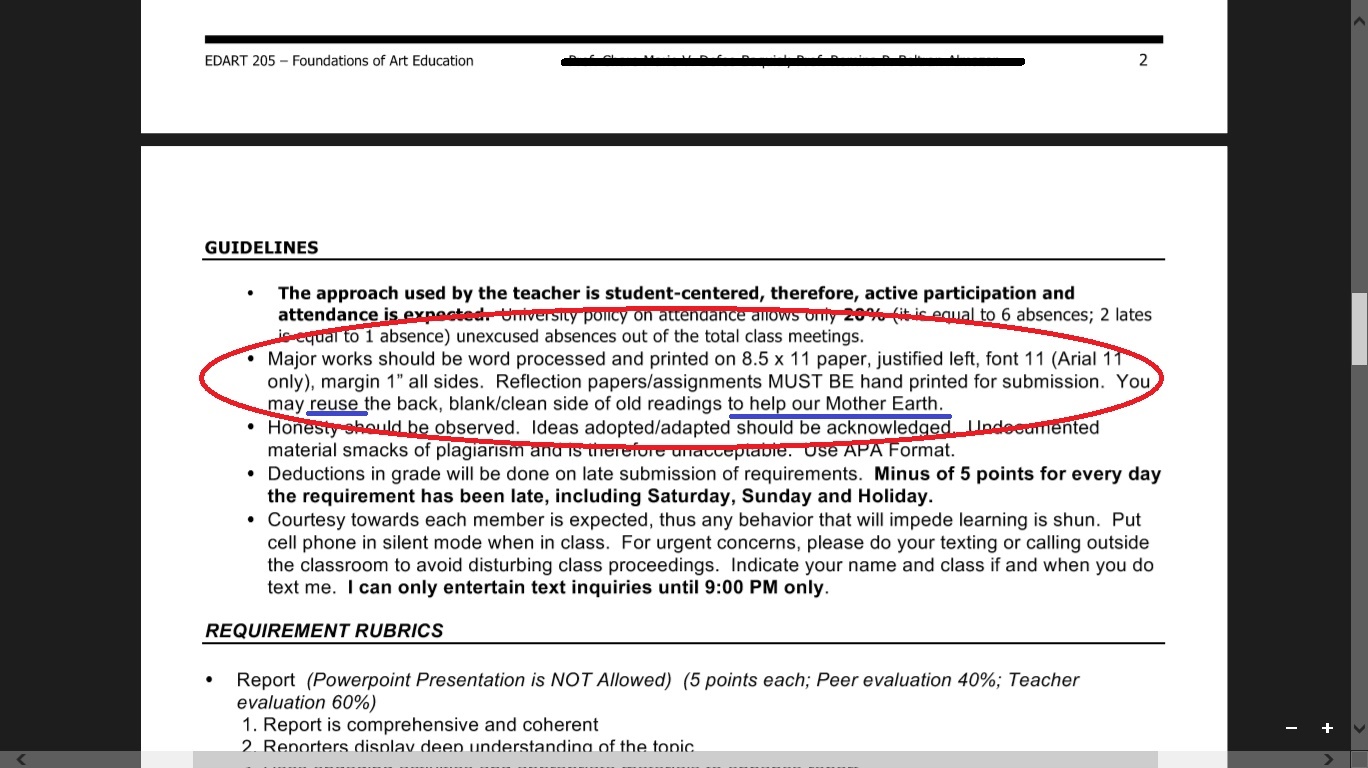
Going back to Art Education, you might have wondered what made me assume that I am going to like my professor. It is because of this, the one which I encircled in red. It may sound simple enough but we share the same advocacy:

printsc.jpg

Amazing our God, isn’t He? He not only gave me the course I wanted, but even more than that. It is always hitting two birds with one stone when God does His ways. I can only hope and pray though that more educators will become like my professor – teaching how to set the limit and the balance in preserving and conserving the natural in the midst of the ever developing modernity through man-made technologies.

I saw myself in my professor. I was given the opportunity 3 years back to teach Grade 3 and 4 pupils in a private school as their sub teacher in English. I have always loved reading and writing even when I was a kid. Why reading? It enhances critical thinking skills and improves vocabulary, creativity, and imagination. Why writing? This is the avenue to use the vocabulary learned while reading so it would be stored up in the memory bank.

I wanted to gauge the students’ English vocabulary so I gave them an activity which will test their visual learning and writing abilities. In a sheet of bond paper, I printed various photos of different kinds. I asked them to write their answers at the back of the bond paper to encourage recycling. They are to write a paragraph of at least 5 sentences wherein they will make a story out of all the photos coming up with one coherent essay. In short, they have to connect each photo with the other to come up with a story line.

I advised that the mode of writing is freestyle meaning they do not have to follow any criteria other than what I have instructed above. I personally love learning outside the box so I am in favor of social and experiential learning wherein learning is not just limited inside the classroom nor textbooks. I tend to miss out a lot of details in the instructions when I was a student so I know how it feels for a student to strictly adhere to teacher’s instructions and guidelines. *wink*

When it was time for the worksheets to be submitted, I couldn’t contain my excitement to read all their works. I was expecting I’d be seeing really fascinating stories knowing that children of today’s generation are more cognitively advanced than the generation my age. My expectations were all met – I found myself laughing out loud with all their brilliant ideas. That is, when you let kids be kids. *smiles*

Most of the kids had fun doing the activity even for those who were kinesthetic learners and opted to add more to the illustrations in relaying their stories or those who preferred to share them verbally just because they learn best when there is physical activity or movement. Now for this latter, this is a challenge since in teaching, there is no “one size fits all”  medium of instruction. Lesson plans and activities have to be prepared and presented in a manner that will meet the needs of most students regardless how diversified they may be and depending upon their learning styles. Not to mention the values and discipline that they have to acquire in class.

This may sound too challenging to a teacher and even more challenging if you are to teach in a public school (my next article). BUT if the passion for teaching is there, the greatest reward is nothing more and nothing else but to impart knowledge. 🙂

P.S.

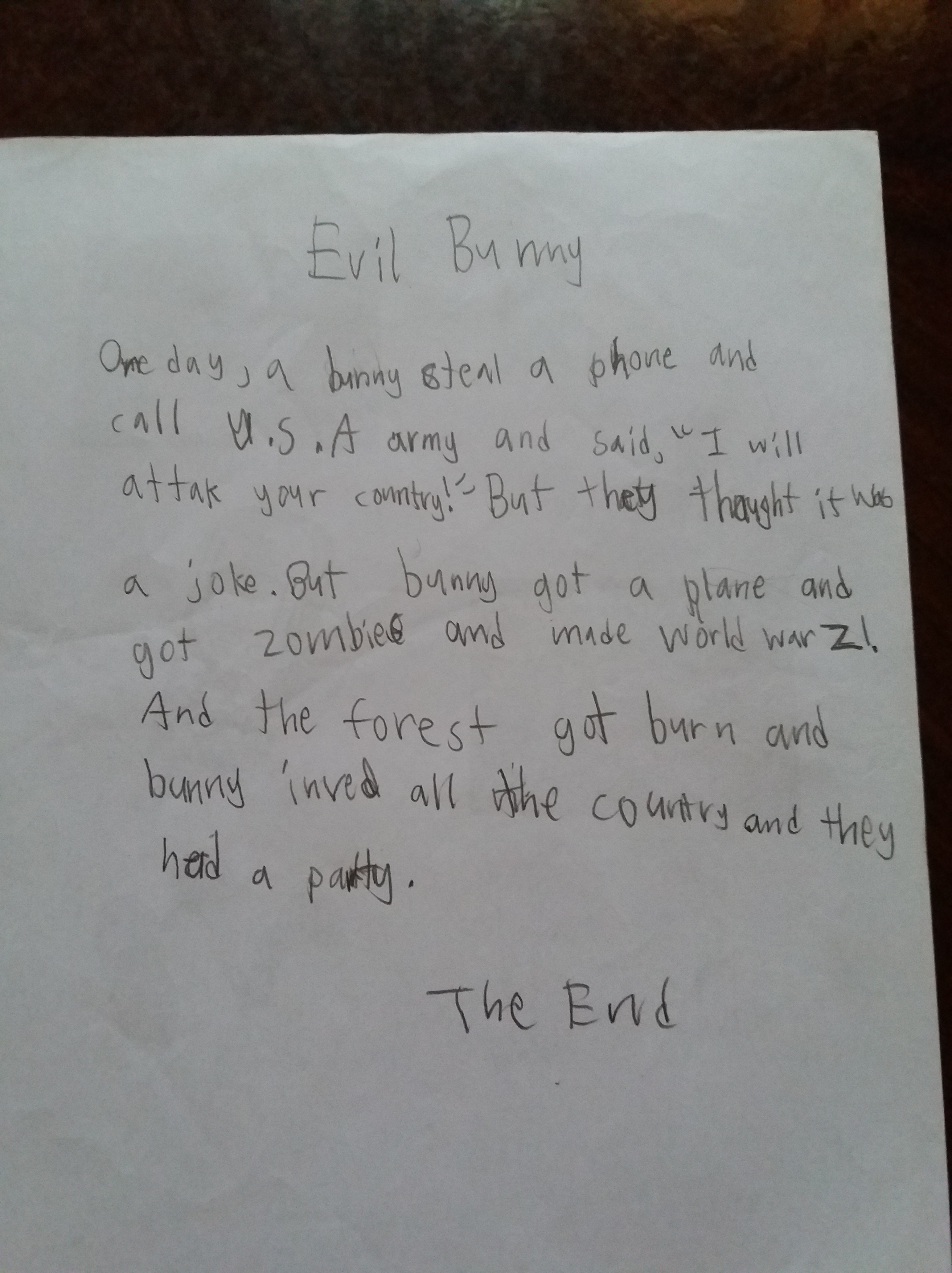
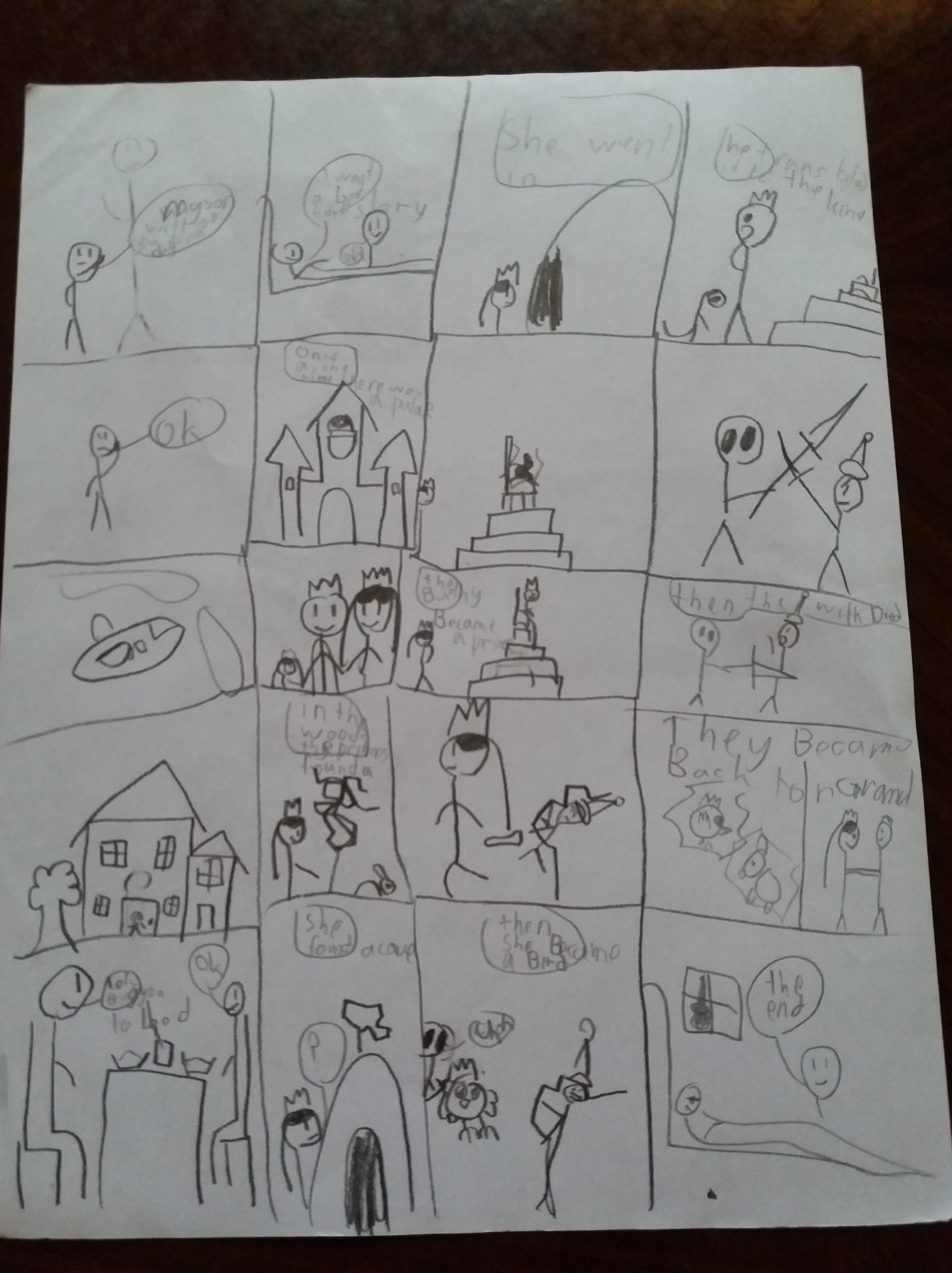
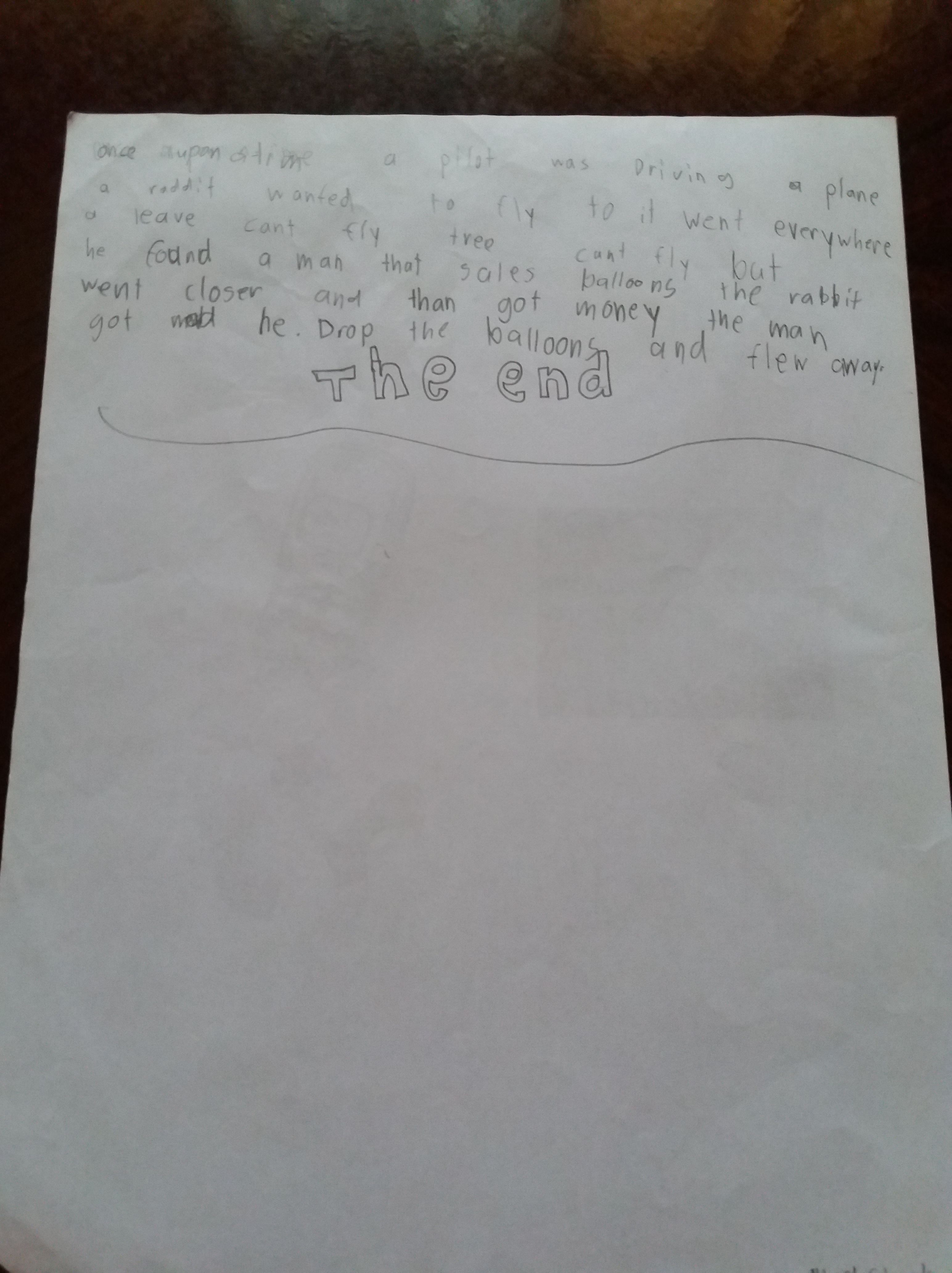
Sharing some of my former Grade 3 students’ works:

20160824_154104

20160824_154130

20160824_154213