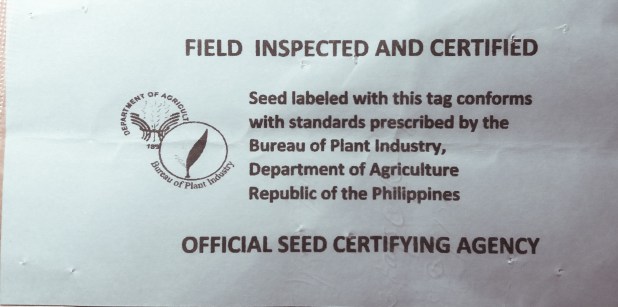
How the agribusiness industry fared throughout the years can be attributed from the bargaining that takes place between the farmer and the trader even before the products leave the farm gate. My family and I have been in the agribusiness, palay production in particular, for decades already. But it was only just recently that I ran a thorough analysis of the business processes involved in farming from the particulars in expenses to the actual farm tasks done.
I asked Dad to give us a rundown of all the marketing processes involved but he told us we’ll learn along the way. I guess this is his way of saying that we conduct due diligence as far as agribusiness is concerned. 😉
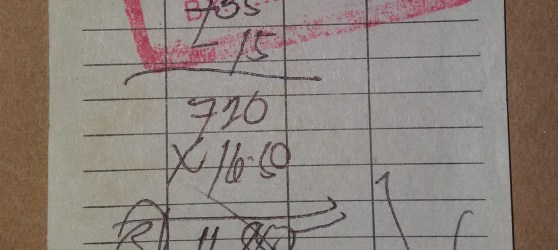
From the data I gathered on Dad’s documents, what caught my attention is the market price of palay listed in one of the receipts (16.50php/kg). I asked Dad who dictates the market price and how did it arrive at that figure. He only smiled and said, “The traders dictate the market price.” My follow-up question was, “Based on what?” He answered, “Based on the market trends.”
So, this is just like stock trading on a certain level. But here, if you’re a trader, you have the market power to set the price you desire. Depending on how you conduct your dealings as a businessman, this can either be a good thing or a bad thing as far as fair agricultural trade is concerned. Are traders really fair in dictating the market price for a particular agri product in the region? Does it follow regional market rates or the national market rates?
I haven’t taken any business education courses but I really would love to and if God wills it, I plan to take up a short course on Market Research. For the meantime, I’ve been doing my homework on farmers and middlemen and how the theory of bargaining works in the farming industry. These are the questions I came up with:
- Are farmers actually getting the profit they should earn from the entire production?
- Can a digital economy change the agricultural landscape in the coming years and provide better marketing opportunities both for the farmers and traders?
- Will agricultural innovations and agritech industries promote a brighter future for the farming sector i.e. lower transportation costs, high-yield production, etc.?
- How can a government-mandated price ceiling affect the overall trading setup between the middlemen and farmers?
- Can contract farming and direct selling be viable marketing alternatives?
- How can we prevent the exercise of “monopsony” in marketing rice/palay?
If you’re in the agribusiness industry and are interested to venture in palay/rice production or any crop production, these articles can provide some insights on the current market setup of farming and agriculture in the country:
https://business.mb.com.ph/2017/10/30/pinol-wants-to-liberate-farmers-from-middlemen/
https://ageconsearch.umn.edu/bitstream/174795/2/agec1999v020i002a001.pdf
https://businessmirror.com.ph/government-needs-to-increase-its-palay-support-price-but-by-how-much/
https://www.untvweb.com/news/dti-da-to-impose-price-ceiling-for-traders-middle-men/
https://psa.gov.ph/content/costs-and-returns-palay-production-0
I’ll be sharing more information as I go along with my market research/business analytics during my free time. Please bear with me if I’ll confuse you a bit with some of my questions since I am also on “tabula rasa” mode when it comes to business developments and the likes. 😀
But if you have any insights to share, please don’t hesitate to drop me a message. I’d love to hear your feedback/suggestion. Thanks in advance and for reading this article. ❤
“For I know the plans I have for you,” says the LORD. “They are plans for good and not for disaster, to give you a future and a hope.” – Jeremiah 29:11
 The Journeyman's Moments