Is Agricultural Mechanization Here For The Better?

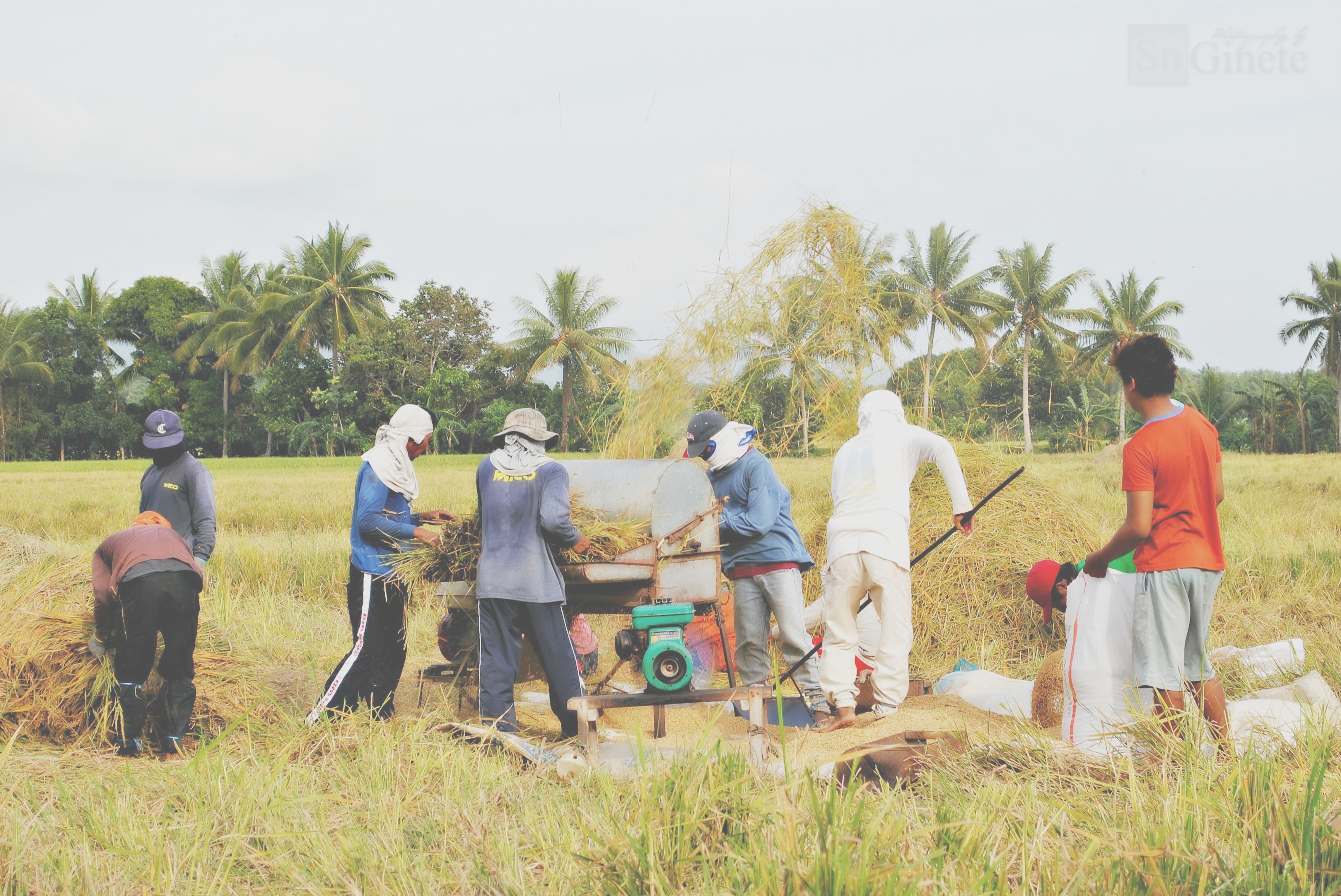
“Halimaw” or “beast” – that’s what our local farm workers would call the harvester. The harvester is just one of the agricultural mechanization upgrades built and designed to make palay harvesting time and cost-efficient.

The downside? Palay harvesting using a harvester simplified the harvesting process, thus, now only required a few farm workers. This means only one thing – we will only hire farm workers who will carry the sacks of palay from the rice fields to the side of the road. They are called here in our local dialect as “parasabak.”

The Process of Palay Harvesting

Before the harvester was invented, there were 3 stages in the palay harvesting process. The first stage is harvesting palay using a sickle, and this usually takes about an entire day. Then it is followed by threshing using a thresher that also takes about one day depending on the size of the rice field. And the last stage involves carrying the sacks of palay to the road.

For shipping and logistics, it will depend on the farmer if he owns a truck that will transport the sacks of palay to the rice dealer or rice miller. Palay producers operating on a macro scale usually own trucks as this will lessen the shipping fees.

But for SMEs (small and medium enterprises) like ours, we coordinate with the rice trader to transport the sacks of palay to their warehouse. There is actually a 4th stage in palay harvesting, which is drying the harvested palay and having them milled before selling the finished product, which is rice, to the market. The selling price of milled, dry rice is higher compared if the farmer sells the palay right after harvesting.

The disadvantage though of the 4th stage is that the unpredictable weather now makes it difficult for palay farmers to sun dry their palay. The profitability of palay relies on two factors – moisture content and yield percentage. The higher the moisture level, the lower the price of palay.

Other Farming “Beasts”

Other “beasts” in palay farming are the tractors, and just recently, the transplanter. My sister was able to talk to another rice farmer who is also a member of the farmers’ association that my Dad is currently a member of. She shared that a transplanter provided by the Department of Agriculture (DA) will be delivered soon and can already be used for the next cropping season. I’d like to commend the efforts of the DA, headed by President Bongbong Marcos, who’s currently the DA Secretary, for their continued efforts to help alleviate the challenges encountered by farmers in general.

The DA has an extensive set of initiatives to ramp up agricultural production, and I will highlight the importance of these initiatives, which will most likely change every year to adapt as we enter a climate emergency. The entrepreneurial mindset of farmers also needs to be tapped to increase their income from selling their agricultural produce. Connecting them to a wide range of markets through public-private partnerships will go a long way to ensure that not a single agricultural product will go to waste, and farmers will get their expected ROI.

So to answer the question is agricultural mechanization here for the better, my answer is “yes.” I guess, it will all depend on the generation of farmers. Because my Dad is a bit apprehensive about trying these new technological advances and innovations as far as agricultural mechanization is concerned.

Personally though, I am all out in trying all these farming innovations as part and in support of the Climate-Smart Agriculture advocacy. For as long as agricultural mechanization remains environment friendly and maintains low carbon emissions, then we maximize utilizing it.

All Hail To Women Farmers

I also noticed that there are now more and more women farmers venturing into agriculture, a popularly identified masculine industry. Now that I get to closely observe how palay production is being done, I must admit that men really do get the upper hand in the agricultural industry. Physical strength is the main component in accomplishing most of the farm tasks.
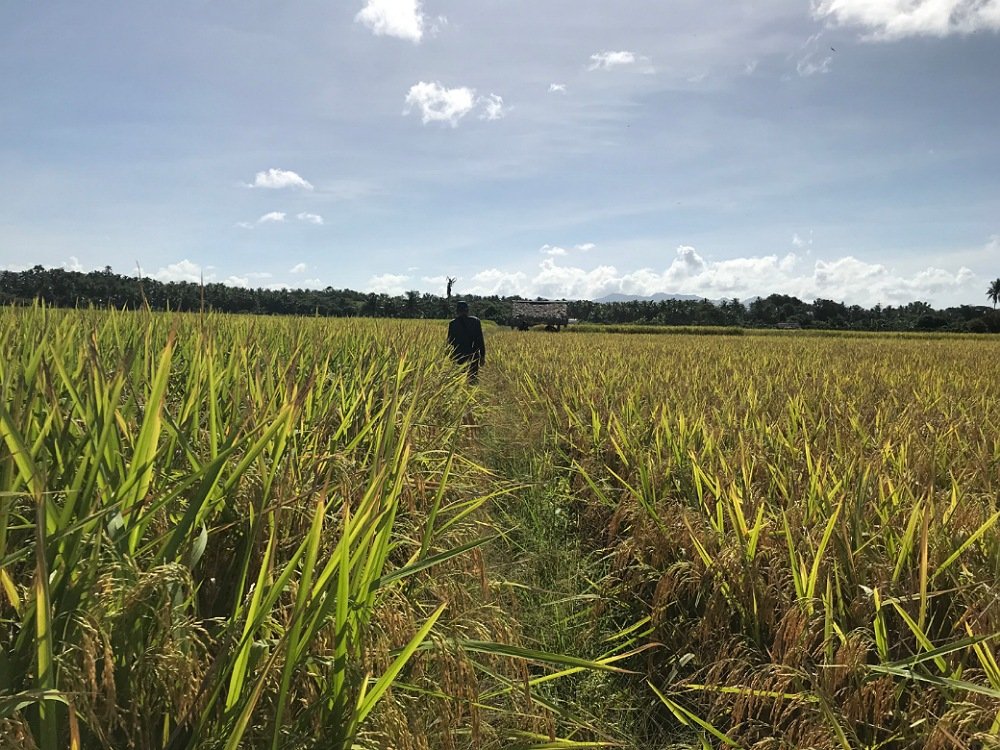
Dad’s Personal Assistant, that is, to rescue Dad in case he trips and falls. 😉

This is something that women, in general, do not have unless we’re Hidilyn Diaz. Agricultural mechanization is somehow the great equalizer in performing farm tasks without any gender bias. I actually want to try operating the harvester if it follows the same mechanism as an ATV. lol Transformers is my favorite movie of all time, so you guessed that right, I like machines.

And yes, my Dad’s a retired Civil Engineer and when I was still a toddler, he would bring me to his office when there was no babysitter. So, I get to snoop around them big trucks when he’s busy signing papers.

What I dislike though being in his office is that when I’m hungry, he would give me Skyflakes for snacks. Uhm, Dad, Skyflakes and toddlers don’t go really well together. But I do love Skyflakes now because they’re actually my “pantawid gutom” during exam days and “hell week” in college.

Why Invest in Agriculture

So, if you’re planning on investing in agriculture, I encourage you to start now even if it’s just a small parcel of land. Agricultural investments are feasible, and they’re a good source of passive income if you have the basic know-how, can hire a farm manager, or have been farming for a couple of years already. There is also a long waiting time between planting and harvesting seasons that will allow you to still have a professional job or side hustles so you can have other sources of income that will serve as your buffer funds.

We need agriculture because it is the only industry that produces food. Without food, it will basically be the end of humanity. This is the part where I’d like to thank and appreciate all of our farm workers who have been our loyal constants for the past decades from one generation to another.

It is my prayer that God will give me and my siblings the wisdom to provide them with more livelihood opportunities in the farming sector so they will also have a continuous source of income to provide for their families. God willing, project diversification might be the solution that we are looking for. And yet, not our will but His will be done always.

So yes, all the zebra stripes that my sister and I got because of the multiple tan lines we have are all worth it. Because if we want to go deeper and get to the core of all the farming issues and challenges that every farmer faces, it really requires that we go out there in the field, figuratively and literally, and get our shoes soiled.

Supporting Local Farming Communities

Another challenge with working in a very masculine industry is people management when the leadership is led by a female. I am observing their responses if they have the social stigma that women should only stay at home, or if they are just plain shy talking to women. 😀 But generally speaking, most of the locals here are good-natured people. Their lives are simple, and yet are rich in genuine connections bound by camaraderie, a true sense of belongingness within the community, and a deep attachment to their environment.

This is also the reason why my approach in managing our farm workers, especially the older ones, is to tell them about a task or a goal, then I ask them how we can accomplish it. I am not a micro manager so I don’t want to hover around our farm workers to see if they are doing the tasks right. I am actually surprised that they know more practical applications that actually work and provide good results.

With this data on hand, farm owners can now incorporate actual data gathered with farming innovations backed by research and conducted by scientists. I believe this is how we bridge the gap between conventional and modern practices – a necessary strategy utilizing this generation’s IoT (Internet of Things), which will in turn provide a more lasting, effective, and promising outcome.

Anyway, I’ll cut this short before it becomes a 100-page thesis. lol If you have any questions regarding palay farming, rice production, and the like, please don’t hesitate to write them down in the comment section below.

As always, “many are the plans of man, but it is the Lord’s purpose that will prevail” (Proverbs 19:21). Thus, let’s “commit our plans to the Lord, so He can direct our steps” (Proverbs 16:3). 🙏


P.S. Speaking of innovations, I am searching for portable and high-quality but affordable coconut graters that can be used at home. Bicolanos love using coconut milk when cooking vegetables and fish viands. Like this Bicolano fish dish called “Taguktok,” which is Dad’s favorite. I already modified it though because I used a different type of fish. We usually use “Buraw” stuffed with green chilis, onions, tomatoes, garlic, and ginger seasoned with salt, vinegar, and pepper. We have a lot of coconuts here at home since we’re also into copra production, but I just don’t know how to grate them manually. This doesn’t make me less of a Bicolana though, does it? 😉
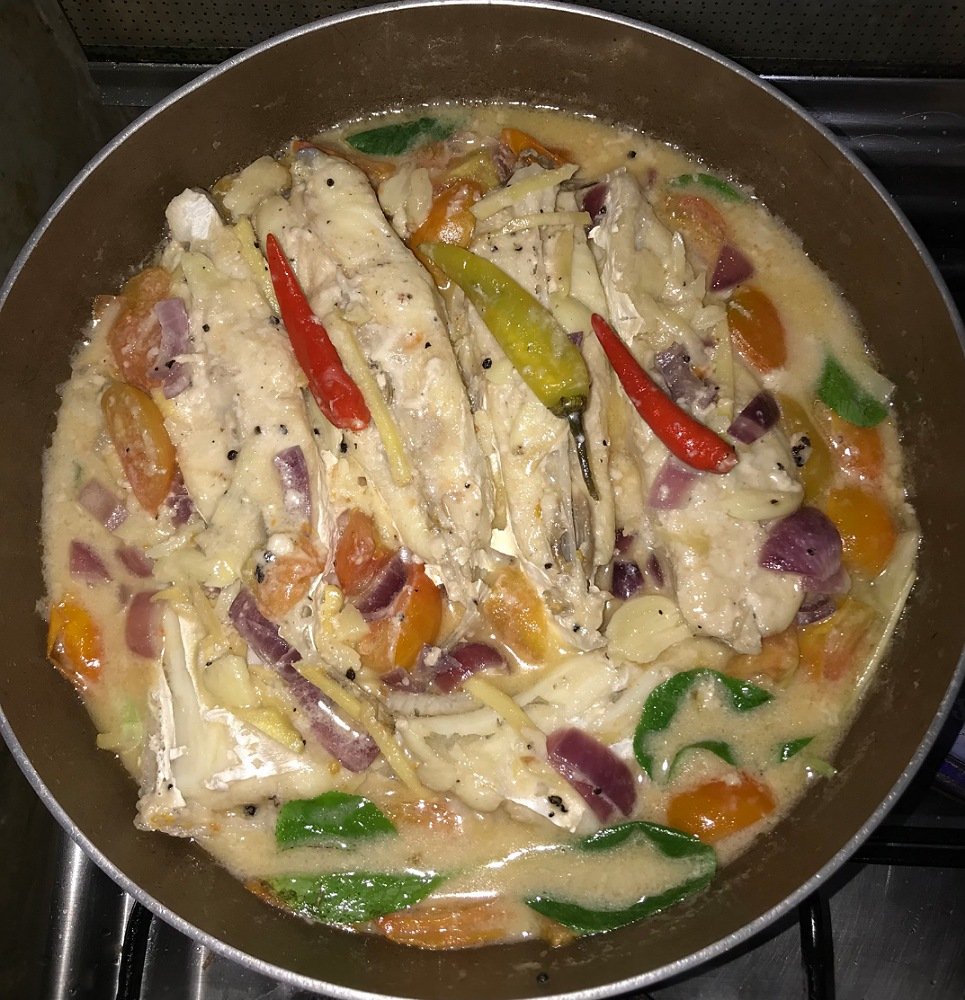
I lack food presentation skills because I’m already tired cooking. lol

Farmers & Traders: What Really Goes On In The Rice Farming Industry

How the agribusiness industry fared throughout the years can be attributed from the bargaining that takes place between the farmer and the trader even before the products leave the farm gate. My family and I have been in the agribusiness, palay production in particular, for decades already. But it was only just recently that I ran a thorough analysis of the business processes involved in farming from the particulars in expenses to the actual farm tasks done.

20190103_180055_edited

I asked Dad to give us a rundown of all the marketing processes involved but he told us we’ll learn along the way. I guess this is his way of saying that we conduct due diligence as far as agribusiness is concerned. 😉

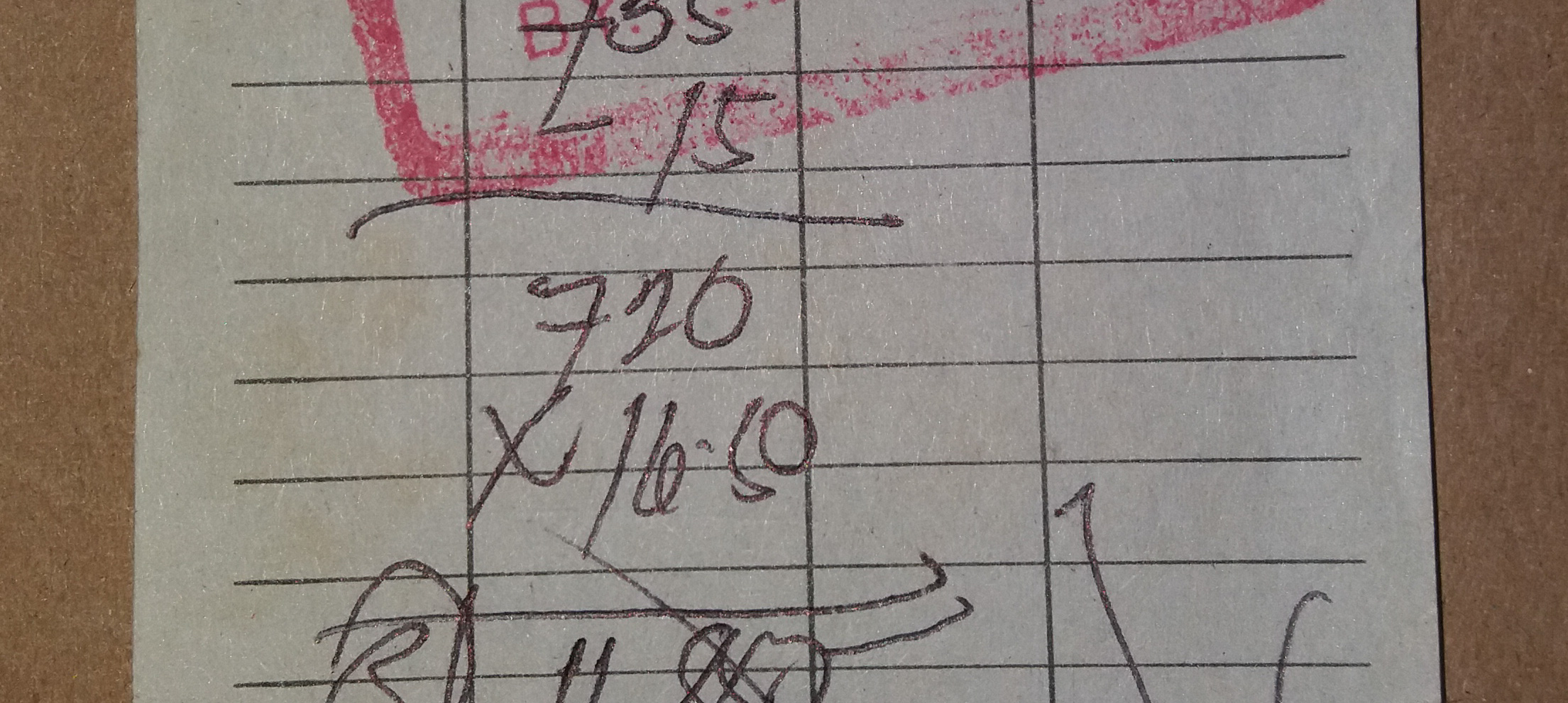
From the data I gathered on Dad’s documents, what caught my attention is the market price of palay listed in one of the receipts (16.50php/kg). I asked Dad who dictates the market price and how did it arrive at that figure. He only smiled and said, “The traders dictate the market price.” My follow-up question was, “Based on what?” He answered, “Based on the market trends.”

20190103_175335_edited

So, this is just like stock trading on a certain level. But here, if you’re a trader, you have the market power to set the price you desire. Depending on how you conduct your dealings as a businessman, this can either be a good thing or a bad thing as far as fair agricultural trade is concerned. Are traders really fair in dictating the market price for a particular agri product in the region? Does it follow regional market rates or the national market rates?

I haven’t taken any business education courses but I really would love to and if God wills it, I plan to take up a short course on Market Research. For the meantime, I’ve been doing my homework on farmers and middlemen and how the theory of bargaining works in the farming industry. These are the questions I came up with:

  • Are farmers actually getting the profit they should earn from the entire production?
  • Can a digital economy change the agricultural landscape in the coming years and provide better marketing opportunities both for the farmers and traders?
  • Will agricultural innovations and agritech industries promote a brighter future for the farming sector i.e. lower transportation costs, high-yield production, etc.?
  • How can a government-mandated price ceiling affect the overall trading setup between the middlemen and farmers?
  • Can contract farming and direct selling be viable marketing alternatives?
  • How can we prevent the exercise of “monopsony” in marketing rice/palay?

If you’re in the agribusiness industry and are interested to venture in palay/rice production or any crop production, these articles can provide some insights on the current market setup of farming and agriculture in the country:

https://business.mb.com.ph/2017/10/30/pinol-wants-to-liberate-farmers-from-middlemen/

https://ageconsearch.umn.edu/bitstream/174795/2/agec1999v020i002a001.pdf

https://businessmirror.com.ph/government-needs-to-increase-its-palay-support-price-but-by-how-much/

https://www.untvweb.com/news/dti-da-to-impose-price-ceiling-for-traders-middle-men/

https://psa.gov.ph/content/costs-and-returns-palay-production-0

I’ll be sharing more information as I go along with my market research/business analytics during my free time. Please bear with me if I’ll confuse you a bit with some of my questions since I am also on “tabula rasa” mode when it comes to business developments and the likes. 😀

But if you have any insights to share, please don’t hesitate to drop me a message. I’d love to hear your feedback/suggestion. Thanks in advance and for reading this article. ❤

“For I know the plans I have for you,” says the LORD. “They are plans for good and not for disaster, to give you a future and a hope.” – Jeremiah 29:11

The Christian From Bicol

(This is an excerpt from this post I wrote back in November 2013 during Typhoon Yolanda. I thought this particular content deserves to have its own separate article with a different title this time.)

Wherever God would take me, whatever God would give me, I will bring with me two identities: first, I am a Christian, and second, I am a Bicolana.

I can never be prouder of anything I have and whoever I have become other than those two I have mentioned above.

Why a Christian? I am nothing and nobody without my God, first and foremost. My identity is in Him, and I believe I need not say more as it is what it already is. 🙂

Why a Bicolana then? Ahh, this is most likely where I’ll be explaining more.

I grew up in the province. I spent more than half of my life there. As of writing, that is. There’s no other place that I could ever call ‘home’ except Bulan. Yes, that is my hometown, a small town in the province of Sorsogon somewhere in the southernmost part of Luzon.

Sorsogon consists mostly of coastal areas surrounded by beaches of all sand colors from white, pink, to black –  you name it, we have it. Rich in natural resources, fishing and farming have been the sources of livelihood with almost all the Bulanons (that’s how we generally call ourselves).

Fishing

Fishing

If there is one value that being a Bicolana has taught me, it would be this – knowing your roots. In other words, learn to look back from your humble beginnings. Bulan is the one thing that has taught me how it is to be humble and to be grateful. Humility bespeaks when the heart is in awe of the mediocre. I know you are going to agree with me right there.

I came from a family of farmers. My parents, my grandparents, and the parents before them all came from humble beginnings. We wouldn’t be here if it weren’t for them. Gratitude is what I could offer to my ancestors for the sacrifices and hard work that they have invested in providing the best for their families.

I came from a generation wherein I didn’t have to go to the fields and do the farming myself, and go home with sweaty clothes covered in mud just to pay for all of my expenses and supply my needs. An experience I never had to go through, and yet something that I would want to go through.

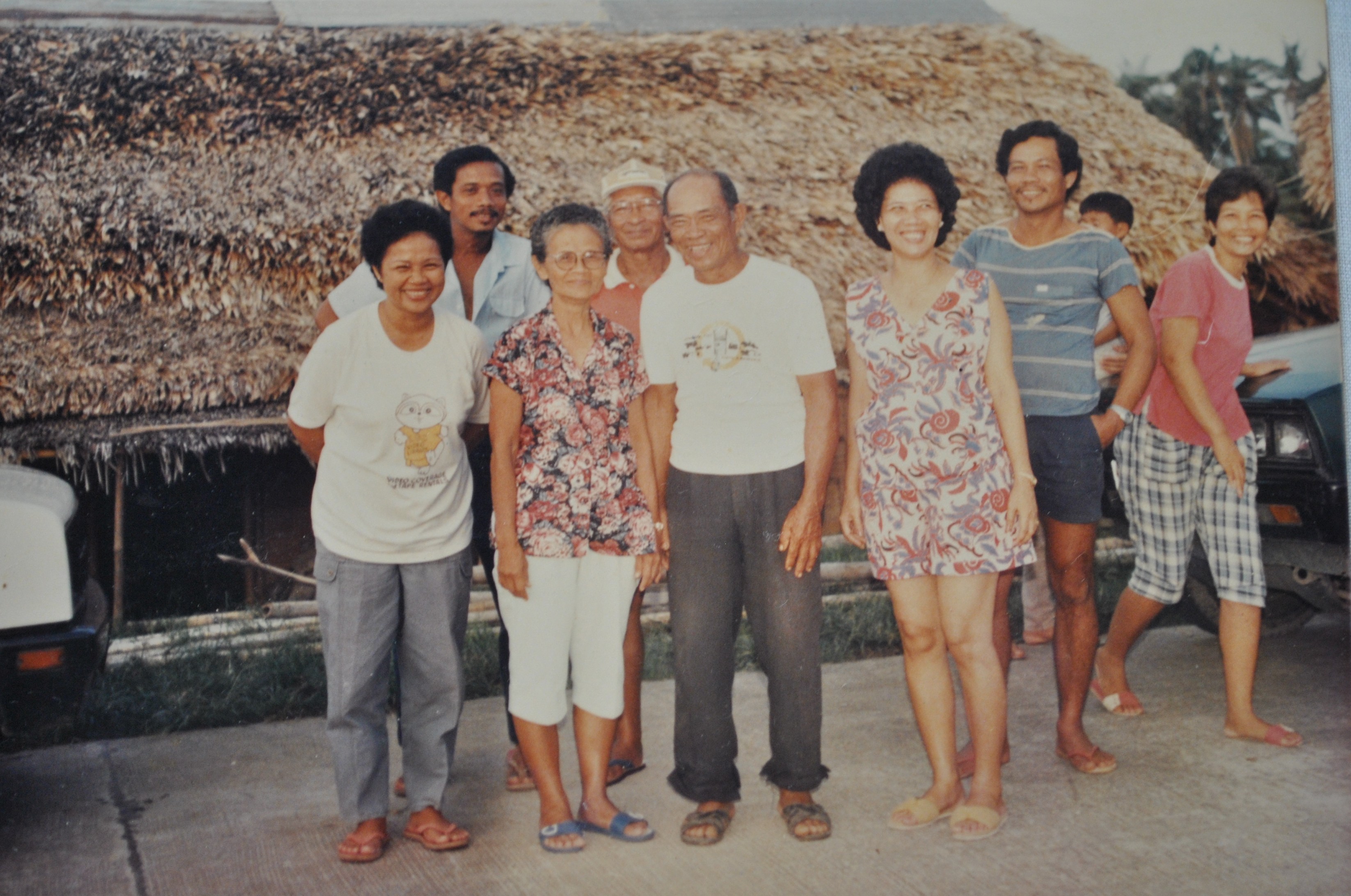
CIRCA 1980s: My mom, aunts, uncles along with my grandparents.

CIRCA 1980s: My mom, aunts, uncles, and my grandparents.

They say that for someone to appreciate the value of something less than its market value and more of its sentimental value, you have to work hard for it and have it like how it is usually done and achieved. You have to sweat it out, so to speak.

I was listening to the podcast of Pastor Christian Flores regarding Victory’s new series entitled “It’s Not About The Money” two Sundays ago, and he mentioned the story of a farmer and how this farmer had invested his earnings in acquiring an even bigger barn where he could store more, which actually resulted in his own destruction.

That made me think about our farm, our farmers, and what we really get from it. For starters, our farmhouse did not change, though many years and decades have passed. We are earning just enough, and we are still living frugal lives, though we have acquired some possessions through time – still, I think it is not about the money. Money, for us, is something that has to do with survival, but never to accumulate great wealth and live grandiose, rich lives.

I might be speaking out of righteousness here, but if you will personally ask me, that is how I think it should be. I do not wish to dwell on this matter then and will just leave all the explaining to our Pastors as they lead us on with the series – a reason for you to stay tuned for our upcoming podcasts or better yet visit a nearby Victory church: http://victory.org.ph/. (Sorry for the shameless plugging, but I felt you would understand it better if the explaining would come from our church leaders).

victoryqc.org

victoryqc.org

This is the season of harvesting, and when I went home during the holidays last November 1 and 2, I chanced upon the last harvest in our farm. I have skin asthma, and as much as I should be staying away from hay, I know it would not stop me from going along with my Dad. I suffered the consequences later on – my cough got worse, and itchy rashes came out that lasted for about a week, leaving black spots on my skin, which then stayed on for about how many months.

The last time I was with my Dad during harvesting was when I was around 6 or 7 years old. I could still remember how our parents would ask us (not really me, as I was way too young, but my sisters and brother) to help in drying the “palay”  we had harvested so they could be sold to the millers for a good price before they then sell it to the market.

Yes, how could I really forget all the scurrying here and there, to and fro, when dark clouds come, and heavy rains start to pour. It only means sweeping the grains, piling and covering them up as FAST as you can to prevent them from getting wet, thus lowering the chances of getting a low price as “palay”  buyers measure the moisture content of the rice grains. The drier the grain is, the higher its market value.

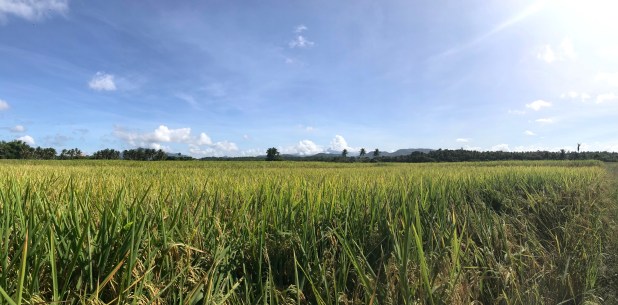
Palay

Threshing of palay.

My Dad is not a farmer per se. He is a civil engineer who juggled two occupations at the same time – that of a farmer and a superintendent at the National Irrigation Administration in the Bicol region (officially at San Ramon, OIC in Masbate and Sorsogon City). He is now 74 years old, retired from his engineering career, and yet a continuing farmer. I have always admired my Dad, who, at his age, still manages to do what he would always do at the farm despite his arthritis, gout attacks, hypertension, cataract, and other illnesses of the aged. Although we don’t dry the harvested rice grains anymore to lessen the stress level of all the scurrying and hurrying, tending the farm is still a lot of busy work to do.

I went to the farm with my Dad not to harvest the grains myself and have them threshed out but witness how it is usually done. I have to get into the particulars as to how to do this and that. Well, I might consider farming as my job someday. Yes, “Tin”  the farm girl. *wink*  I think I heard my Kuya’s sarcastic chuckle back there again. Haha Yeah, right. And yes, I wanted to observe how our farmers do it – our trusted and loyal workers. I admired them more than I have admired an office employee (no offense to office-based workers). But hard labor is no easy job. Exposed in the heat of the sun, bending over for hours either planting rice seedlings or harvesting them, soaked in mud or inhaling the itchy hay dust when threshing are, for me, among the most challenging tasks.

I closely looked at all of them. I saw Tio Digoy and Tio Kadog – they are the oldest among all of them. They have been working for my Dad since I was a kid. Now, their sons are working for us as well. I have learned to love them for all that they have put up for me and my family. I am praying that through us, their sons, daughters and grandchildren will one day have a better future because of their parents and grandparents’ hard work. Though that means we might lose workers in our farms, it would also be equivalent to giving everyone the chance to have better lives than what they have now.

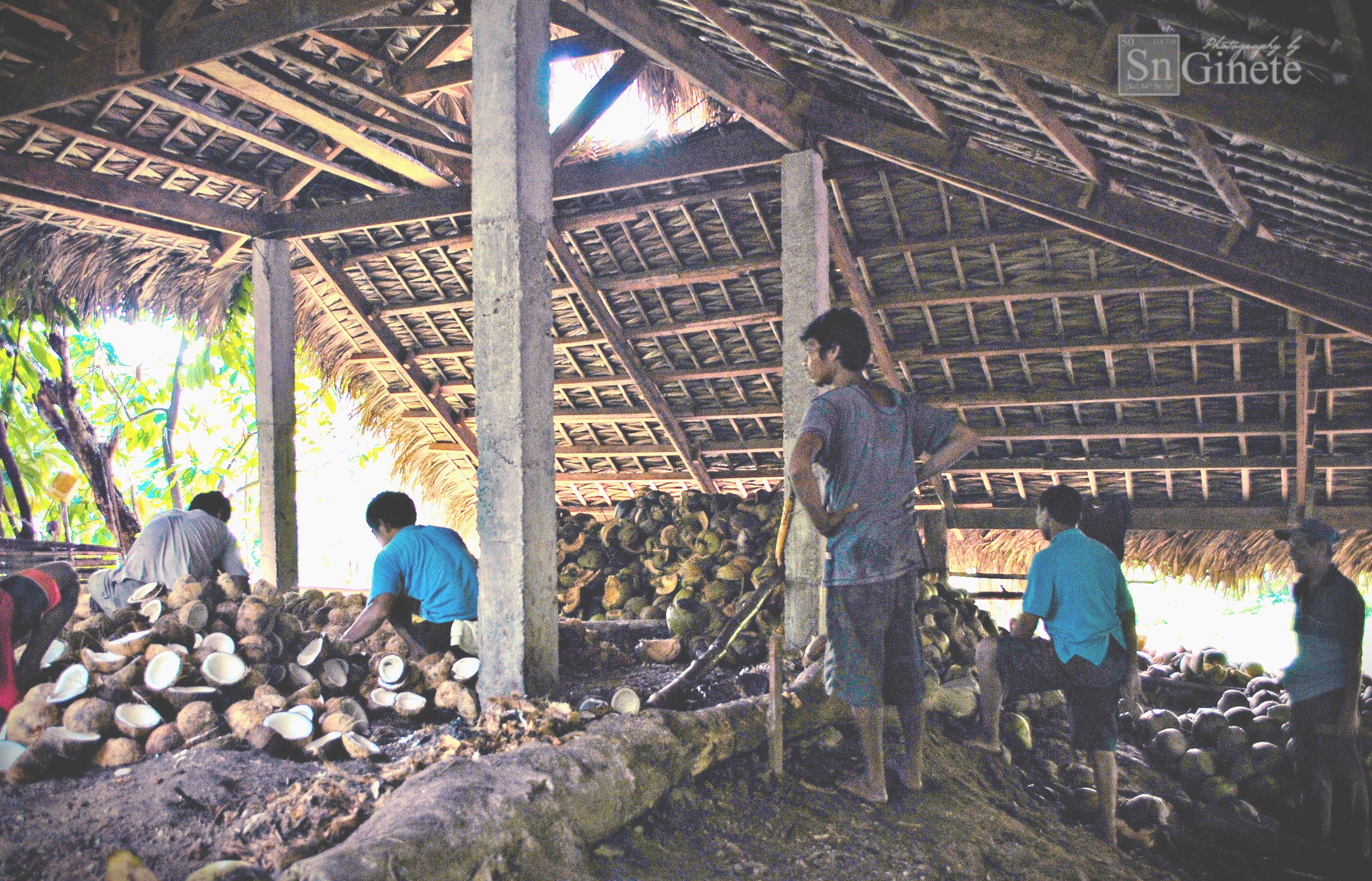
I am praying too that someday there will no longer be a need for manual labor and everything will be run by machines operated in a clean office from planting to harvesting rice. That goes as well for harvesting coconuts and converting them into copra. The team of Tio Digoy also does them for us. Skilled, they really are. My family and I will always be grateful to them. We will always be grateful to Him for any blessing that He has bestowed as well as for His guidance and protection not just to me and my family but to our skilled workers and their families as well.

Copra

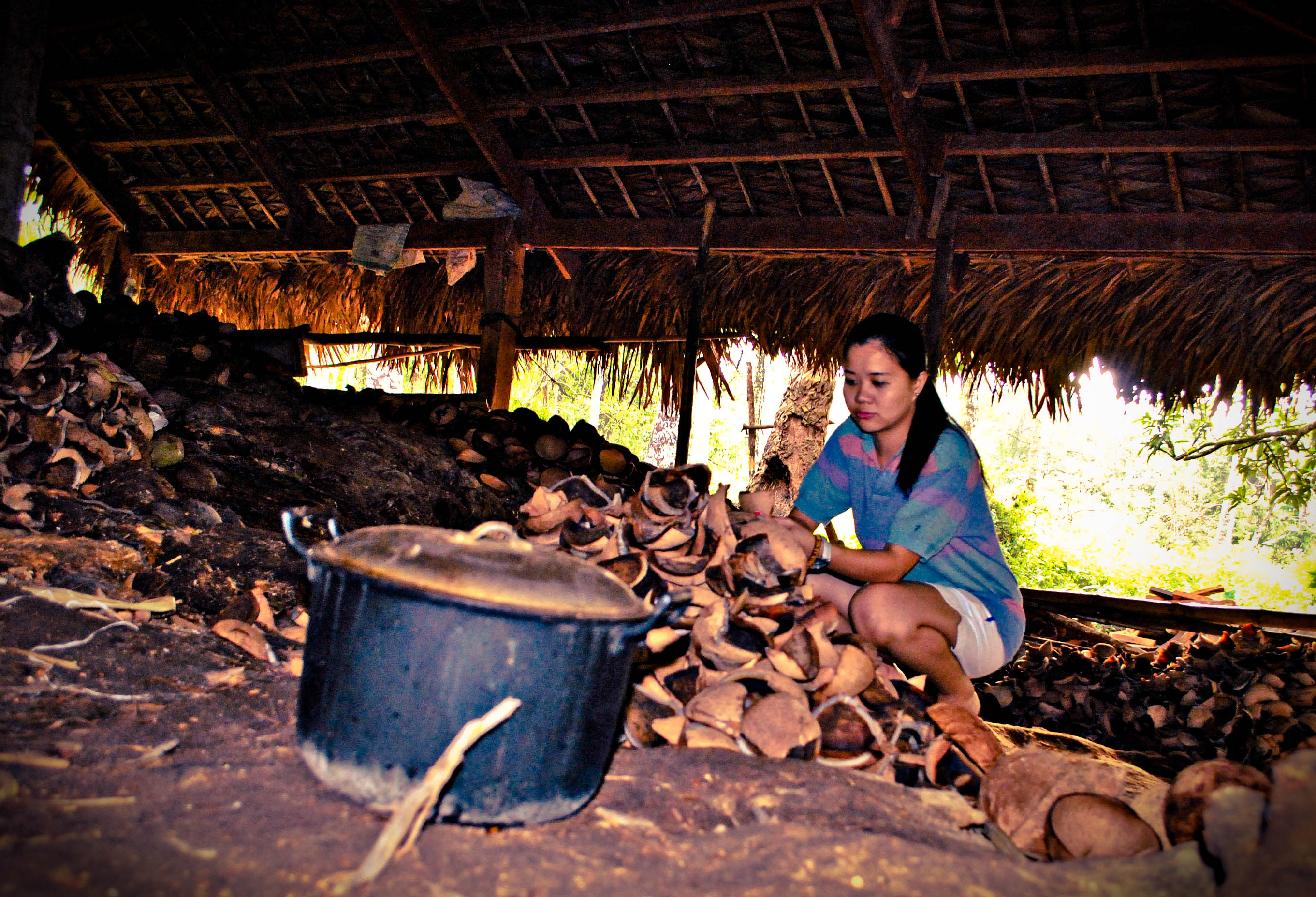
Coconuts being made into copra.

So if most think this is what I do in Bicol:

Nope, that’s not it because this is what I usually do:

"Tin, The Farm Girl"

“Tin, The Farm Girl”

Quite the opposite, right? Well, aside from washing the dishes, cleaning the house, feeding the pets, etc. and having a little vacation time actually. We have no helpers or house maids back home and here in Manila, by the way. As it is written in the bible:

“For even the Son of Man did not come to be served, but to serve, and to give His life a ransom for many.” – Matthew 10:45

Let’s all live a life of servitude, shall we my dear brothers and sisters? 🙂