Disclaimer: This is about the history and it’s a long read but still worth reading. 😉
Oyango is read as /oh-YAh-ngo/. It is where my grandparents spent most of their lives. You only need to travel for 10 minutes from our place to get to the farm. This is the community where my grandparents have built a legacy with their children, with us, and with the neighbors.
The Legacy Behind Oyango Ridge
My grandpa was popularly known as a selfless giver. He shared most of what he could harvest from wild fruit-bearing trees with his friends and neighbors and sold some of the high-value crops. My parents do the same now with whatever we can harvest in our garden. I also intend to do the same.
How Did It Start?
This piece of land was owned by my great-grandfather, Julian Bertumen. He was my Mom’s granddad. It was passed on to my grandparents, then to our parents. We’ve known this place as a special farm back when we were kids.
I can still remember how our grandpa would recount stories during the Japanese occupation and why there were Japanese tunnels inside. I was around 6 years old at that time and I can only recall snippets of the entire experience.
Who is Beato Gerolao?
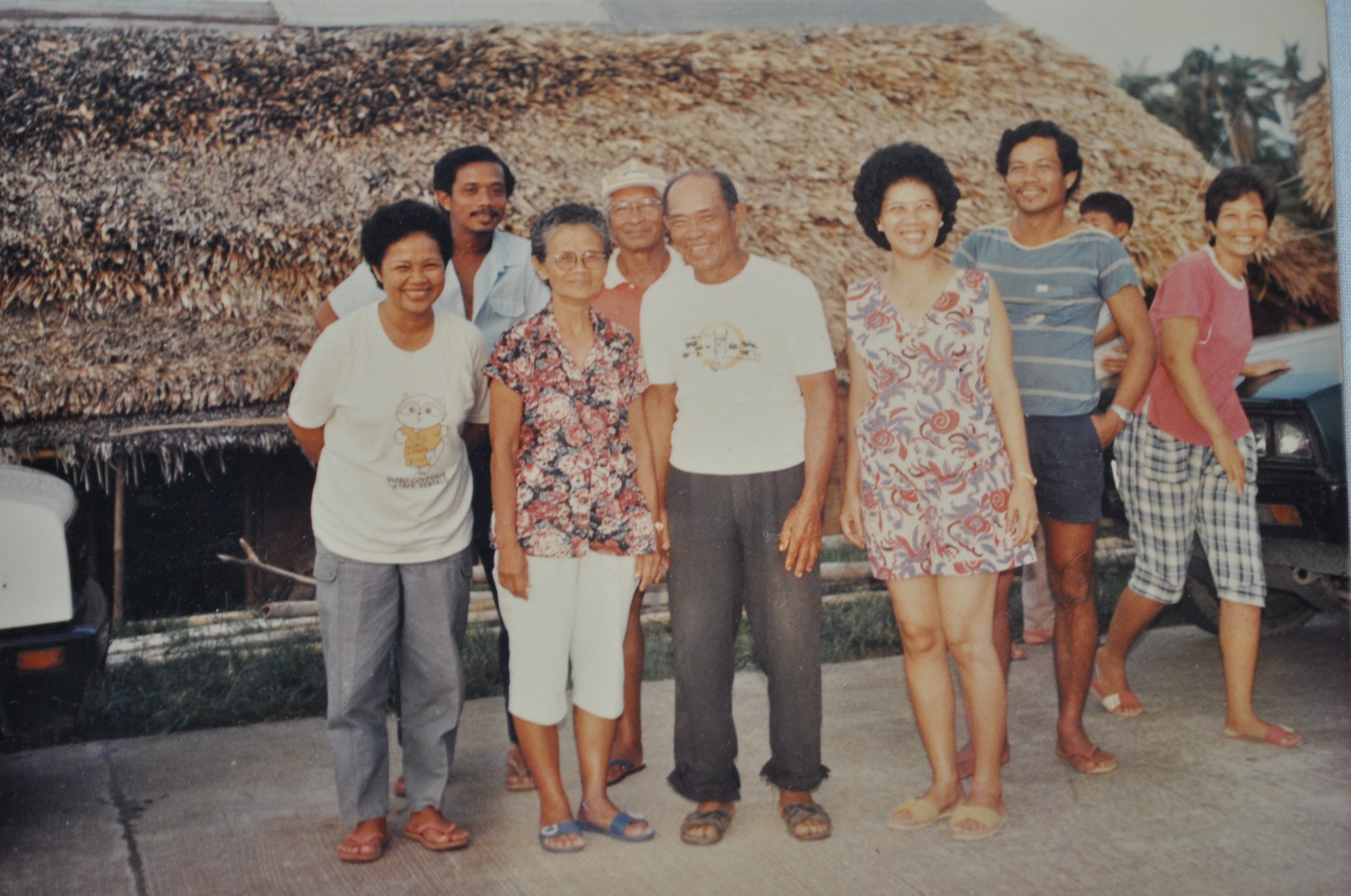
My grandpa was a good storyteller. This is probably because he loved reading history books. I believe this is why as kids, we developed this attachment towards the place. It’s always a happy moment for us every time my Mom will say, “Okay, tomorrow we are going to the farm.”
To us, it speaks of so many great stories that we can only retell to the younger generations. And yet, I know, no one can share those stories like how our grandpa did. But one thing is for sure: that’s the legacy he passed on to us.
Our love for the farm was rekindled when our 94-year-old grandma reminded us about it during our Christmas vacation last December 2017. She told us that the property that our late grandpa acquired and utilized through his own efforts is all for us, the younger generations.
World War II
I admire my grandparents in so many ways. My grandma is a housewife, and my grandpa was a true-blue farmer. But they were able to send all 4 of their kids to school with the help of some relatives, and yet were also able to acquire other land possessions in other parts of the town during their time. They are now the properties that my parents, my aunts, uncles, and cousins are utilizing.
It was during the generation of my grandparents when World War II broke out. My grandparents didn’t have any formal education back then and they were a part of history where struggles were everywhere. I can imagine how harsh life must have been back then – all the post-war trauma and the economic, social, and political instability. But I believe those events forged something deeper in the early generations – resiliency.
Oyango Ridge History
The land is surrounded by mountain ridges. That’s why the Japanese chose it as their perfect hideout, thus, the tunnels. Some of these tunnels are short, and some were carved deep into the mountains, having entry and exit points at each side of the mountain. There were some that our grandpa said were used to hide an aircraft. There’s also one part of the farm where there’s a crater for another aircraft hideout. He assured us that there’s no need to worry if there might still be bombs dug deep in any part of the land. But honestly, we really can’t be too sure if it is free from land mines.


Some asked permission to search our property. Since it’s already private property, my grandpa declined and warned them that they would be trespassing if they pushed through. Besides, my grandpa said it’s impossible they’ll find a treasure there because the land was basically used as a military artillery and as an air raid shelter.
It’s a wide but secluded place where they can perfectly and secretly hide any bulky military equipment, such as an aircraft, in case of an air surveillance or an air raid. Even before my great-grandpa bought the farm, and some gold diggers were successful enough to scour the place, they found no treasure.
The barracks of the Japanese are actually located miles away from the farm situated inside the grounds of my grade school alma mater. That is why our place is popularly called “Barracks”, if you plan to go there, and not by the street name itself.
There is one historic landmark inside the school grounds, which is also another air raid shelter or Japanese shelter made from stone and concrete. But nobody knows where it leads to since eroded soil blocked some parts of the tunnel already. Treasure hunters also tried their luck on this tunnel, but to no avail.
Also, to be able to dig on a piece of property, one must secure a treasure hunting permit from the National Museum of the Philippines. Otherwise, it will be considered an illegal activity. What bothered us really is the idea that there could still be land mines on the property since our grandpa said it’s used as a military artillery range.
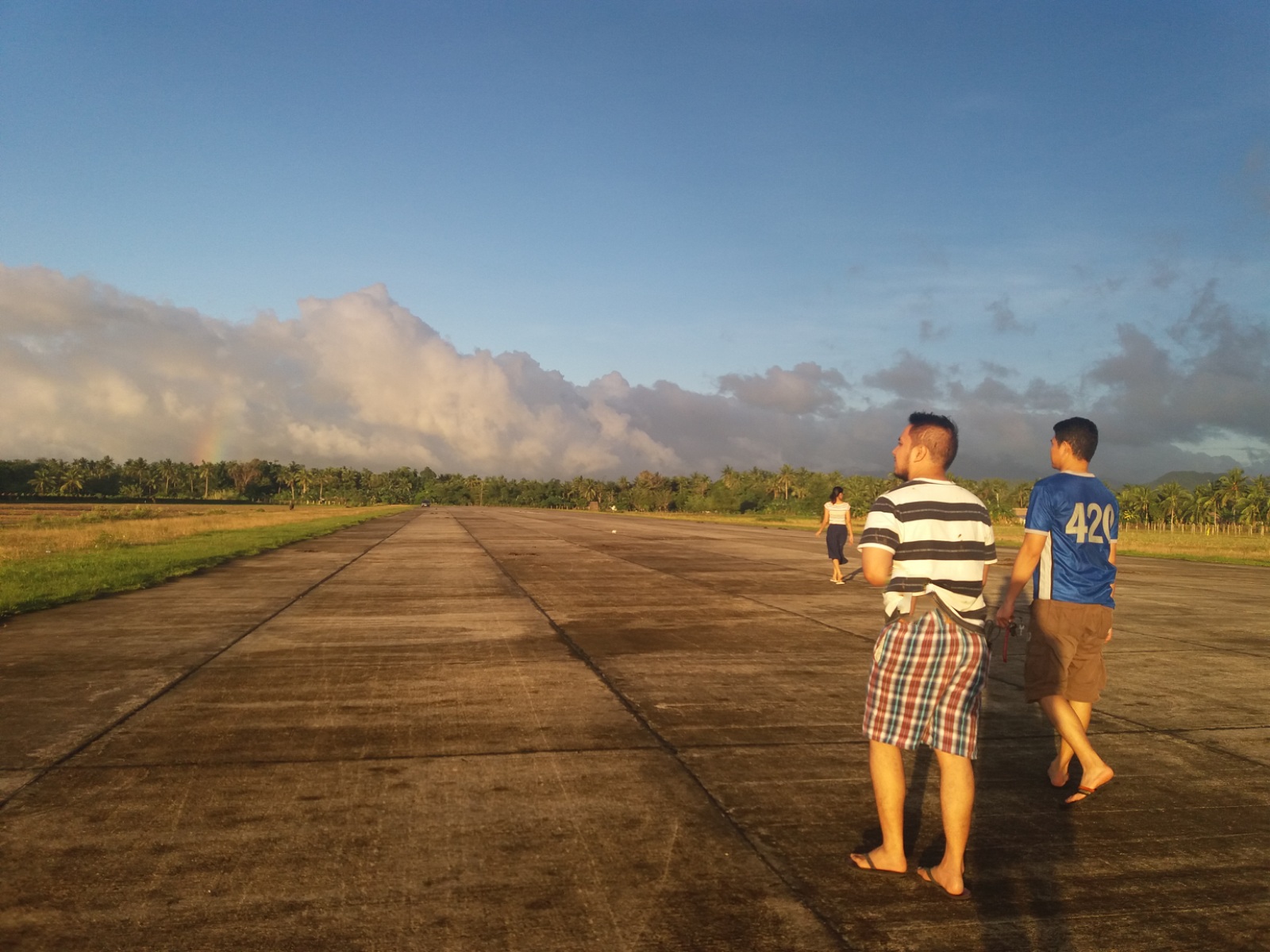
You must be wondering why the Japanese chose our town during their brief occupation. If you’re going to look at the map, it is a strategic location for military operations. We are a coastal area so there are several options when it comes to escape routes – by land, by sea, and by air. Near the Oyango Ridge, there is now an auxiliary airport but I believe this was built after the war already. However, it never became operational.
Objectives: Mission and Vision
Why utilize the property? My siblings and I have already discussed the project’s mission and vision:
MISSION: “Greenery Towards Greater Sustainability”
VISION:
We are a privately-held company and a not-for-profit organization. Our goals include the promotion of sustainable agriculture through organic farming and supporting the local food movement. With this advocacy, we hope to provide more livelihood opportunities locally and increase agricultural appreciation.
As a social enterprise, we are targeting the inclusion of a training camp for the students and the young generation who will venture into the agribusiness industry. We are also looking into expanding our agribusiness projects to agritourism. This will enable us to promote local tourism by building a recreation and leisure community through the farm resort, vacation home, campsite, hospice, and retreat center for holistic wellness.
It is a not-for-profit organization because a majority of the profits will be used to fund the project’s operations. We are targeting the project to be self-sustaining. Self-sustaining means the initial invested capital will remain intact, and the ROI generated will be entirely used to fund the operations of the project. The higher the ROI, the more opportunities to expand the project’s objectives – the campsite, the retreat area, training facilities for young entrepreneurs/interns, etc.
So if we are to picture it in a graph, it can’t be a succession of extreme highs and lows similar to stock investments, which are volatile by nature. It cannot be a flat line, because a flat line means your business is dead. 😀
Instead, there has to be a steady increase in the ROI or, at the very least, consistently earn. The challenge now lies in how we can make this happen – insert marketing strategies. This is the point where I find it daunting and a bit overwhelming. But I have observed lately that when business start-ups are too focused on generating money asap and how much they will profit, it sometimes derails the company’s mission, objectives, and its values along the way. I believe it is best to leave the “money” part to God. Besides, He is the sole provider. I know He will supply according to our needs.
Creating a business model is far more complicated and way more intricate than we imagined, even after studying all the theories. How to keep the business running is where some businesses get stuck, and I am praying God will give us the grace and wisdom so it won’t happen to us. Because this is not for us, but helping others have better lives. And also, I would like God to be the center of it, a.k.a. our “chiefest” CEO. 😉
Sources of Livelihood
There are limited livelihood options in our town because it is a “sleepy” town. I call it that way because it has a small population, and the town’s revenues only come from small-scale businesses. There is only an influx in the population(revenues, too) during the holidays, i.e., Christmas vacation, Holy Week, town fiesta, etc., where relatives from abroad or from the city visit the town. During this season, businesses are flourishing. But when vacationers leave, the businesses go back to catering to the town’s small clientele.
This is the sad part: there is a lack of business opportunities, which also means a scarcity when it comes to livelihood options or jobs. Fishing and farming are the town’s primary sources of livelihood. However, due to climate change, there are now fewer and fewer catches every year, making it even harder for a regular fisherman to earn a living and feed his family. When it comes to palay production, it is also seasonal. Climate change also had drastic effects on the farming calendar.
In one of my freelance jobs, I encountered this documentary by Kara David entitled “Paraisong Salat.” Some families in our town experience the same struggles. My Mom had so many of these stories of former students back when she was a grade school teacher. They were the ones who were consistently absent in class because, at the tender age of 10 years old, they were already helping their dads fish at night. Some fell asleep during class hours because they hadn’t slept all night. Some weren’t responding well during class interactions because they hadn’t had breakfast yet – their dads came home without a catch.
More Opportunities, A Better Community
Imagine the expanse of the opportunities we can provide to these families. When we utilize the farm on a wider scale, we will need lots of farm workers and more people to help us manage the farm. We also plan to help small-time farmers by selling seedlings to them and educating them on how to grow selected crops properly and maximize their yield.
The farm will be running on a regular basis, which means they will have regular jobs, and they need not worry about getting a consistent income to feed and raise their families. Children won’t have to help their parents earn a living, but instead, focus on school. They will go to school well-fed, well-slept, and well-clothed. And that foundation I’ve been dreaming of putting up someday, I can see it happening here.
There is one bit of a challenge that I am looking into, though. When we utilize the property on a wider scale, we will need bigger farming equipment. This will trim down our production expenses. But it can also mean fewer farm workers because the farming equipment will do most of their tasks. And yet, looking at it again, it isn’t much of a big problem. We can always delegate other farm tasks to them since there’s a need to up the manpower to make the property fully operational.
To be honest, I have never regarded this piece of property as our own because I believe it belongs to God and will always belong to God. He only entrusted this land to us because it is attached to His plans that involve us. I believe, too, that this land will fulfill a greater purpose later on, where many will benefit.
It’s just like the Garden of Eden. It was never Adam and Eve’s in the first place. They were only placed there by God to cultivate it. The same goes for each and every one of us here. We are all tenants, even if the title of a property bears our name. For this organization, I have felt that this verse will speak its purpose:
“Then the LORD God took the man and put him into the garden of Eden to cultivate it and keep it.” – Genesis 2:15
I can only pray that I’ll live long enough to witness that promise being fulfilled in this land. 😀
Read more: “More About Oyango Ridge: A Story Of Family History And Agenda | Part 2”
 The Journeyman's Moments
This is a mixture of history, business and some good plans for the folks in your community. I pray everything works out well and through this post, you find some investors. It is also my prayer that God provides the necessary resources you will need to make this project a success so that the people in your community, particularly, the children get the benefit from the proceeds of the land. Great post!
LikeLiked by 1 person
Thank you so much for your prayers! I totally appreciate them all. We are still waiting for God’s perfect time to start the developments if it is His perfect will. 😊 I will be sending my blog guesting article also for your The Christian Blog Ghana before this week ends. My apologies for the long delay. 😀
LikeLike
Oh wow! I will be expecting the article. I need to start thinking of one to send to you as soon as possible. If you have any ideas about what you want, you can let me know. Thanks so much.
LikeLiked by 1 person
Thank you so much as well and you’re always welcome! ☺ Please feel free to choose any topic you’d like to write about. It is an honor to have you as my first blog guest. 👌😊
LikeLike