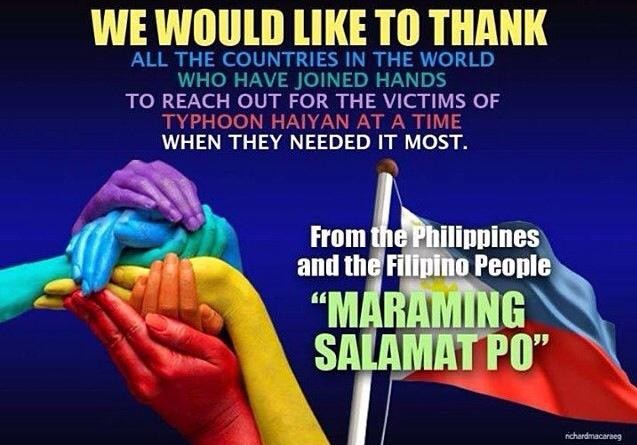
In light of the recent calamity that killed thousands of people in the Visayas and Mindanao regions affecting several neighboring provinces including my hometown in Bicol here in the Philippines and as a Filipino, I would like to ask for your support, in any way that you possibly can, for the victims of the super typhoon Yolanda.
Please visit this link for a list of legitimate organizations/relief centers where you could send in your donations: http://www.wheninmanila.com/verified-legit-ways-to-help-super-typhoon-haiyan-yolanda-victims-how-to-donate-or-volunteer-with-legitimate-organizations/.
Or if you cannot, please join us in praying for our fellow countrymen. We, the Filipinos, will be extremely grateful for any help and support that you could offer.
To my dear fellow Filipinos, though we may have severely suffered, rest in the fact that we are never alone in this. We will rise and rise we will with the help of our fellow brothers and sisters from all around this world. Despite the adversities that have brought us down to our knees, our kindred spirits will remain to be strong and steadfast. Our cries for plea, our tears for our losses, our battered and tired bodies – it is our strong spirits that will never falter.
I pray that through these all, may the Lord God Almighty continue to shower us with His love, protection, guidance and provisions.
Continue to hope, continue to pray, continue to strive in finding the good in what was left – again, we are never alone.
May God bless us all!
———————————————————————————————————————————————-
Wherever God would take me, whatever God would give me, I will bring with me two identities: first, I am a Christian and second, I am a Bicolana.
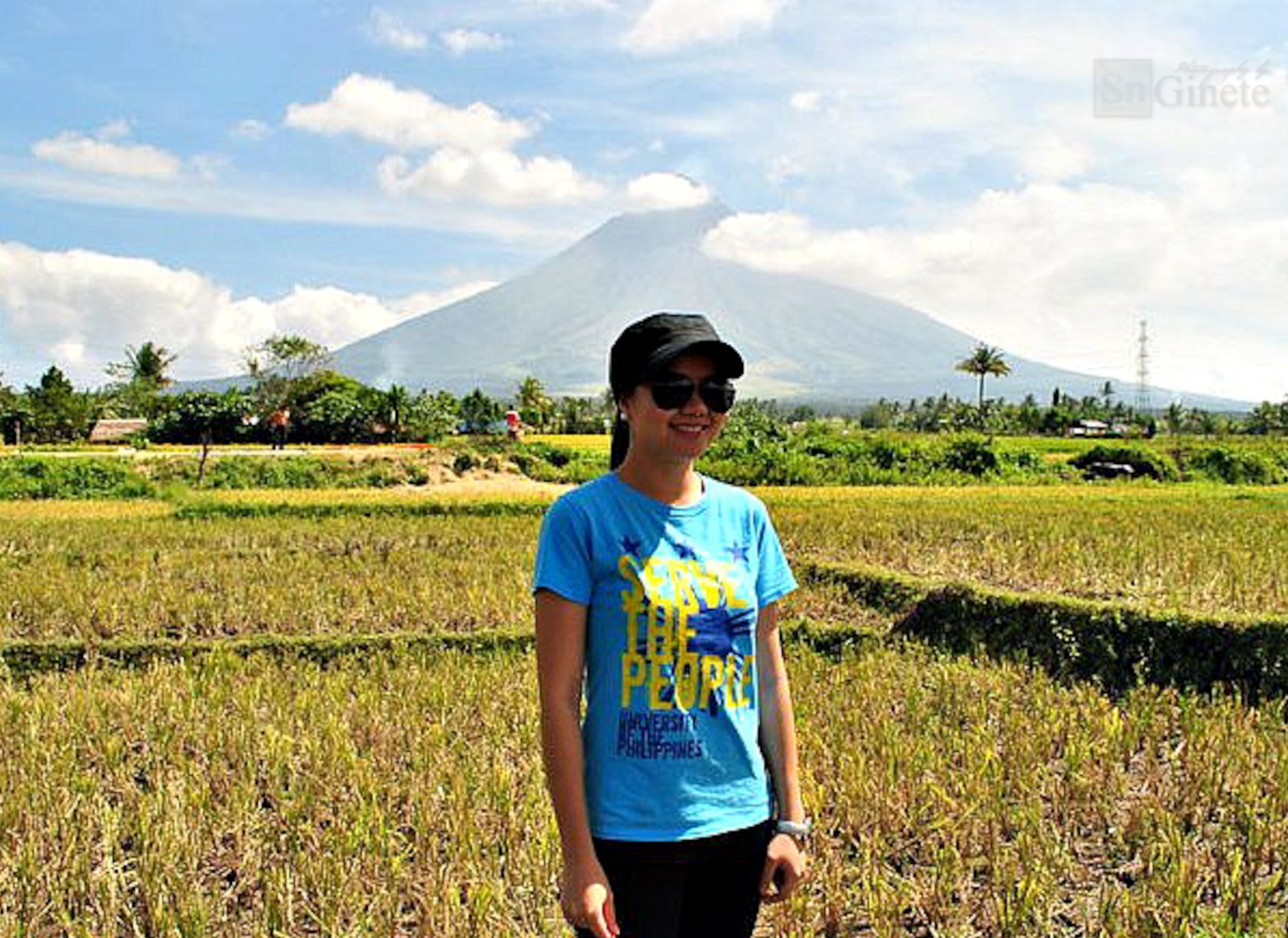
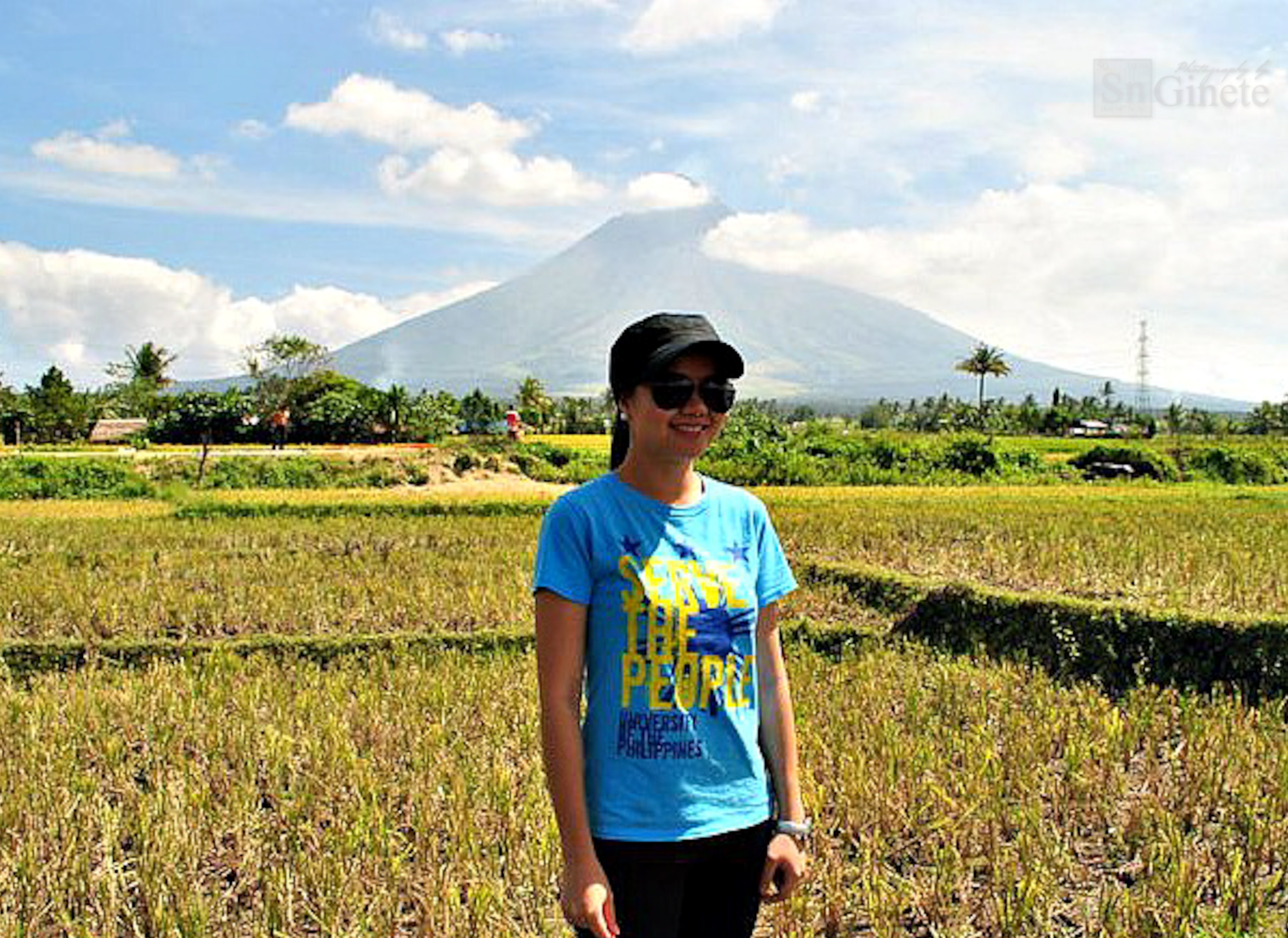
The majestic Mt. Mayon and I.
I can never be more proud of anything I have and whoever I have become other than those two I have mentioned.
Why a Christian? I am nothing and nobody without my God, first and foremost. My identity is in Him. I need not say more as it is what it already is.
Why a Bicolana then? Ahh, this is most likely where I’ll be explaining more.
I grew up in the province. I spent more than half of my life there. As of writing, that is. There’s no other place that I could ever call ‘home’ except Bulan. Yes, that is my hometown, specifically located in the south of Luzon island, Sorsogon City, Philippines.
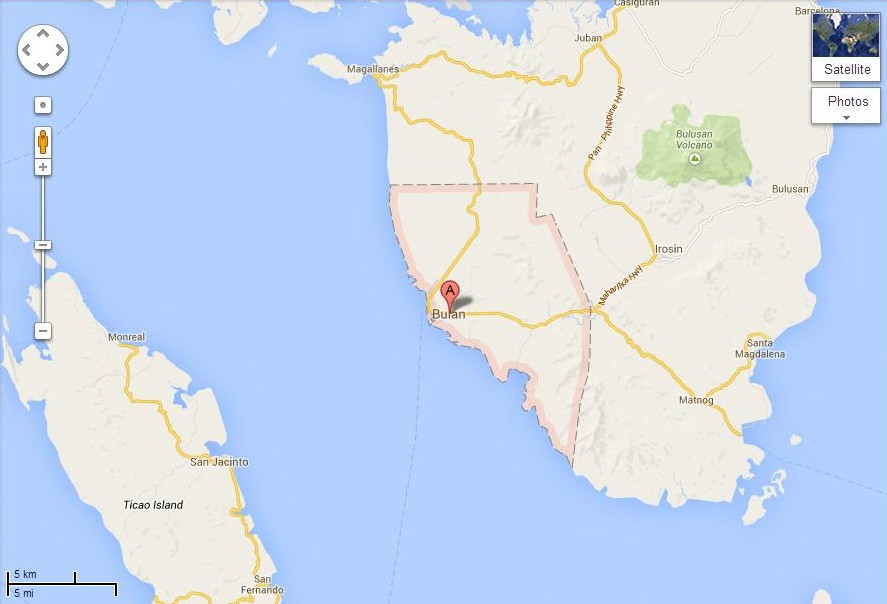
Bulan, Sorsogon
It has a distance of 667 kilometres (414 mi) from Manila, 63 kilometres (39 mi) from the province’s capital Sorsogon City, 20 kilometres (12 mi) from the town of Irosin and 30 kilometres (19 mi) from the town of Matnog. (http://en.wikipedia.org/wiki/Bulan,_Sorsogon)
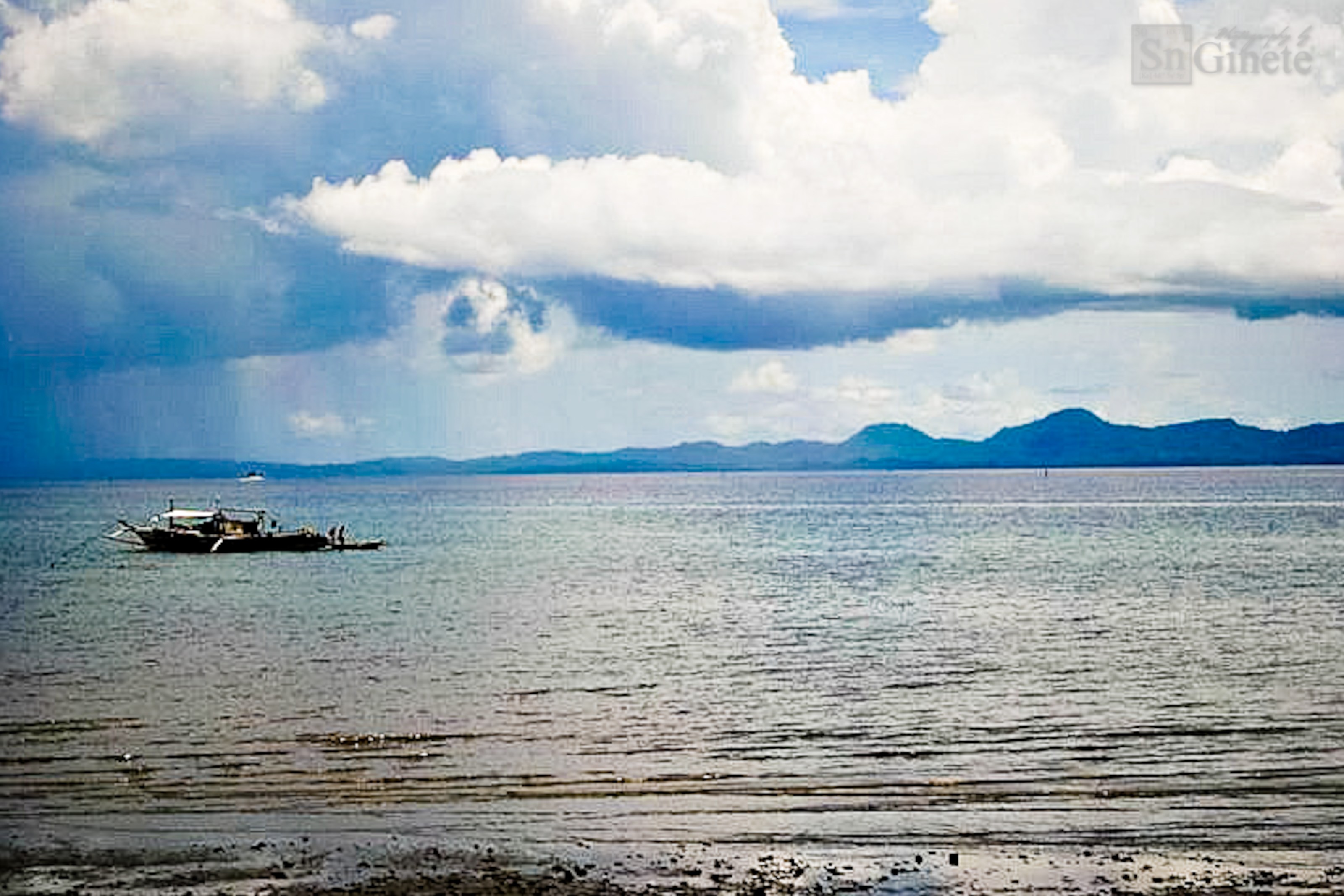
Sorsogon City is a coastal area, surrounded by beaches of all sand color. From white, to pink, to black – you name it, we have it. Rich of natural resources, fishing and farming have been the sources of livelihood of almost all the Bulanons (that’s how we generally call ourselves).
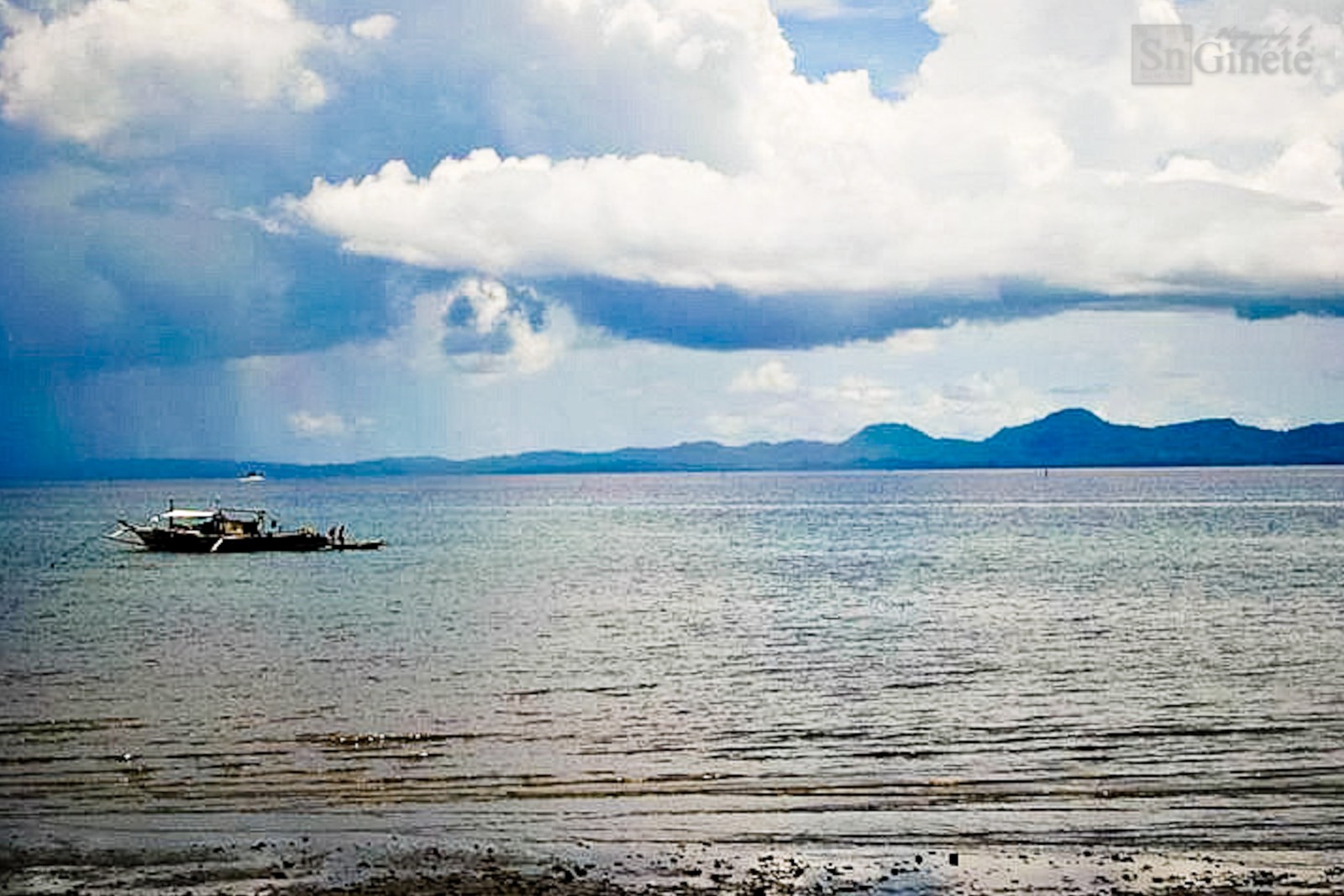
Fishing
If there is one value that being a Bicolana has taught me, it would be this – knowing your roots. In other words, learn to look back from your humble beginnings. Bulan is the one thing that has taught me how it is to be humble and to be grateful. Humility bespeaks when the heart is in awe of the mediocre. I know you are going to agree with me right there.
I came from a family of farmers. My parents, my grandparents and the parents before them all came from humble beginnings. We wouldn’t be here if it wasn’t for them. Gratitude is what I could offer to my ancestors, for the sacrifices and hard work that they have invested in providing the best for their families.
I came from a generation wherein I don’t have to go to the fields and do the farming myself and go home with sweaty clothes covered in mud just to pay for all of my expenses and supply my needs. An experience I never had to go through and yet something that I would want to go through.
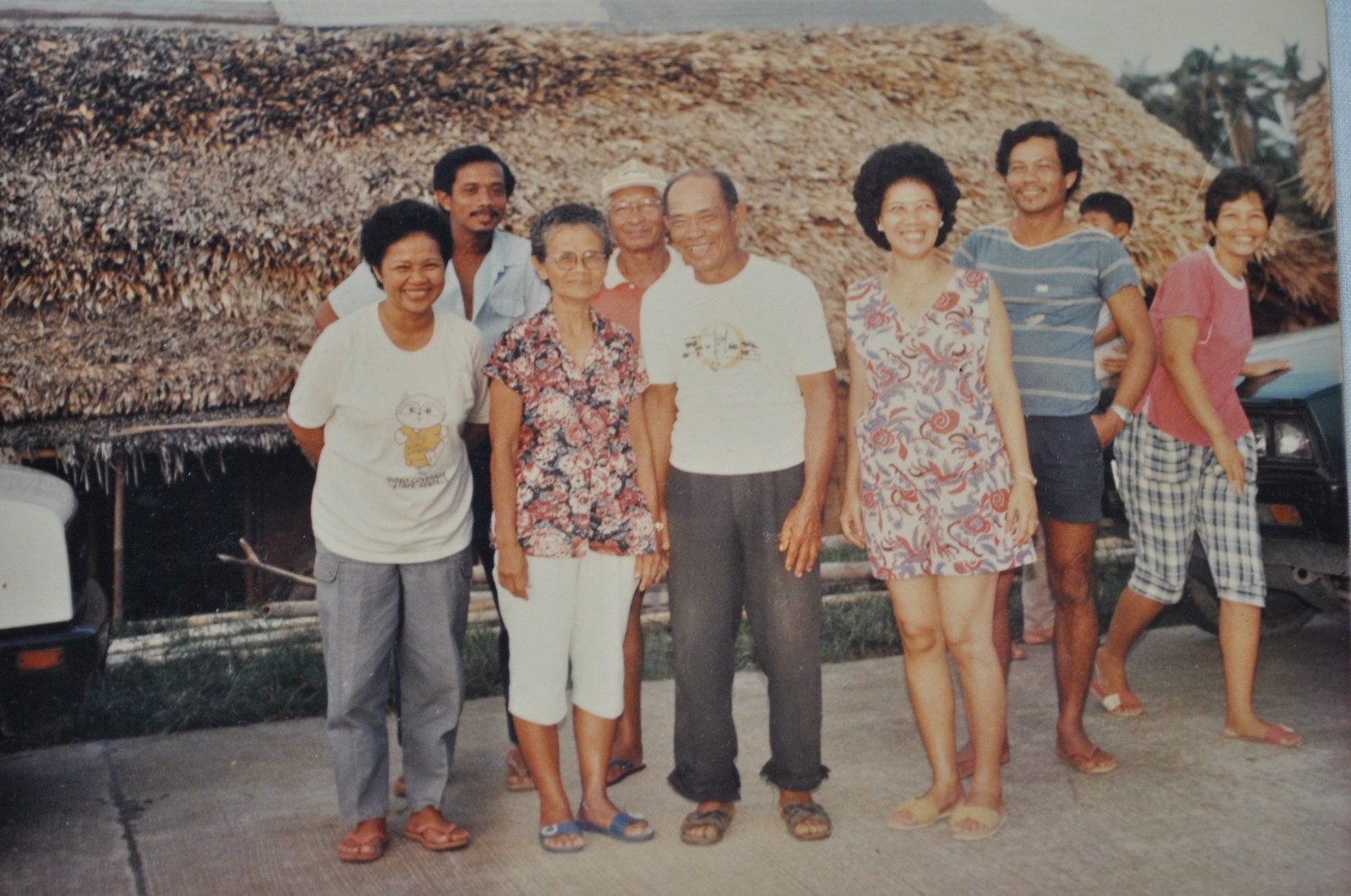
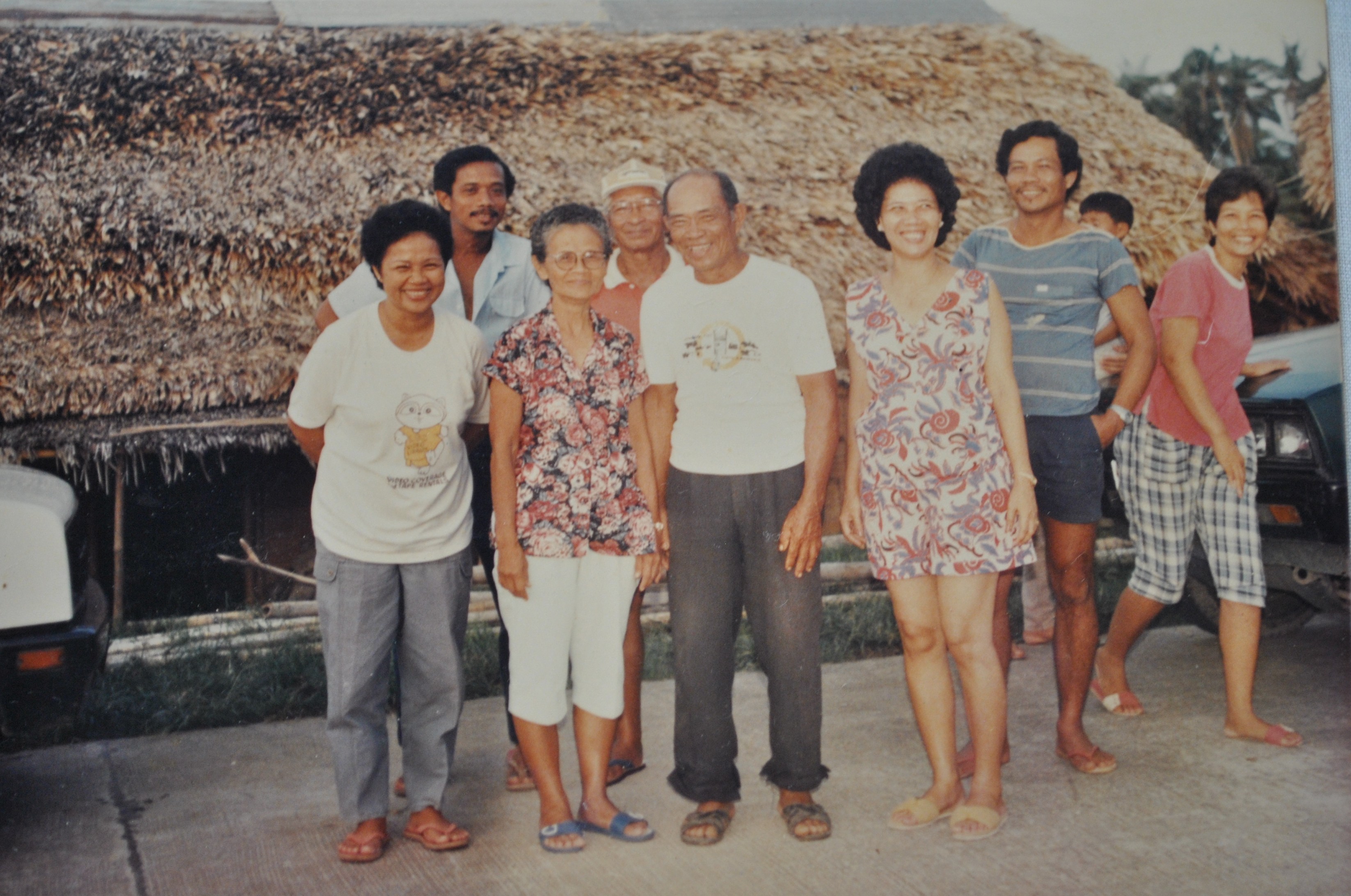
CIRCA 1980s: My mom, aunts, uncles along with my grandparents.
They say that for someone to appreciate the value of something less than its market value and more of its sentimental value, you have to work for it and have it like how it is usually done and achieved. You have to sweat it out, so to speak.
I was listening to the podcast of Pastor Christian Flores regarding Victory’s new series entitled “It’s Not About The Money” two Sundays ago and he mentioned about the story of a farmer and how this farmer has invested his earnings in acquiring an even bigger barn where he could store more which actually resulted to his own destruction.
That made me thought about our farm, our farmers and what do we really get from it. For starters, our farm house did not change though how many years and decades have passed, we are earning just enough, we are still living frugal lives though we have acquired some possessions through time – still, I think it is not about the money. Money, for us, is something that has to do with survival but never to accumulate great wealth and live grandiose, rich lives.
I might be speaking out of righteousness here but if you will personally ask me, that is how I think it should be. I do not wish to dwell on this matter then and will just leave all the explaining to our Pastors as they lead us on with the series – a reason for you to stay tuned for our upcoming podcasts or better yet visit a nearby Victory church: http://victory.org.ph/. (Sorry for the shameless plugging, but I felt you would understand it better if the explaining would come from our church leaders).
victoryqc.org
This is the season of harvesting and when I went home during the holidays last November 1 and 2, I chanced upon the last harvest in our farm. I have skin asthma and as much as I should be staying away from hay, I know it would not stop me from going along with my Dad. I suffered the consequences later on – cough got worse and itchy rashes came out that last for usually a week leaving black spots on your skin that last for about how many months.
Anyway, the last time I have been with my Dad during harvesting was when I was around 6 or 7 years old. I could still remember how our parents would ask us (not really me as I was way too young, but my sisters and brother) to help in drying the “palay” we have harvested so they would be sold to the millers for a good price before they sell it to the market.
And yes, how could I forget all the scurrying here and there, to and fro when dark clouds come and heavy rains start to pour. It only means sweeping the grains, piling and covering them up as FAST as you can to prevent them from getting wet, thus lowering the chances of getting a low price as “palay” buyers measure the moisture content of the rice grains. The drier the grain is, the higher its market value.
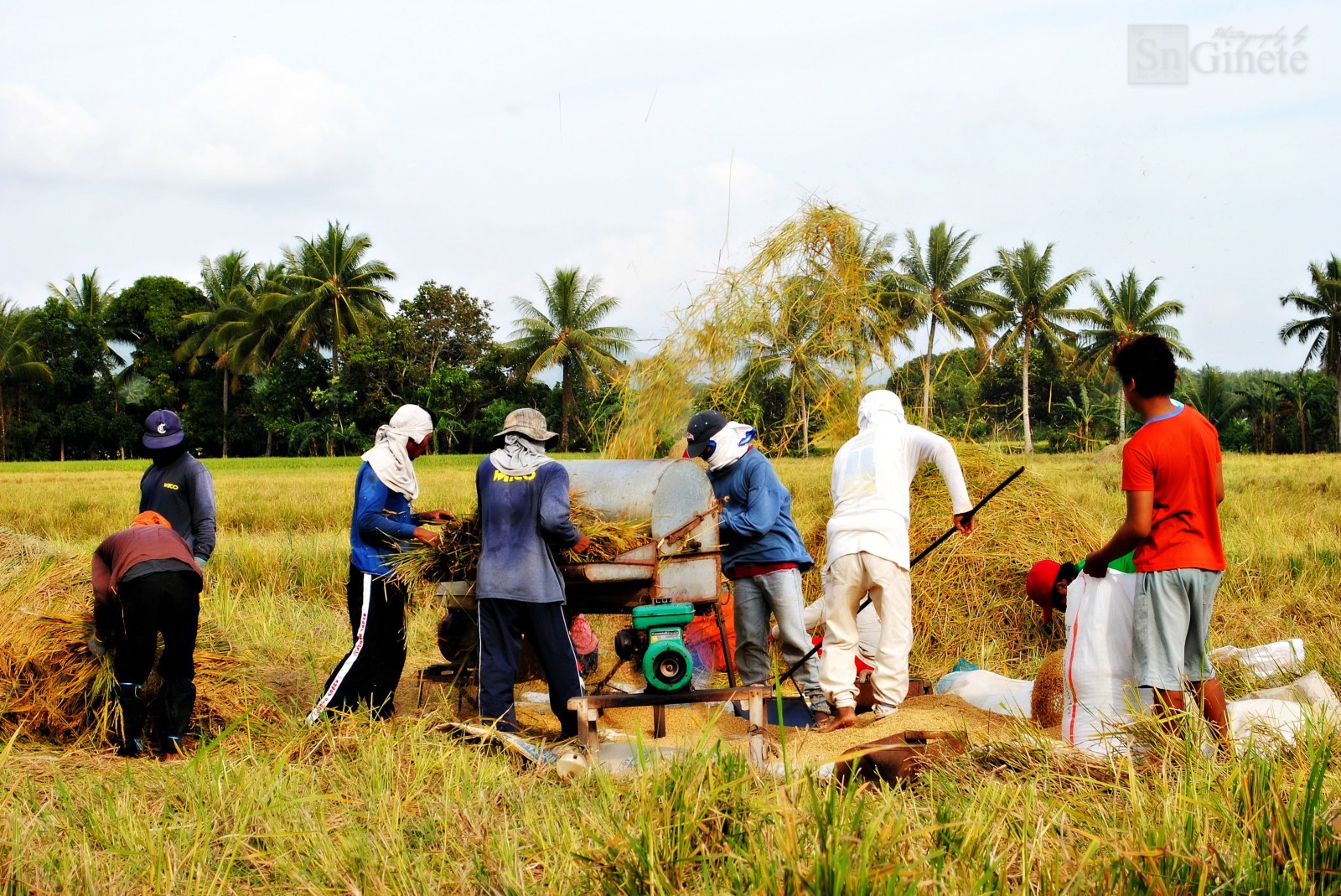
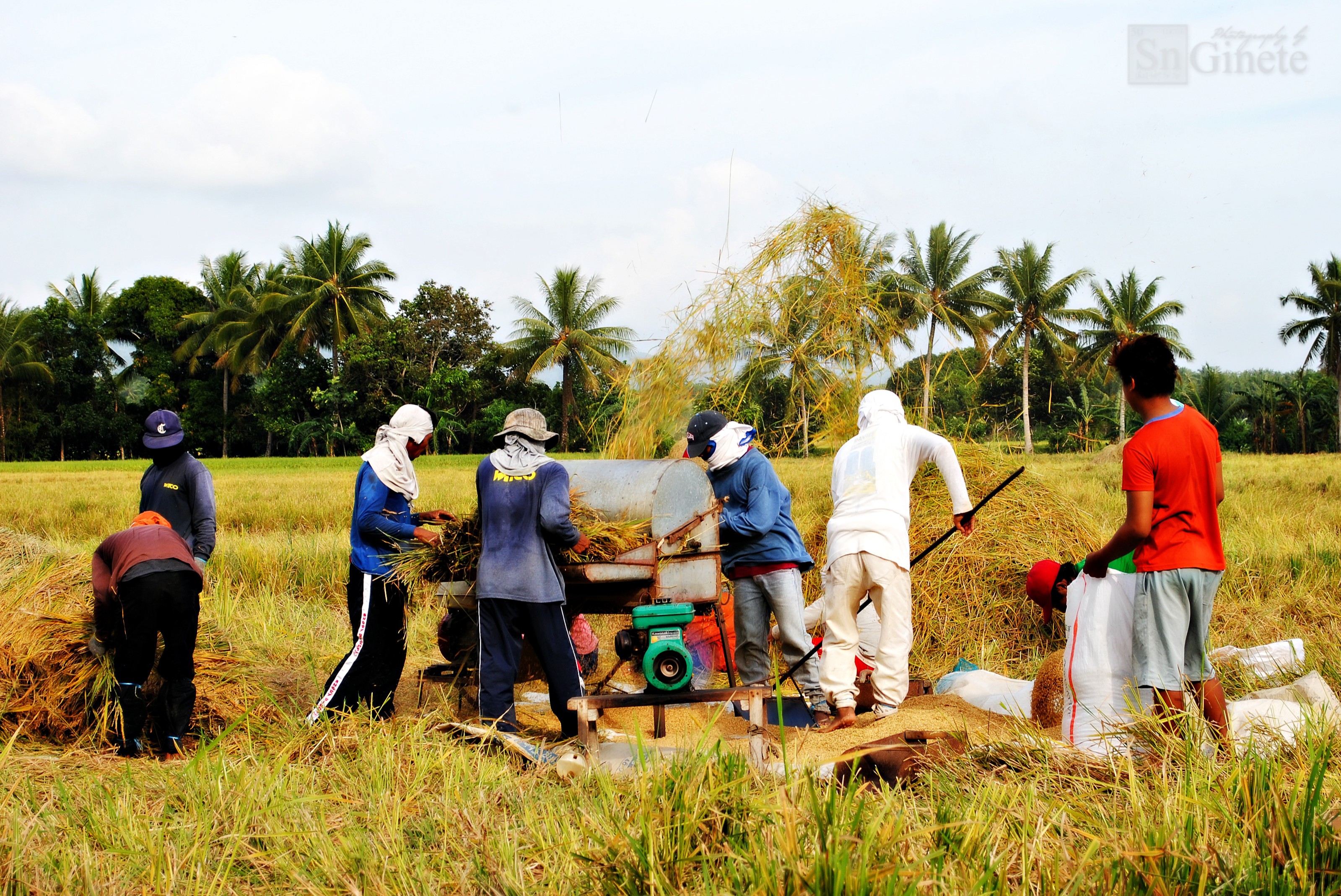
Harvesting and threshing of palay.
My Dad is not a farmer per se. He is a civil engineer who juggled two occupations at the same time – that of a farmer and a superintendent at the National Irrigation Administration in the Bicol region (officially at San Ramon, OIC in Masbate and Sorsogon City). He is now 74 years old, retired from his engineering career and yet a continuing farmer. I have always admired my Dad, how at his age, still manages to do what he would always do at the farm despite his arthritis, gout attacks, hypertension, cataract and other illnesses of the aged. Although we don’t dry the harvested rice grains anymore to lessen the stress level of all the scurrying and hurrying, tending the farm is still a busy work to do.
I went to the farm with my Dad not to harvest the grains myself and have them threshed out but witness how it is usually done. I have to get into the particulars as to how to do this and that. Well, I might consider farming as my job someday. Yes, “Tin” the farm girl. *wink* I think I heard my Kuya’s sarcastic chuckle back there again. Haha Yeah, right. And yes, I wanted to observe how our farmers do it – our trusted and loyal workers. I admired them more than I have admired an office employee (no offense to office workers). But hard labor is no easy job. Exposed in the heat of the sun, bending over for hours either planting rice seedlings or harvesting them, soaked in mud or inhaling the itchy hay dust when threshing are, for me, among the most challenging tasks.
I closely looked at all of them. I saw Tio Digoy and Tio Kadog – they are the oldest among all of them. They have been working for my Dad since I was a kid. Now, their sons are working for us as well. I have learned to love them for all that they have put up for me and my family. I am praying that someday, through us, their sons, daughters and grandchildren will have a better future because of their parents and grandparents’ hard work. Though that means we might lose workers in our farms, it would also be equivalent to giving everyone the chance to have better lives than what they have now.
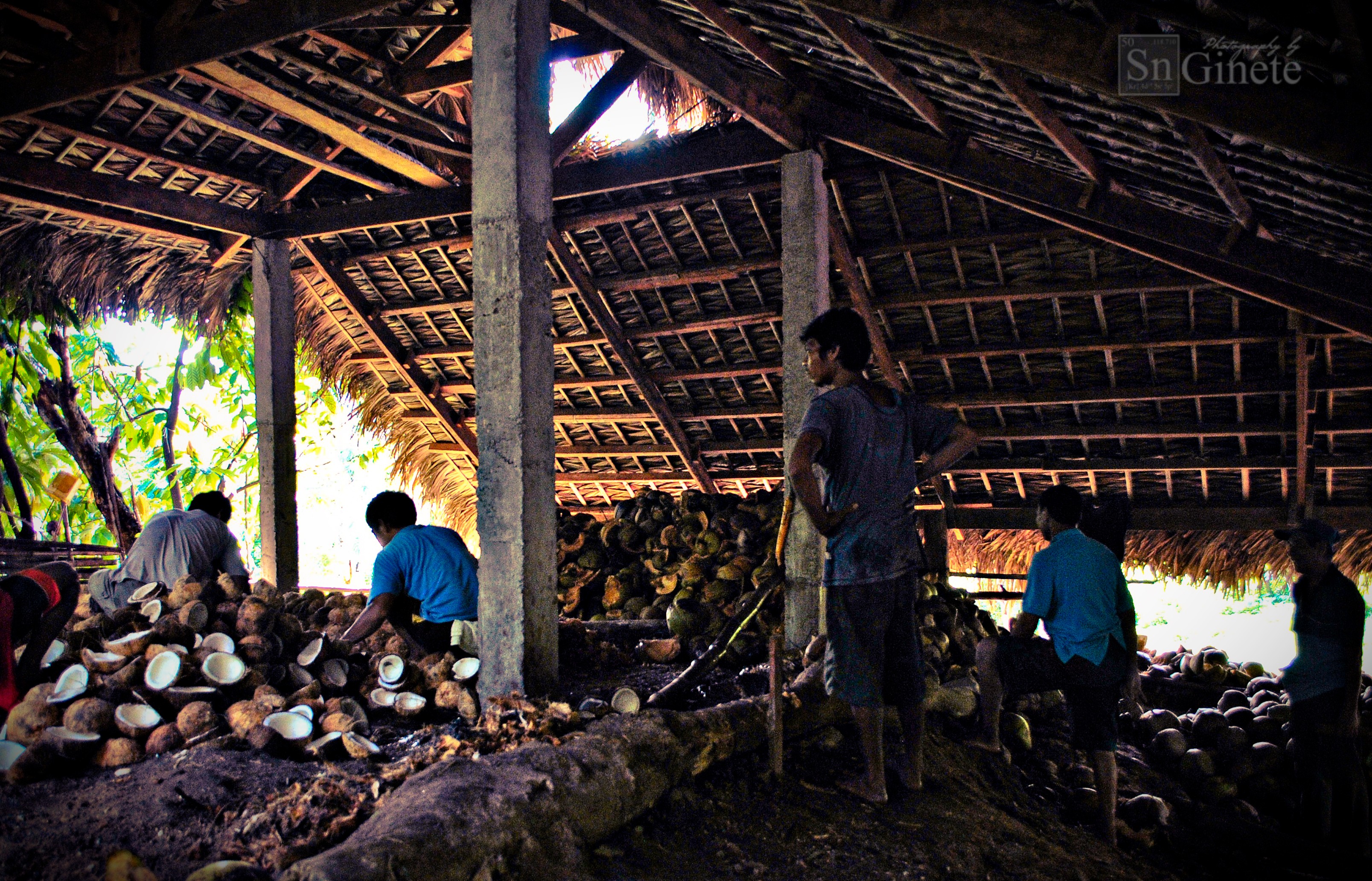
I am praying too that someday, there will no longer be a need for manual labor and everything will be run by machines, operated in a clean office from planting to harvesting rice. And that goes as well for harvesting coconuts and converting them into copra. The team of Tio Digoy also does them for us. Skilled, they really are. My family and I will always be grateful to them. We will always be grateful to Him for any blessing that He has bestowed as well as for His guidance and protection not just to me and my family but to our workers and their families as well.
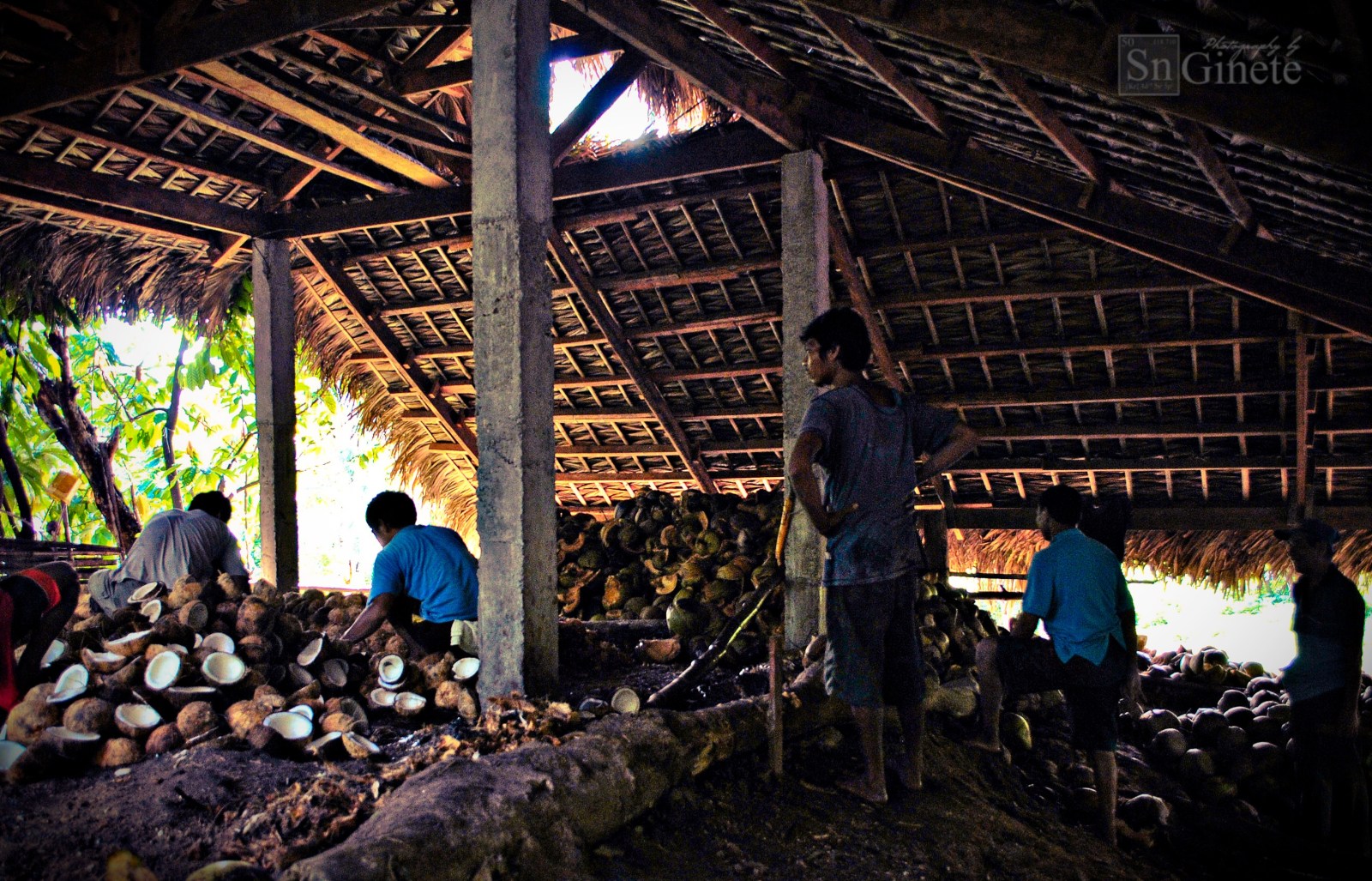
Coconuts being made into copra.
So if you think this is what I do in Bicol:
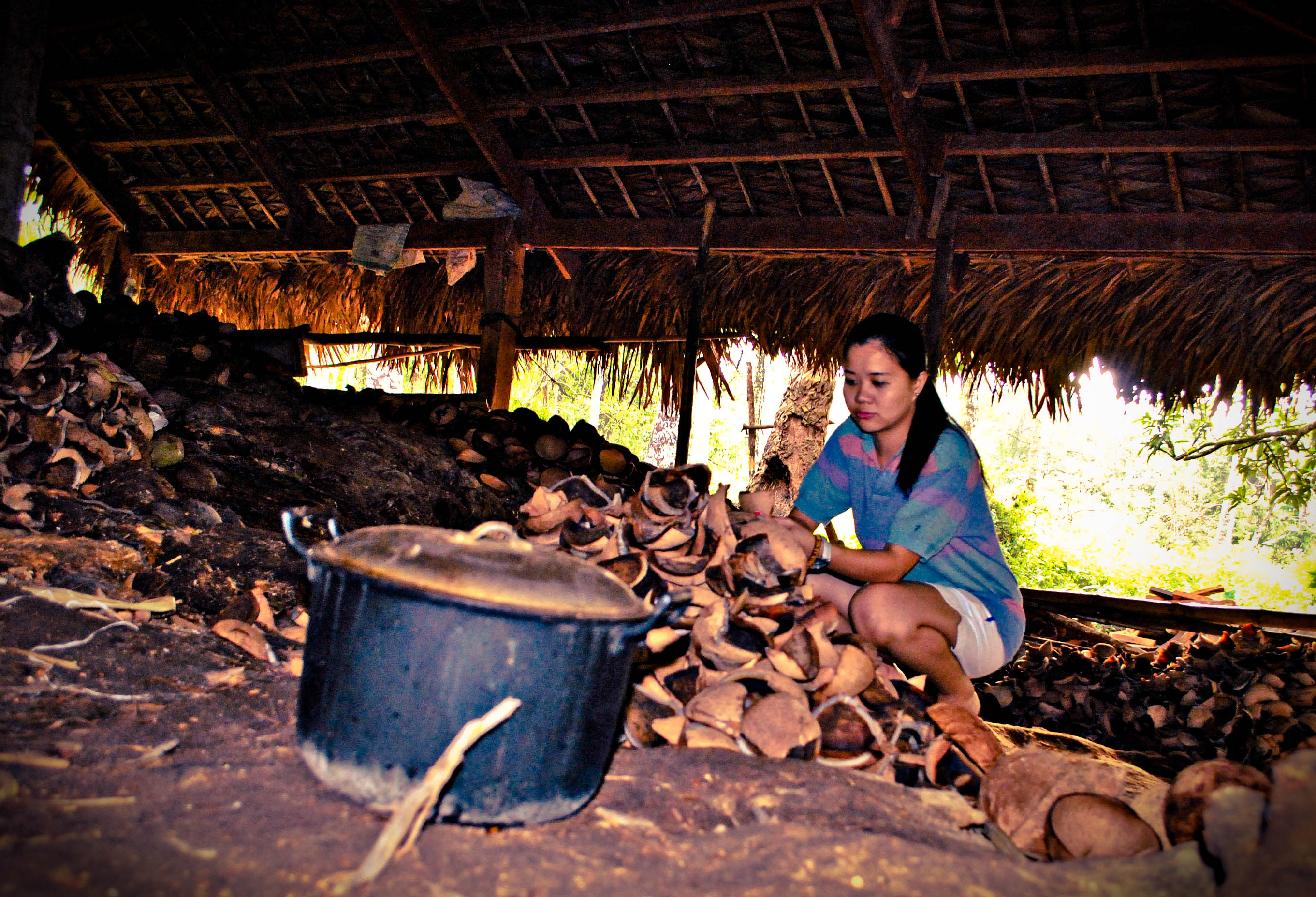
Think again, because this is what I usually do:
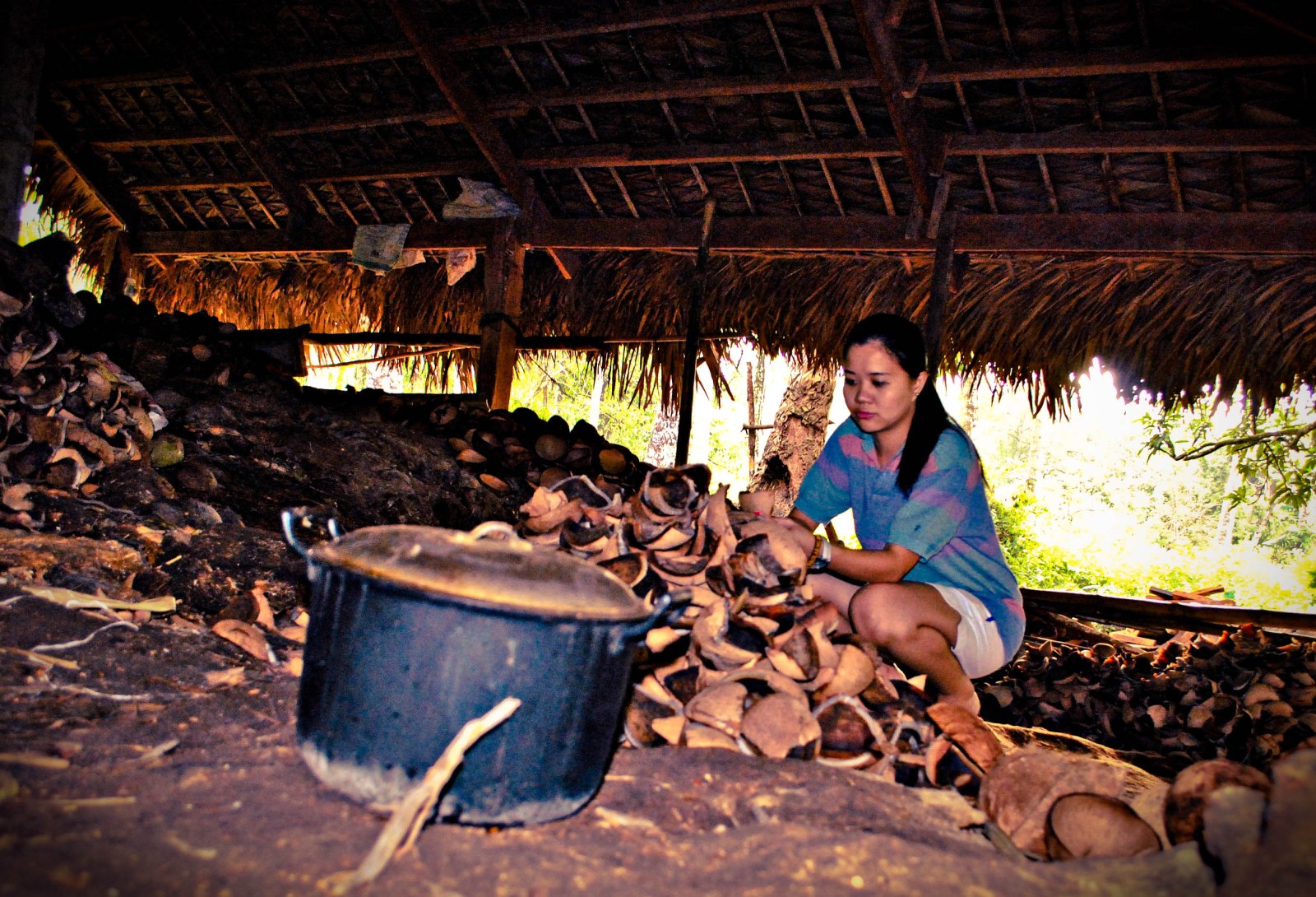
“Tin, The Farm Girl”
Well, aside from washing the dishes, cleaning the house, feeding the pets, etc. and having a little vacation time. We have no helpers/”yayas” back home and here in Manila, by the way.
Now, that is who I really am. Look back, give back and be grateful.





 The Journeyman's Moments