High Hopes For The COP 28 – UN Climate Change Conference 2023

The COP 28 or the 2023 United Nations Climate Change Conference is currently being held in the United Arab Emirates, which commenced on November 30, 2023 and will end on December 12, 2023. Here’s what we can expect from the Conference of Parties for this year:

“High on the agenda for COP28 is the conclusion of the first-ever Global Stocktake (GST), the main mechanism to assess progress on the goals set in the Paris Agreement. The GST will be an opportunity for countries to assess their climate efforts so far and to identify the gaps in current climate action.  

Beyond making COP 28 the “most inclusive” ever, the UAE has also announced three additional priorities for COP28:

  1. fast-tracking the energy transition and slashing emissions before 2030;
  2. transforming climate finance, by delivering on old promises and setting the framework for a new deal on finance; and
  3. putting nature, people, lives and livelihoods at the heart of climate action.” – Global Witness

Despite man’s inability to avert the impacts of climate change, I still remain hopeful that global leaders and respective government agencies will be able to help us adapt and mitigate all the risks involved.

Environmental Meltdown

The World Economic Forum shared this video and I believe it speaks volumes to all of us – ecological destruction has already reached its tipping point. The accelerated melting of ice caps in the Arctic region has drastically increased sea levels and it looks like the “Waterworld” scenario is no longer a far-fetched reality. Decreasing snow caps exacerbated warmer seas resulting in a high percentage of deaths of marine species and disrupted habitats.

Here in our hometown, which is a coastal area, there is already a decline in seafood supply. When I was young, wet market stalls were always teeming with different kinds of fish on any day of the week. Only a few of them are available now, and the sizes are also getting smaller.

I’m afraid an imbalance in the supply and demand, coupled with overfishing, climate change, political and social instability, and an increasing population will indeed confirm what experts have predicted that it is not possible to solve the problem of food insecurity by 2030. The question that all of us are asking now is what kind of climate action are we taking?

I am sure we’re all familiar with Greta Thunberg and all other climate activists who made waves in the internet for desperately calling out to the world that we are already in a climate emergency. It is no longer imperative that we look for ways to halt Earth’s degradation. Our approach now is more centered on how to survive the looming threats of climate change.

Combating Food Insecurity

So how do we prepare for the global food shortage? Let’s take into account our current world population that already reached 8,045,321,447 as of 2023. If marine biodiversity can no longer offer us with an abundant supply, we might have to consider indoor aquaculture.

During extreme heat waves and droughts, we can explore cultivating edible plants that grow in deserts and can withstand extended periods without irrigation. During the rainy season, floating gardens are a great alternative. We might also have to improve our hydroponic systems to make them more wide scale.

In the coming decades, we can expect more scientific breakthroughs and discoveries in bioengineering, cloning, and genetic modifications. We are racing against time, and I have high hopes that climate financing will focus on these developments because experts will need to work double time if we want to ensure the survival of humanity.

Btw, I am no scientist and environmental expert, though if I am given an opportunity (kun dire ako polpolon sa Math 😅), my preferred branches of Science to study are Biology and Botany.

A Collective Effort, Better Together

I hope our farm will be able to contribute towards climate change mitigation efforts. My family and I have a series of projects in the pipeline and yet I am asking God when and how we execute them. The tasks to do are a bit overwhelming, but I always make it a habit to start with small, achievable tasks related to these projects. And most importantly, we follow God’s timeline by seeking His will in every plan.

I support the idea that you have to be diligent and disciplined enough even in doing mundane tasks and routines in order to get good results. And if you want excellent results, you have to equip yourself with the necessary skills and knowledge in order to make modifications as needed.

One farming component that I am particularly interested in now is Bokashi composting. I see it playing an integral role in our farming activities to make our farm more sustainable. Although just like what I’ve mentioned in my previous articles, the fulfillment of some of these plans might not take place during our lifetime. But I firmly believe that God will assign people from the next generations to continue what we have started. And yet, not our will but let God’s will be done always.
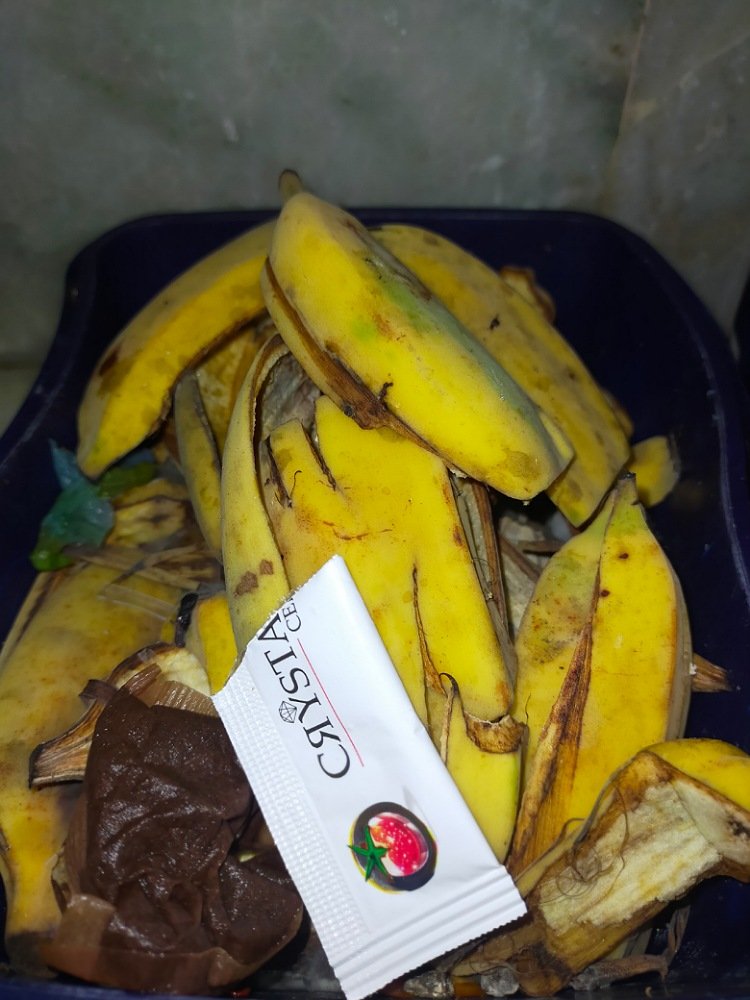

But why, oh why, Daddy? A non biodegradable in a biodegradable bin??? But because you’re 83 years old already, love you still, Dad. 😀

I am praying for more breakthroughs in organic farming and the successful integration of climate-smart farming practices here on our farm. Even David Beckham is starting his own organic farm. If we are to do this as a collective whole, the impact will be greater compared if only a small number of individuals or organizations are performing their climate change mitigation initiatives in order to achieve sustainability.

We act now, then we let God lead us to do the rest according to His timeline. 🙏

P.S. In case you see me looking like a man and acting so manly and all, pls. don’t ever think I have gender issues or an identity crisis. lol I was driven by circumstances to behave in such a manner due to a lack of males in the household. 😃

This is how I cope with and adapt to a very masculine industry in order to survive. I can also be girly, cute, and sweet, but I actually have a Kraken inside me that I am trying so hard to keep hidden and is just waiting to be unleashed. lol Thanks to my faith, I have managed to keep it hidden in most circumstances. 😉


“Let us not become weary in doing good, for at the proper time we will reap a harvest if we do not give up.” – Galatians 6:9

WE Rice & Agri: My Vision of a Social Enterprise

Hello, my dearest readers! After a year of hibernation and very busy months, I’m finally posting here on my WordPress blog. This is not a regular blog post, however, as it’s actually one of our requirements in the Social Entrepreneurship online class I’m currently enrolled in at the University of the Philippines Open University. By reading my concept paper, I hope you will be encouraged to take the online course as well and be part of the catalysts for social change.

——————————————————————————————————–

My Vision of a Social Enterprise: WE Rice & Agri

by: Christine Lailani Ginete-Rome, LPT

BACKGROUND & RATIONALE

The social enterprise that my family and I have envisioned to organize one day, God willing, will be called “WE Rice & Agri.” It is derived from the statement, “We rise and agree.” When I was choosing the name for our social enterprise, I thought about what will highlight the main agricultural produce of our family’s agribusiness (rice) in the Bicol region with a subtle note on women empowerment. WE Rice & Agri stands for “Women Empowerment thru Rice and other Agricultural products.” 

Why use women’s empowerment for this social enterprise? When the pandemic started in 2020, researchers have identified an alarming increase in the statistics of domestic abuse and violence on women and children. According to an article by Business Mirror,

[In the report titled, “Covid-19 and Violence against Women: The Evidence Behind the Talk,” UN Women partnered with the United Nations Population Fund (UNFPA) and analytics company Quilt.AI and determined that these online searches surged 63 percent in the Philippines. These online searchers included specific references to “men hitting women,” “spouse abuse,” “boyfriend hit me,” and “controlling men” or “controlling husband.”

There are several studies that can confirm that women in abusive relationships oftentimes do not seek protection or report the incidences of abuse because of several factors. One of them is economic security especially in the case of couples who already have children. 

According to an article by the National Network To End Domestic Violence,

“Financial abuse is often cited by victims of abuse as the main reason that they stayed with or returned to an abusive partner…Research indicated that financial abuse occurs in 99% of domestic violence cases. Surveys of survivors reflect that concerns over their ability to provide financially for themselves and their children were one of the top reasons for staying in or returning to an abusive partner. As with all forms of abuse, financial abuse occurs across all socio-economic, educational, and racial and ethnic groups.”

VALUE PROPOSITION

WE Rice & Agri hopes to empower women in the Bicol region to rise up against domestic violence and abuse, provide economic security through livelihood opportunities, and assist in their recovery from the trauma through spiritual mentoring and counseling. The business initiative can also extend to widows and female senior citizens who are still capable of performing light tasks.

The organization seeks to partner with the DSWD and/or international agencies that are advocates of women’s and children’s rights. To aid in the empowerment, counseling, and therapy sessions guided by Biblical principles that will be held once a week, the organization will reach out to churches for volunteers who will be working under the Women’s Outreach Ministry of the organization. 

Our agribusiness currently employs around 20-30 farmworkers, but they are comprised of men and mostly the heads of the families. Through our social enterprise, we also hope to provide an alternative source of income to full-time house moms by allowing them to work in the company as part-time workers. We are looking into setting up a daycare center where our women workers can leave their young children while working inside our farm. 

DESCRIPTION OF PRODUCTS OR SERVICES 

Our family’s agribusiness is a micro-enterprise but we plan to expand our business operations in the future focusing on Climate-Smart Agriculture (CSA) in support of the climate change mitigation efforts being conducted worldwide. We are into copra-making and rice farming for how many generations already starting from my great grandparents, which can be dated back to pre-World War II. Fast forward to 2021, we are now transitioning to innovative approaches in sustainable farming. Our 6.5-hectare farmland is located in Bulan, Sorsogon, wherein 1 hectare is allotted for rice farming and a small portion is used to grow coconut trees for copra. 

We are also currently cultivating other rice fields with lot sizes ranging between .8 to 1 hectare located in different areas of the town. Another idle property is located in the town proper, which measures 264 square meters. We are still in the business planning stage on how to utilize it and one of our options is to set up a small store where we will be displaying all the agricultural products for sale. This will help us minimize our operating costs since we no longer need to rent a stall at the public market. The property is also located just a few blocks away from the commercial hub of our town.

There are some portions in one of our properties where we grow bamboos and cacaos but they were only used for personal consumption. We are planning to add organic vegetables and corn to the agricultural products that we would like to sell to the market. The following is the complete list of crops that we have and would like to grow in the future and the possible processed products that will be prepared by our women workers.

  1. Rice – rice-based pastries or kakanin, rice wine, rice noodles, etc. 
  2. Coconuts – vinegar, tuba, walis tingting, buko juice, coconut husks for gardening compost, uling, etc. 
  3. Bamboo – weaved baskets, bags, mats, hats, other home decors
  4. Cacaotablea, other chocolate-based products
  5. Organic Vegetables – lettuce and other high-value crops through hydroponics/greenhouse farming/mushroom farming
  6. Corn – sold as raw and/or processed via mini food carts (popped corn, steamed corn, cheese corn, etc.); prepare the husks that can be utilized for industrial purposes i.e. fiber, cattle feeds, etc. 

BENEFITS TO STAKEHOLDERS

Gender inequality is included in the 17 Sustainable Development Goals of the United Nations. Stakeholders will not only be supporting a local cause but should the project becomes a success, it will add up to the communities all around the world that address and eliminate gender inequality. The percentage of locally expanding the network for this type of social enterprise is also high since there is only a small number of social enterprises operating using this business model in our region. We hope to encourage more local business owners to follow suit and also become catalysts for social change. 

We are also exploring other viable projects for our 6.5-hectare farmland such as developing a portion of it as a sustainable agritourism site. This will provide other means of income and will also serve as a buffer during the typhoon and drought seasons wherein it will be difficult to grow some of the crops needed for the production of the agricultural products listed above. By diversifying our project portfolio, we hope to achieve sustainability in our social enterprise so our women workers will have a consistent income stream. 

Consumers will benefit from more affordable prices as raw materials don’t need to be outsourced since our farm will be supplying them. For local buyers, they will now have a wider range of agricultural products to choose from in the market that can be purchased without spending on costly shipping fees.

We are targeting to cater to nearby communities and cities in the region by considering options such as contract farming and as a model farm through the Department of Agriculture’s Agribusiness and Marketing Assistance and by exploring other marketing channels provided by private organizations. The local community will also benefit from environment-friendly farming practices such as agroforestry that will enable the preservation and conservation of local biodiversity and ecosystems.

WE Rice & Agri will act as our company’s forerunner in enriching the lives of the local community in a holistic sense starting from the “ilaw ng mga tahanan” – the beloved mothers.

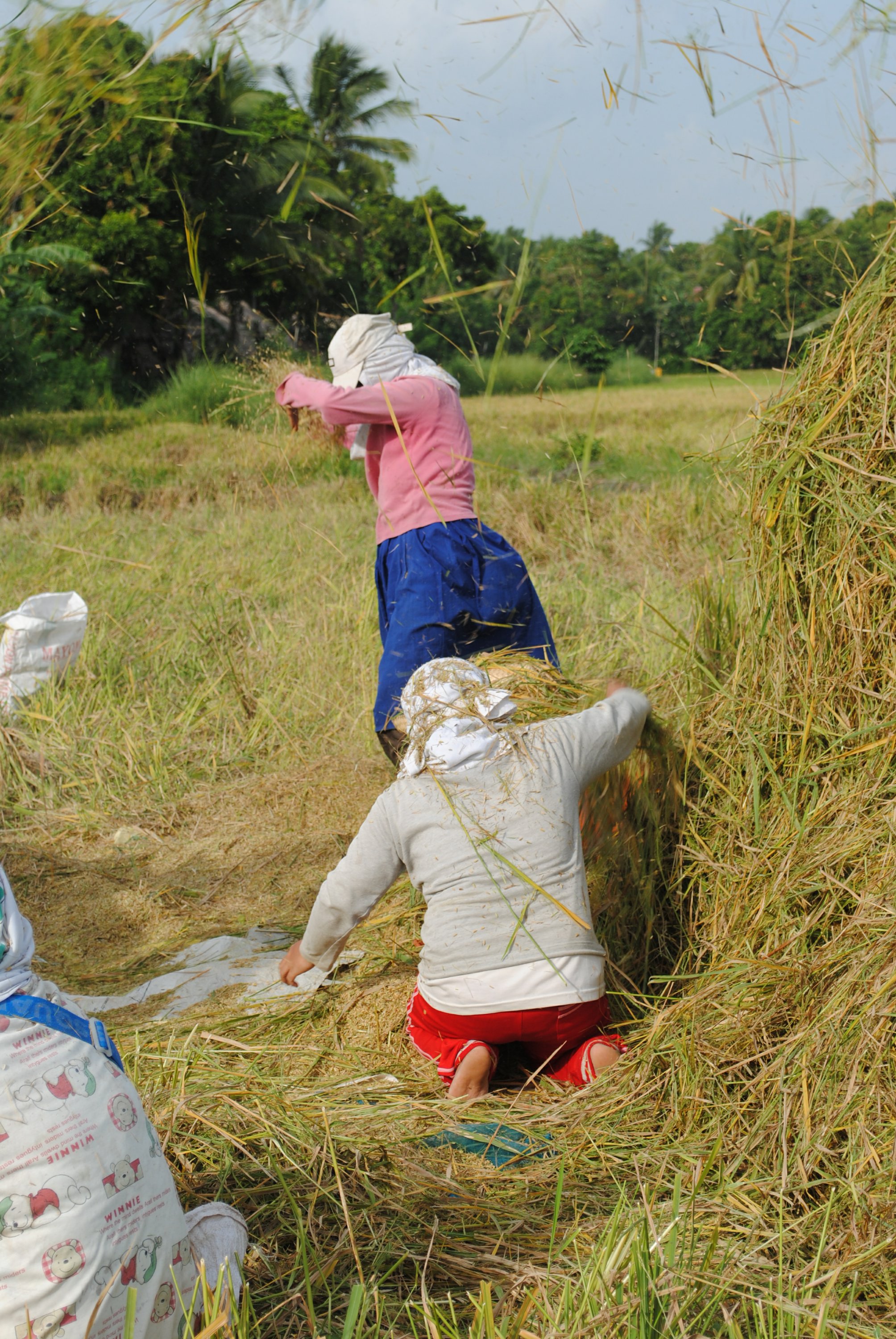
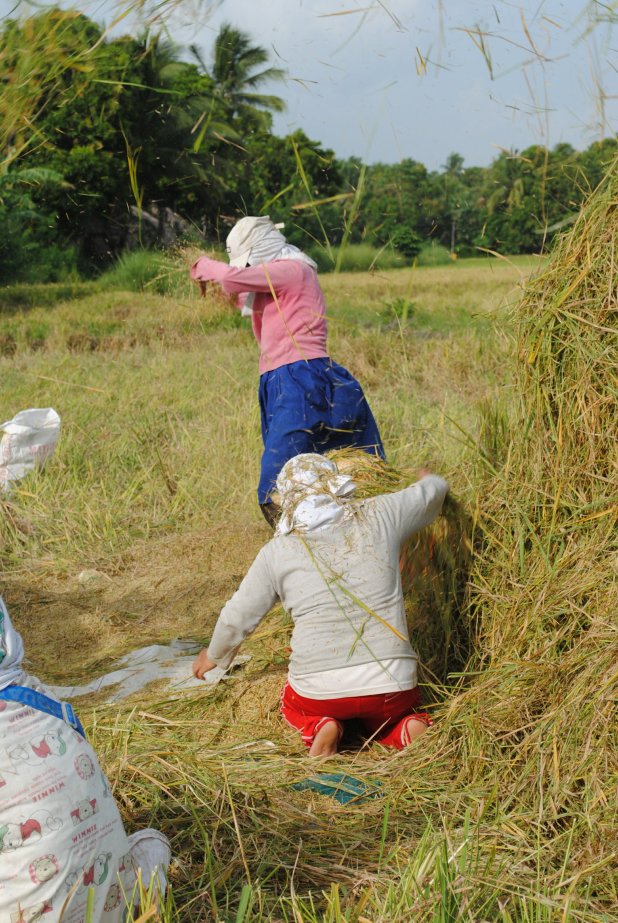
Photo by Christine Lailani Ginete-Rome (Bulan, Sorsogon): Some of the women farmworkers would gather excess palay grains in our rice fields during threshing. They no longer do this now since we’re already using a harvester.
“Commit to the LORD whatever you do, and He will establish your plans.” - Proverbs 16:3

Padayon by God’s grace,

tin ginete rome